
Nicaragua Itinerary: Ideas For 1 Or 2 Weeks

Disclaimer: Some links on this page may be affiliate links. If you purchase anything through them, I will receive a small commission at no extra cost to you! Further details in the Privacy Policy.
After an arduous journey that started in the Honduran island of Utila, I finally made it across the border by the evening, and into the Nicaraguan colonial city of Leon.
This was the beginning of a love affair, where Nicaragua would skyrocket from a country I’d barely heard of, to one of my favourites in the world within the space of a fortnight. Even with 92 countries under my belt, Nicaragua still ranks in my personal top 6, it really is that good!
This Nicaragua itinerary will show you the best things to do during a 1 or 2-week trip.
You should begin with the colonial cities of Leon and Granada, go volcano boarding down Cerro Negro Volcano, stay in a jungle Treehouse hostel, walk along the trails of Volcan Masaya, immerse yourself in wildlife at Charco Verde ecological reserve and chill in popular surf town San Juan del Sur.
Regardless, Nicaragua has to be on your Central American backpacking itinerary.
Below I will explain what to do in each of these places having been to all of them myself, so I will let you know exactly what you’re getting yourself in for.
This post has been updated for 2026, with new information on the lava at Volcan Masaya, which had previously been blocked by a landslide.
Nicaragua 2-Week Itinerary
- Days 1-3: Leon
- Day 4: Volcano boarding down Cerro Negro Volcano (Day trip from Leon)
- Day 5: Granada
- Day 6: Volcan Masaya (Half day trip from Granada)
- Day 7: Treehouse Hostel
- Days 8-11: Ometepe Island (Charco Verde and volcano adventures)
- Days 12-14: San Juan del Sur
Nicaragua 1-Week Itinerary
- Day 1: Leon
- Day 2: Volcano boarding down Cerro Negro Volcano (Day trip from Leon)
- Day 3: Granada + Volcan Masaya (Half day trip from Granada)
- Days 4-5: Ometepe Island (Charco Verde)
- Days 6-7: San Juan del Sur
Below I will be sharing suggestions primarily for the 2-week Nicaragua itinerary, since the 1-week itinerary is essentially the same, with a few things left out.
This is almost exactly the same route I took through Nicaragua, minus a trip to Diriamba, a small town I visited only due to my goal to watch top flight football in every country. Diriamba otherwise has little of interest to tourists.
If you only have a week, then pick and choose your preferred activities from the suggestions below.
Days 1-3: Leon
Leon is a cool colonial city located towards the Honduras border. It is best known as the base for volcano boarding tours, but has some cool spots to visit such as the local markets and cathedral which make it worth a few days.
Getting to Leon by Bus
You can take local buses or express buses. Whilst more expensive, I recommend the express buses as they only cost around £1.50/US$2 from capital Managua which is very cheap by western standards. The local buses stop more frequently.
From Honduras, the cheapest option is a Tica bus from Tegucigalpa which runs at 9am four times a week (Wednesday and Friday-Sunday) taking 7 hours, not including border crossing times, and costing upwards of £20/US$27.
The Honduras/Nicaragua border is notoriously difficult to navigate alone. I recommend taking a tourist shuttle as the staff handle the logistics for you.
Getting to Leon by Plane
Fly into Managua and follow the bus instructions mentioned above.
Getting to Leon by Tourist Shuttle
The easiest way to get here, especially from Honduras, although it is more expensive than normal buses. Shuttles run from tourist spots such as La Ceiba for a steep £64/US$86. You can also buy tickets from the Bay Islands which are valid from La Ceiba.
Other popular destinations for shuttles to Leon include Antigua in Guatemala (£52/US$70) and other locations across Guatemala, El Salvador, Honduras and Nicaragua. Check out the Roneey Shuttle website for more details.
Exploring Leon
Your number one stop in Nicaragua should be the beautiful colonial city of Leon. Of the three primary routes into the country, the former capital is just about the easiest beginning point for two of them.
It’s the first major city you will reach whilst arriving overland from Honduras. It’s also only a 1-2 hour drive from capital Managua which is home to the country’s largest airport, making it your most likely start point if flying into the country.
Skip Managua and head straight to Leon if you arrive via air. Managua sucks if I’m honest with you, it has little of interest, and it’s the only place in Nicaragua which is fairly sketchy.
The third route into the country is overland from Costa Rica. It will take several hours to reach Leon from here (maybe 4-5 but this is hard to calculate given the state of the roads and reliability of buses). Therefore you may want to consider doing this itinerary in reverse if coming from Costa Rica.
Anyway, what should you consider doing in Leon?
- Do a free walking tour. My number one tip in any city in any country. But the tour in Leon is incredible. The guide is very informative, deep dives into the history, and even took us to sample some treats in the local market. You will learn about key aspects of Nicaraguan history ranging from the ruling socialist Sandinistas to revered poet Ruben Dario.
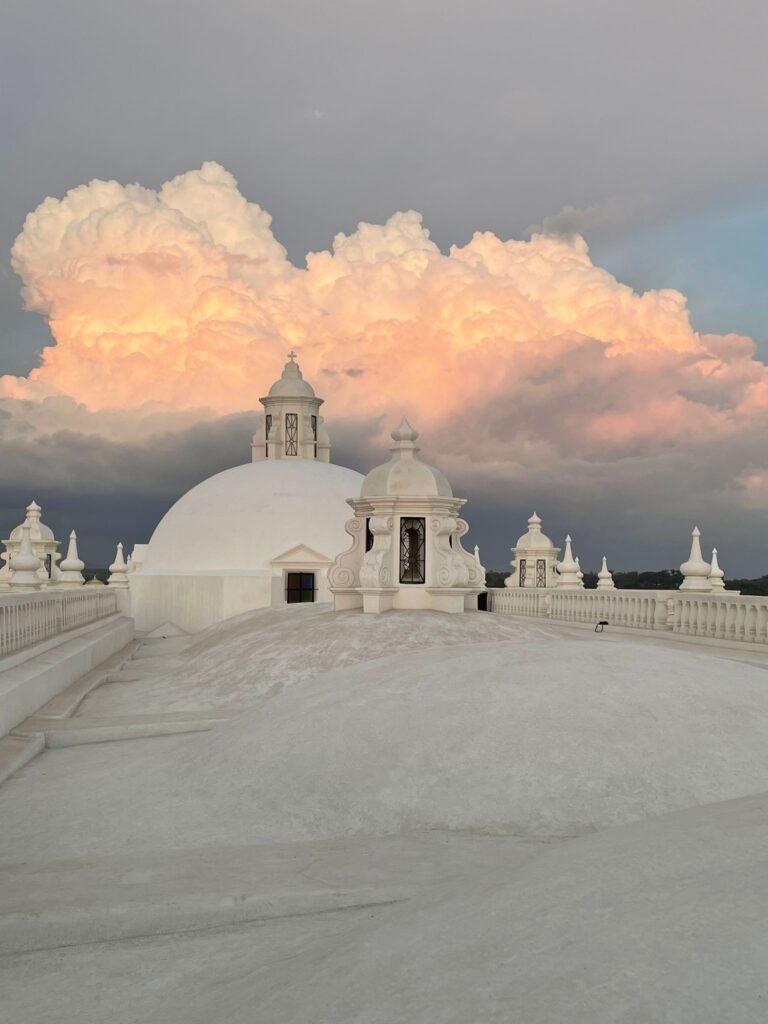
- Watch the sunset at Leon Cathedral. It costs £2 (US$3) to access the roof of this UNESCO World Heritage Site, and no amount of superlatives can possibly describe how stunning the sunsets are here. Looking straight ahead at the bright orange clouds was a sight to behold. Simply incredible.
- Check out the colourful buildings. There are many brightly-coloured structures across the city. From red-and-white church Iglesia el Calvario to sandy-yellow Church of La Recoleccion, there are no shortage of photogenic buildings dotted across the city – and not just churches!
- Explore the local markets. Markets are the lifeblood of any city you pass through on your travels. They gave you a better glimpse than anything else into how locals live their lives, what they buy, what they eat and so on. Mercado Central is the place to do this in Leon.
- Visit Museo Historico de la Revolucion: History is written by the winners, and this museum on Nicaragua’s successful revolutionary movement who have run the country for most of the past 45 years is no different. For just £2 (US$3) you can enjoy learning about what happened with the help of surviving revolutionaries. Just remember that you’ll only be hearing one sides’ version of events here… Open daily from 9am-5pm.
- View the socialist artwork. All over Leon you will find colourful murals paying tribute to the current regime. It’s an interesting thing to see, particularly if you come from a country where political propaganda isn’t rammed down your throat on every street corner.
- Get stuck into the local nightlife. Nicaragua is famous for producing Flor de Caña rum, and it’s super cheap. Likewise Toña beer can be found all over Leon for little more than £1-2 (US$1.25-2.50) per bottle. This university city isn’t short of bars, and gringo-approved favourites such as Bigfoot Hostel and Via Via Leon are generally the most popular start points for travellers.
Where to Stay in Leon
This university city is popular with backpackers staying in hostels ahead of their volcano boarding tours. Many will stay at popular tourist spots including Via Via and Bigfoot as mentioned above. These are some of the best places to meet other travellers if you’re feeling social here.
If you’re more into hotels than hostels, Hotel la Perla is popular for its colonial appearance, friendly staff and luxury appearance. Don’t miss out on this upmarket option if your budget allows!
Day 4: Volcano Boarding Down Cerro Negro Volcano
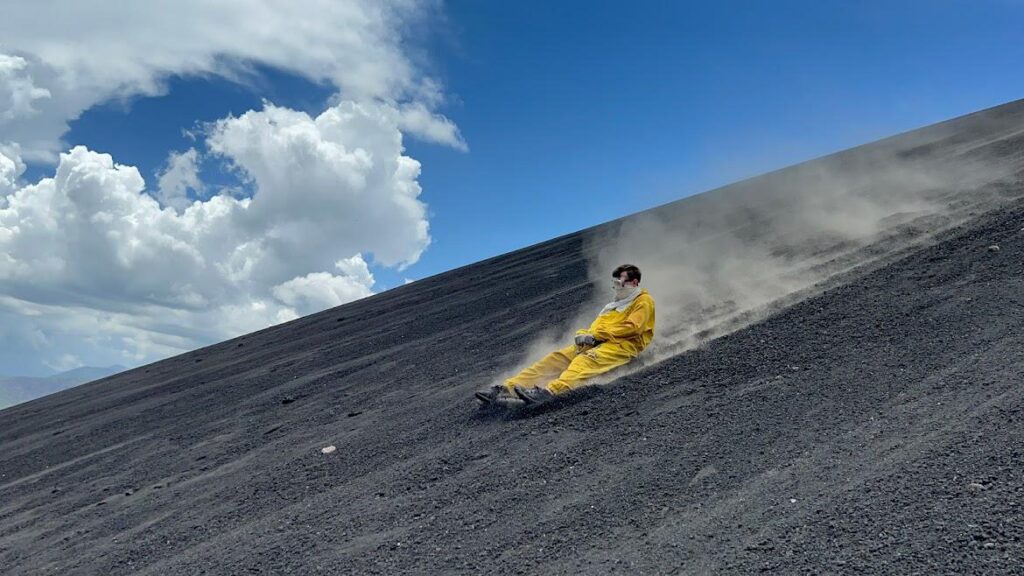
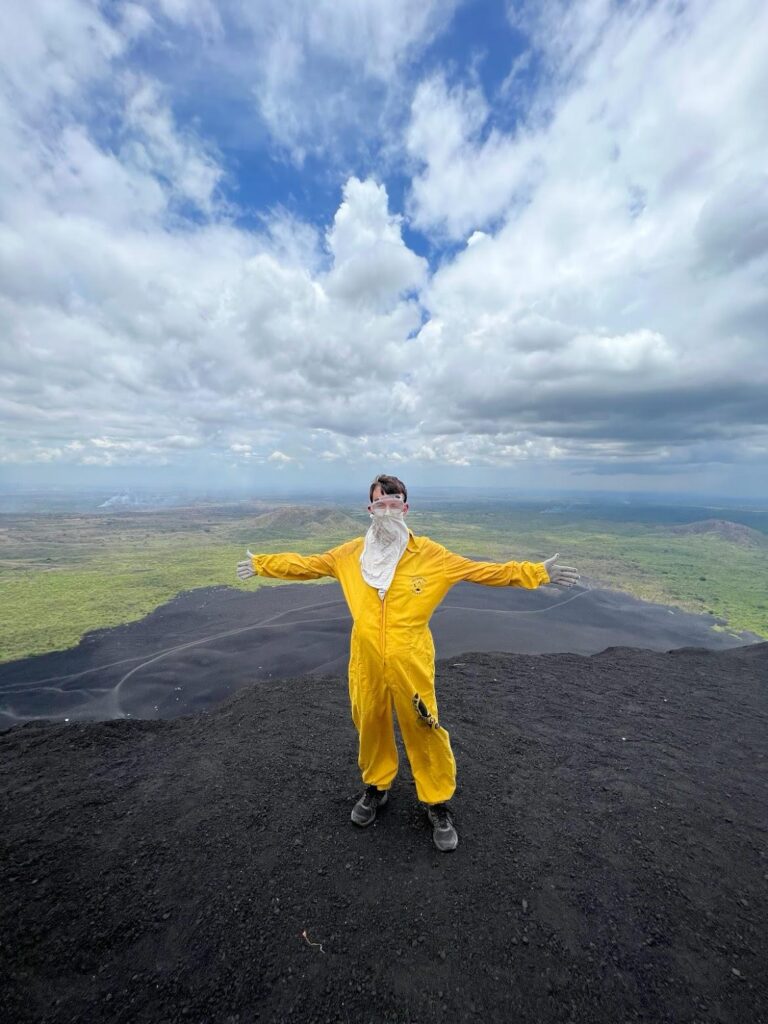
This is exactly what it says on the tin. You can bomb down a volcano on a metal board at 70km/h which is just as awesome as it sounds (if a little scary when you pick up speed).
Fancy boarding down a volcano?
Don’t miss out on this once-in-a-lifetime experience!
Nicaragua’s Cerro Negro Volcano is the only place on earth where you can do this
Going to keep this short and sweet, because I wrote a whole article on everything you need to know about Nicaragua’s volcano boarding experiences.
But basically you can ride a board, in a similar manner to a sandboard, and whizz down the side of a volcano at up to 70 km/h.
Nicaragua is the only country in the world where you can do this on a tour, so don’t miss out on this unique Central American bucket list experience.
Tours run from Leon costing upwards of £24/US$32 and take anything from half a day to a whole day, depending on which tour you choose.
Day 5: Granada
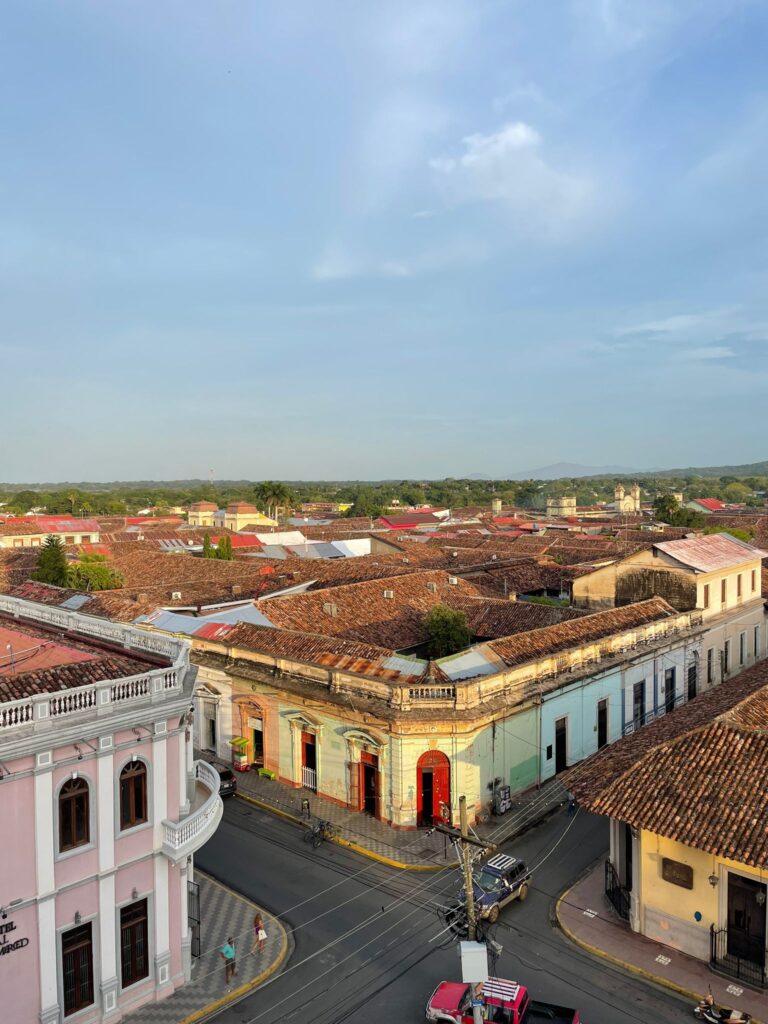
Granada is another colonial city with some similarities to Leon. This one is a great base for Volcan Masaya, has some cool islets to check out, and is even home to the best hostel I’ve ever stayed in.
Getting to Granada by Bus
From Managua you will need to head to the UCA Bus Terminal and buy a £4/US$5 ticket to Granada. The journey will take around 1.5 hours. If coming from Leon then you will need to change in Granada. It took me around 30 seconds to switch buses. It’s very easy.
From the south, you will need to take the 2-hour journey from Rivas for £1/US$1.25.
Getting to Granada by Plane
Once again, you will need to fly to Managua before getting a bus down to Granada.
Getting to Granada by Tourist Shuttle
To be honest, this isn’t necessary if you’re already in Nicaragua. The buses are far cheaper and safe to use. But if you really want one, then it will cost £15/US$20 or more.
There are no direct shuttles from other countries to Granada. There are shuttles that stop overnight in Leon and end up in Granada the following day for £81/US$110. I would suggest taking buses rather than shuttles once within Nicaragua.
Exploring Granada
Another gem of a colonial city.
Some people spend a few days here, but as good as it is, there are better places in Nicaragua, so I’d recommend spending just one night here unless you’re staying in the country for more than two weeks.
- Stay in Oasis Hostel. The best hostel (from maybe 150+) that I’ve ever stayed in. Oasis offers free rum-based drinks during happy hour early in the evening. They have free breakfast including delicious pancakes, there are plenty of tours which staff can help you arrange, there’s a pool, places to chill, private rooms… Oasis has it all. They even arrange regular activities in the evening such as trivia nights and much more. They really care about their guests too. Unlike most hostels, they will respond to negative reviews online, and in many cases make changes to improve the experience for future guests.
- Attend a magic show. Yes really. This may not sound like the usual sort of Nicaragua travel activity, given that this is a land for adventures, but it’s actually pretty fun! The Magician Lounge offers shows for £9 (US$12) per person and you can grab a drink from the bar whilst watching the magician perform. I won’t spoil the surprise, but this is a great evening activity in Granada. Despite rumours this had shut down, I can confirm it still runs in 2026.
- Do a free walking tour. Once again, this is a great way to get to know the city and learn all about the history. I must admit that Leon is better than Granada for sightseeing and importance in Nicaraguan history, but Granada still has some cool buildings and great scenery with volcanos in the background.
- Check out sunset from Iglesia la Merced. For around £0.80 (US$1) you can walk up the stairs to the top of the bell tower and you have great views of the city from above. It’s a lovely spot to get some great pictures.
- Take a boat tour of the Granada Islets. You can hire a boat to take you around Lake Nicaragua for around £16 (US$22) for one hour. It gets cheaper per hour for longer tours. There are 365 islets used for a variety of different purposes with some being inhabited, others catered towards tourists and some housing cool wildlife including monkeys.
Where to Stay in Granada
We’ll start with my all-time favourite hostel, Oasis Hostel which offers a great social vibe, free rum during happy hour, activities in the evenings, and tours to nearby hotspots including Volcan Masaya.
Another backpacking favourite is Boca en Boca, whilst Granada also has a Selina, which if you aren’t familiar, is a popular upmarket hostel chain, often catering towards digital nomads.
Day 6: Volcan Masaya
A volcano where you can see lava with your own eyes. If you haven’t been to Guatemala and seen Volcan de Fuego erupt, it’s hard not to be impressed by this spot.
Volcan Masaya is one of the coolest in Nicaragua!
Make clay with locals, enjoy stunning lake views, and see Volcan Masaya’s crater here!
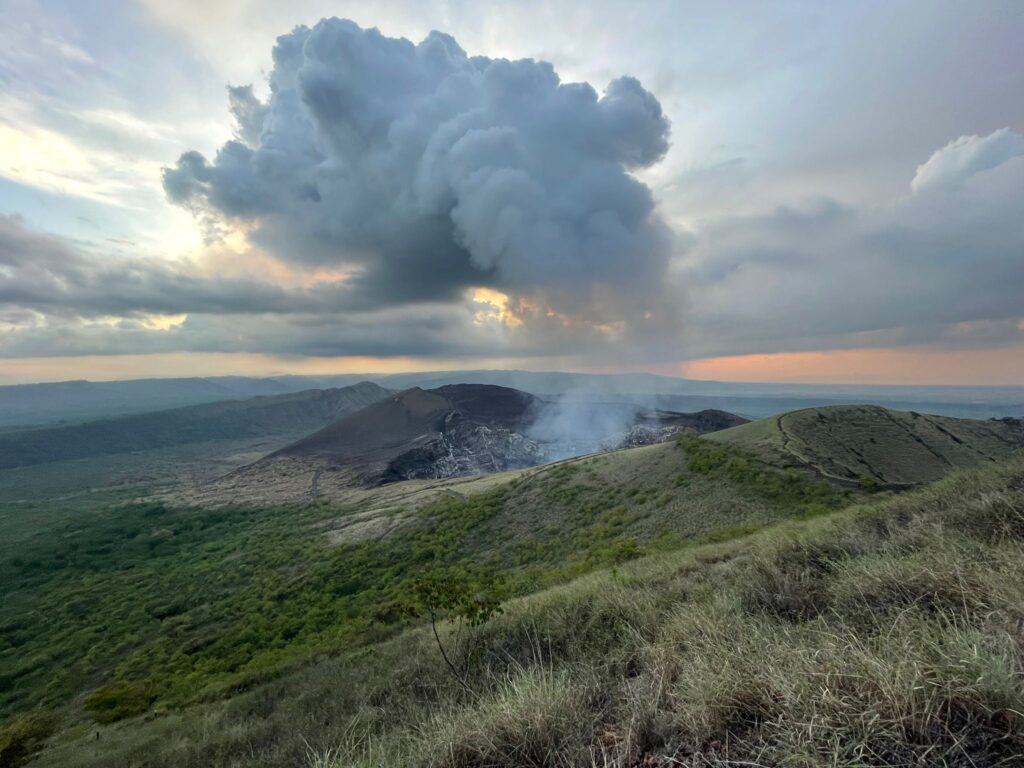
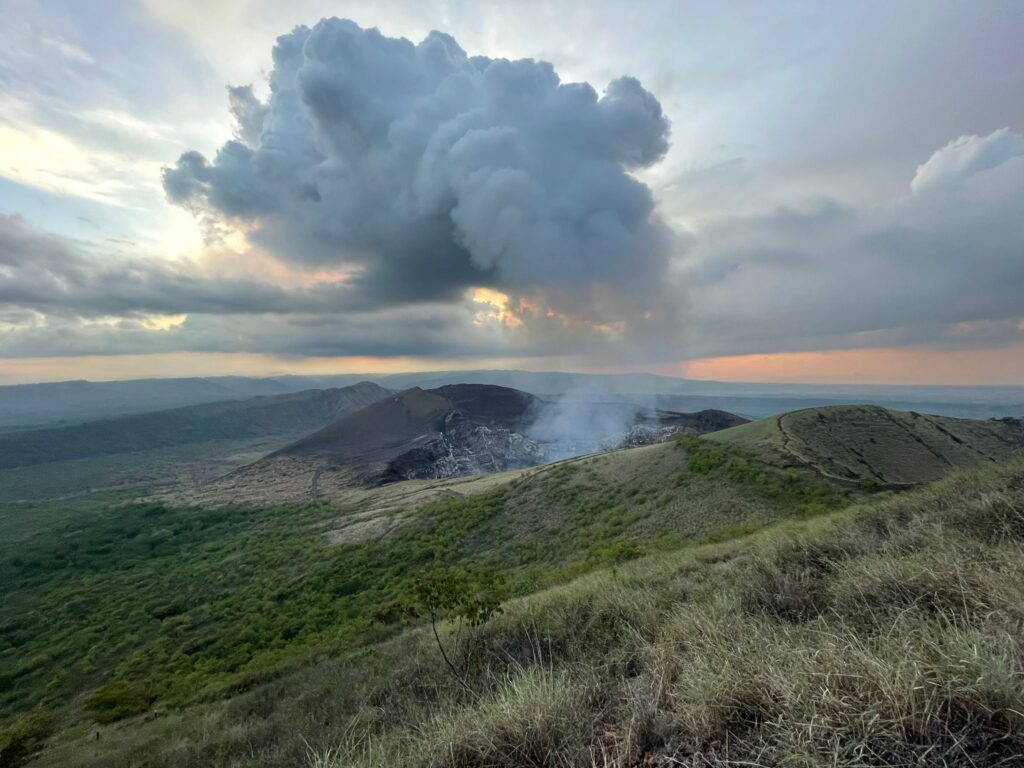
This is one of the highlights when backpacking in Nicaragua. You can see lava bubbling at the bottom of a volcanic crater, which is seriously cool.
You can now see lava once more, after landslides had previously blocked it off over periods in 2024 and 2025.
You can visit as a half-day trip from Granada just before sunset, which is a pretty awesome time to see the orange glow amid the darkening skies.
Spend the morning in Granada doing things you didn’t have time for yesterday, or just chilling in this relaxing city.
Then in the afternoon, you’re ready for a bucket list experience that helps put Nicaragua firmly towards the top of Central America’s best countries.
Many places around the city, including Oasis Hostel, offer tours to Volcan Masaya. Take one of these and you’ll do some trekking around the volcanic landscapes.
It isn’t even necessary for a day trip. The volcano is just 23km from Granada so you can do this activity in around 3-4 hours depending on traffic.
Even when you head to the volcano independently without a tour, it costs around £1 (US$1.25) for a one-way ticket. Plus £3/US$4 to enter the park during the day, and £8/US$10 to enter at night.
Coming here was one of my favourite moments in Latin America. It’s one of many things that made Nicaragua stick fondly in my mind for many years, and I highly recommend sticking it on your own “must visit” list.
Day 7: The Treehouse
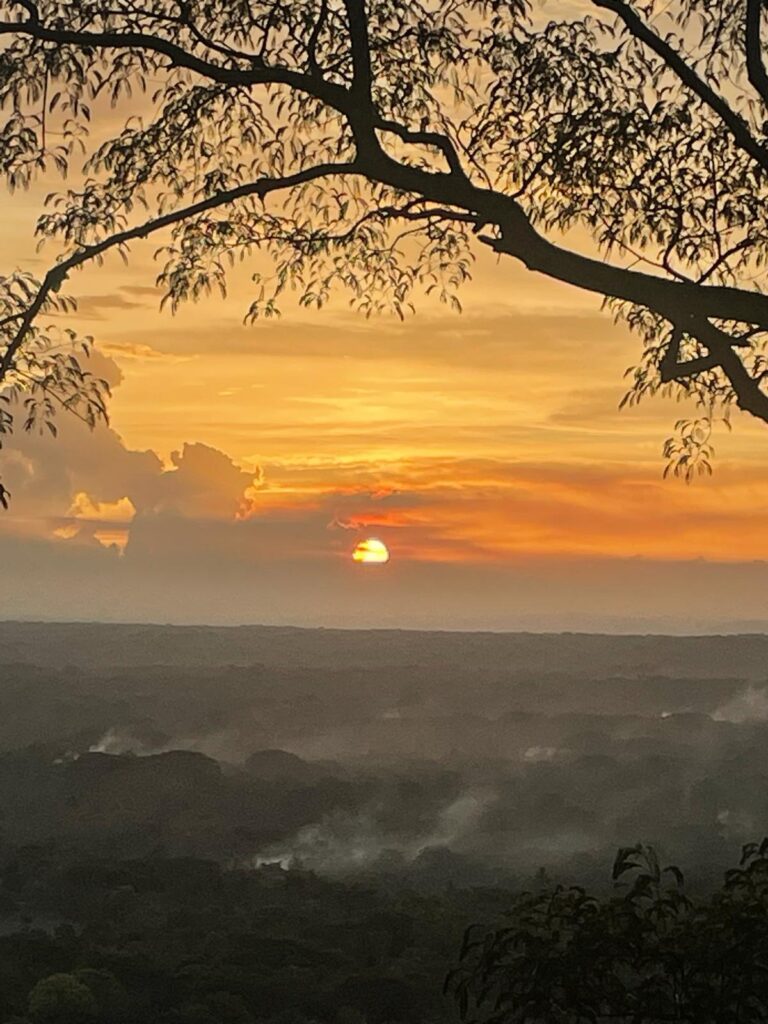
This hostel in the jungle is an awesome place to either immerse yourself in nature for a few nights, where you can chill in a hammock surrounded by monkeys, or you can party hard on a Friday night at one of their famous jungle raves.
Getting to the Treehouse
To reach the Treehouse Hostel you should take the free shuttle from Madhouse Hostel in Granada. It runs on Thursdays at midday and is only available to guests who have a confirmed reservation.
Unfortunately they changed the rules so you can only book 3-night stays, from Thursday-Sunday every week. A shame really, as I reckon a night is enough here.
Exploring the Treehouse
For your seventh day in the country, prepare to wind down and immerse yourself in nature with a night in the jungle.
On a 1-week Nicaragua itinerary you can skip this and get your wildlife fix at Charco Verde instead.
The Treehouse, or “Treehouse Nicaragua” as it is colloquially known, is… well, a treehouse in the jungle.
I wrote a more complete guide on whether Treehouse Nicaragua is worth visiting (although by the fact I’m including it in this itinerary, you can already guess the answer).
But to give a brief overview, you can spend a night looking out at the birds and monkeys in this jungle at the base of Volcan Mombacho. Then the main event is a big party every Friday.
I arrived on Saturday (back when this was possible) and many people were sluggish after the party, which meant they just chilled in hammocks all day. In the night we all gathered in the main area to watch movies.
Coming here is a cool experience that you won’t be used to if coming from the US or Western Europe. Don’t miss out!
Days 8-11: Ometepe Island
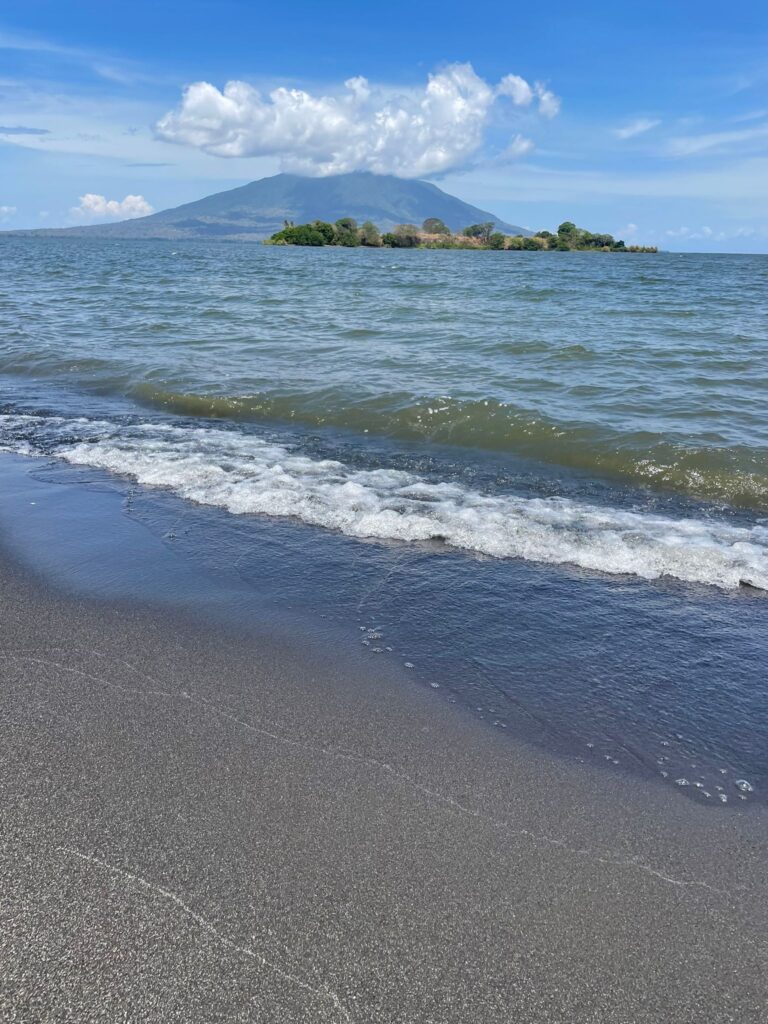
Probably my favourite place in Nicaragua, although the bar is pretty high. Ometepe is a nature paradise, an island dominated by two giant volcanoes, and home to awesome wildlife including anacondas and monkeys.
Getting to Ometepe by Boat
This is the only way onto the island. You will need to take a bus to Rivas, then a £1/US$1.25 taxi to San Jorge, followed by a £1/US$1.25 ferry to Ometepe.
Getting to Ometepe by Plane
This is no longer possible. Twice-weekly flights from Managua were discontinued, and it is no longer possible to fly to Ometepe. Instead the nearest airport is Costa Esmeralda International Airport north of San Juan del Sur. Take a bus to Rivas from there.
Exploring Ometepe
No matter whether you’re backpacking Nicaragua on the cheap, or travelling in luxury, Ometepe is not a place to be missed. This figure-of-eight-shaped island is easily accessible via ferry from San Jorge on the western shore of Lake Nicaragua.
Ferries run every half an hour throughout the day from 7am until 5:45pm (albeit with a reduced service on Sundays) so it’s pretty easy to reach Ometepe. Most ferries will drop you off in Moyogalpa.
This small town is the best place on the island to book tours and transport as it is where most tourists arrive to start their Ometepe adventures.
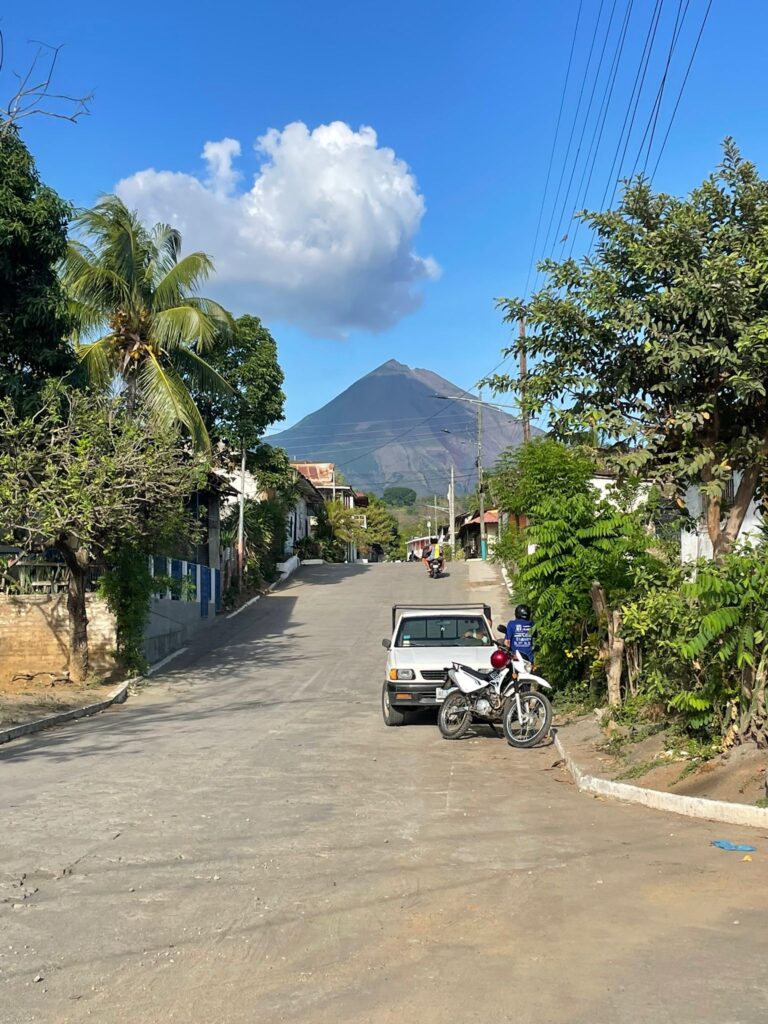
The island is most famous for the two volcanos (Maderas and Concepcion) poking out of each loop of the “8” shape. But what can you do to fill four days here?
Day 1: Charco Verde Ecological Reserve
Take the ferry across in the morning. Then make your way to Charco Verde for the afternoon, one of Nicaragua’s most underrated gems.
I absolutely love this place. Charco Verde is one of my favorite places not just on Ometepe, but in Nicaragua overall.
Boa constrictors can be found here, although I wasn’t able to find one unfortunately. On the plus side, loud and cheeky howler monkeys are easy to find, as are the incredible dung beetles which live amongst the dirt.
I’m sorry, but seeing a tiny bug pushing a giant ball of… you know, was actually really exciting to watch. Either that, or I’m just easily satisfied. I’ll let you decide the answer to that…
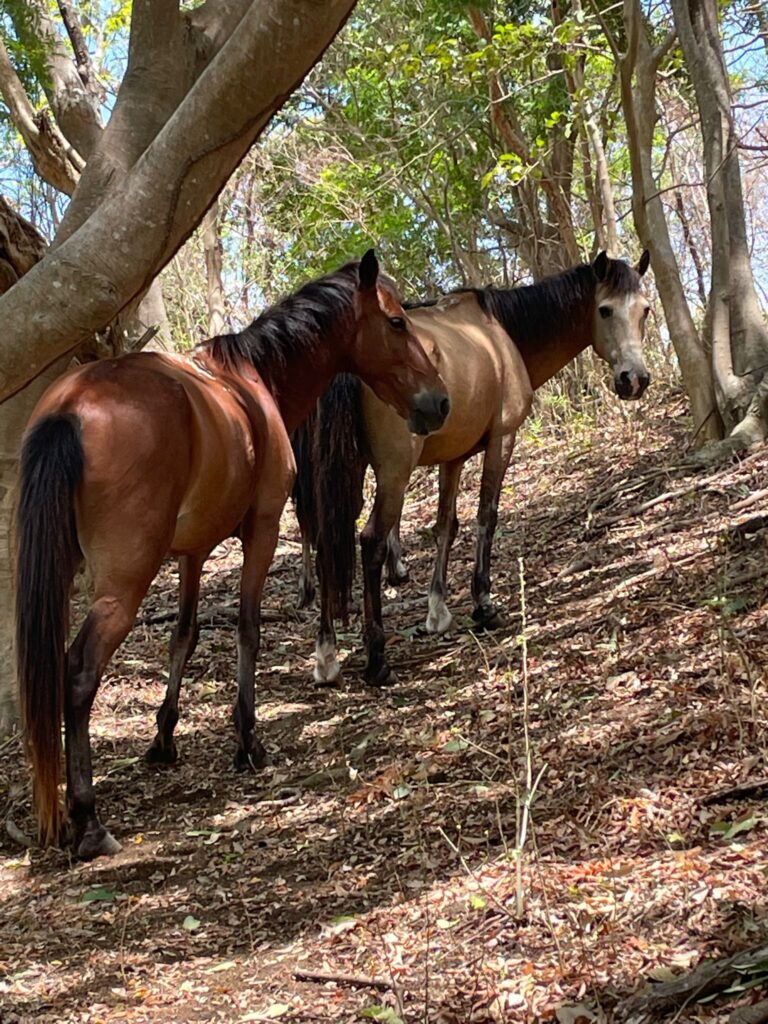
There are also wild horses, many birds and a whole garden dedicated to colourful butterflies. Check out my Charco Verde guide for more information.
If you’re following the 1-week Nicaragua itinerary, Charco Verde is the better wildlife experience compared to Treehouse Hostel. Both are awesome, but if you’re tight for time and only have the opportunity to visit one, make it this one.
Day 2: Hike Volcan Concepcion
You will need to be fit for this one. It takes 7-9 hours to hike up and down, and this is certainly more taxing than Cerro Negro Volcano.
The guide will take you through some rugged grassland up towards the notoriously cloudy summit. Watch out for wildlife along the way. The deadly coral snake lives in the grass here, and if one bites you, then I hope your travel insurance covers a good coffin… Wear long protective boots here, Ometepe’s healthcare options are atrocious.
Needless to say, this will be your only activity on day two, you will be pretty shattered by the end of it.
Fancy Nicaragua’s toughest hike?
Volcan Concepcion is great for those who love a challenge!
Enjoy the local wildlife as you ascend towards the summit
Day 3: Ojo de Agua, San Ramon Waterfall and Punta Jesus Maria
Make your penultimate day on the island a relaxing one. Head to Ojo de Agua at the base of Concepcion to chill in the natural springs. As with most minor activities in Nicaragua it costs £2/US$3 to enter.
Then visit San Ramon waterfall which is located near Volcan Maderas. It takes around 30-40 minutes to reach whilst hiking up, so be sure to take this into consideration.
Continue your day of (relative) rest with a trip to the beach. Namely Punta Jesus Maria which is just south of Moyogalpa. It has a spit with water coming in from both sides. The spit costs around £0.80 (US$1) to enter.
Stay here until sunset and prepare for one final big adventure on Ometepe before you return to the mainland.
Day 4: Hike Volcan Maderas
Concepcion’s little brother really isn’t so little after all. It takes a similar amount of time to hike up and back down (around 7-9 hours) and you traverse through cloud forests to reach the top.
A guide isn’t necessary for this one, but I’d strongly recommend one. Even experienced adventurers failed to make it back alive after going without a guide. With a guide however, the hike is very safe. Easy? Not at all, but certainly safe.
Once you’ve made it to the top, you can safely say that you’ve conquered both of Ometepe’s famous peaks.
Take a guided tour with a professional who can keep you safe
Enjoy adventure without putting your safety at risk
Where to Stay on Ometepe
Rancho Tranquillo in Moyogalpa is best known for its friendly staff, great breakfasts and the fact you feel immersed in nature. It has a 9.6 rating on Booking from over 150 reviews, which just goes to show how popular it is!
Also in Moyogalpa, Hotel Victoria has a scenic swimming pool outside and is popular because of stunning mountain views.
Days 12-14: San Juan Del Sur
Lastly, we have Nicaragua’s popular surf spot, party hub, and beach sunset paradise on the country’s western coast. You’ll find a ton of fellow backpackers down here. It’s a pretty common start point if arriving from Costa Rica.
Getting to San Juan del Sur by Bus
You will need to take a bus to Rivas. From there you can catch another bus to San Juan del Sur. Buses run (roughly) hourly from 5am-5pm and cost under £0.50/US$0.63.
Getting to San Juan del Sur by Plane
The nearest airport is Costa Esmeralda International Airport. From here you must take a bus to Rivas, before catching another bus to San Juan del Sur.
Getting to San Juan del Sur by Tourist Shuttle
It is possible to take a shuttle either from elsewhere in Nicaragua (starting from £16/US$22). Or from abroad, with prices starting from £48/US$65 if coming from Tamarindo in Costa Rica. I don’t recommend domestic shuttles unless you are tight for time. Buses are safe and much cheaper.
After several days of volcano adventures, it’s understandable that you’ll be a little shattered. You will spend the morning of day 12 travelling, firstly via ferry to reach the Nicaraguan mainland once again, then by bus or taxi to San Juan del Sur.
You have two options. The direct taxi is the fastest, costing £16/US$22. This should take just over 30 minutes. Perhaps up to an hour if you’re unlucky with traffic.
The cheap option is a £0.80-1.60/US$1-2 taxi from Santa Jorge to nearby Rivas and then a bus to San Juan del Sur for around £2/US$3. If you’re backpacking Nicaragua on a budget, then this is the choice for you.
Exploring San Juan del Sur
Now that you know how to get here, it’s time to get stuck into the activities you can look forward to.
Day 12: Relax On The Beach
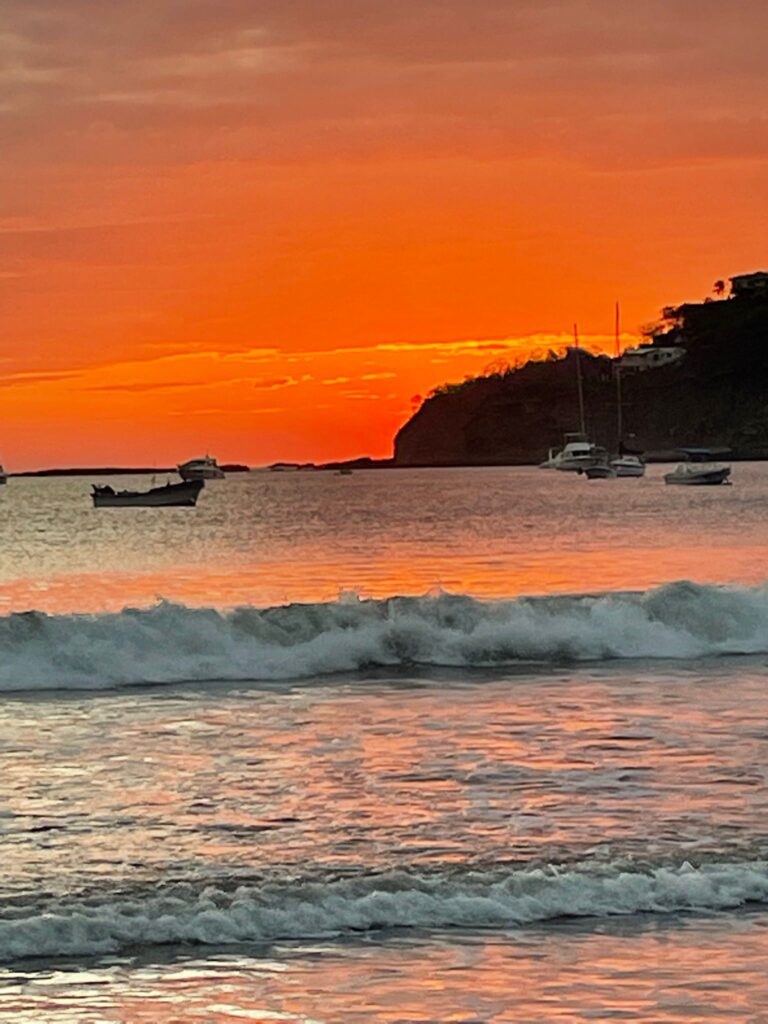
Once you’ve made it over from Ometepe, it’s time for some well-deserved downtime. Just sit back, watch the waves come in, and enjoy the absolutely beautiful bright-orange sunsets. In fact, SJDS, as the town is often known, has some of the best sunsets I have ever seen.
Grab yourself a rum or Toña (or the less impressive Victoria beer) and enjoy this Central American spectacle before calling it a night.
Day 13: Give Surfing A Go In Nicaragua’s Primary Surf Spot
SJDS is like Mecca for surfers. The wet season has the biggest waves although the dry season may be more beginner-friendly with better weather and smaller waves to contend with.
If you’re a surfing newbie, lessons cost around £19-22 (US$25-30) per hour, often with the option to keep the board for the rest of the day thrown in. The pros will tell you that surfing for an hour or two can be pretty exhausting, so you may well be looking at another quiet evening to recharge your batteries.
Playa San Juan del Sur has plenty of restaurants overlooking the bay, so you can grab a bit of seafood for the evening and enjoy a quiet stroll along the beach for another splendid sunset.
Day 14: Short Cristo De La Misericordia Hike And Wild Parties
After Ometepe’s two challenging volcano treks, you can reward yourself with a shorter hike in SJDS. It takes around 35-45 minutes to walk from the beach up to a statue of Jesus, known as “Christ of the Mercy” in English.
The statue costs £1.50 (US$2) to visit and you are rewarded with views of San Juan del Sur Bay from above.
You can enter the statue of Jesus to find… another statue of Jesus. This one is much smaller (duh, it wouldn’t fit inside the big statue if it was bigger) and is surrounded by lots of information boards talking about Jesus and his links to SJDS.
For the sake of clarity, that’s information about the Jesus statue rather than Jesus himself. The real Jesus wasn’t riding gnarly waves before cracking open the Flor de Caña. At least I don’t think he was…
Anyway, the Jesus-meets-bay-views vibes make SJDS feel like a mini Rio de Janeiro, which certainly isn’t a bad thing.
In the evening, you can go full gringo backpacker by joining one of many wild parties in the area. Find any popular hostel and you will be able to start your night and find out where to go, regardless of whether you are a guest or not. I stayed at Surf Town Hostel which has a big bar, a swimming pool and other activities such as a pool table. A perfect spot to get ready for the nightlife.
Now if you’re in SJDS on a Sunday, then you’re lucky enough to be there in time for Sunday Funday, a wild pool/bar crawl that takes you to four locations with a free shot at each. You will also receive free shuttle rides between each location. Tickets are a little steep, costing £30/US$40 once taxes and a booking fee are added to the ticket price.
Now Sunday Funday may not be an authentic Nicaraguan experience, but if you like letting your hair down every once in a while, this is the place to do it. Teens and early 20-somethings absolutely love this event. For us oldies on the wrong side of thirty, it really depends on whether or not you’re still into the whole bar/nightclub/party scene or not.
Where to Stay in San Juan del Sur
If you’re looking to splash out on a beachfront hotel, then look no further than Morgan’s Rock where you can enjoy the incredible sunsets from.
The Flamingo Experience offers similar luxury, complete with private beach access.
Budget travellers will prefer the Four Trees Jungle Lodge which is a few miles from the beach, but offers great mountain scenery instead.
Is There Anything Else Worth Seeing In Nicaragua?
Oh yes! If you’re looking for a 3-week Nicaragua itinerary, then the obvious addition would be the Corn Islands.
The larger of the two is called Big Corn Island. Now it must have taken a while to come up with a name for the smaller one, but they eventually settled on Little Corn Island.
The Corn Islands are the place to be in Nicaragua if you’re into diving and snorkelling. They’re a little out of the way, but worth visiting if you’re into nice beaches and water activities.
They also attract smaller crowds than SJDS so they may be a better option for just chilling on the beach.
If coming down from Honduras, then Esteli is about as close to Honduran capital Tegucigalpa as Leon. This city is best known for tobacco production. It makes a lot of cigars and has strong links to Cuba, a country famed for cigar-loving ex-leader Fidel Castro. Tourists can visit a cigar factory and go hiking in the surrounding countryside here.
Now Nicaragua is known as “the land of lakes and volcanos” so guess what else is worth visiting here?
That’s right, more lakes and volcanos! I’ve already covered the main ones, but if you are backpacking Nicaragua for a longer time period, or you have an extended holiday here, then there are many others to be seen.
Apoyo is the pick of the remaining lakes. It’s an easy short trip from Granada, taking little over 30 minutes to reach by car.
Lake Asososca is another one worth seeing. You can easily combine this with a volcano boarding tour with Volcano Day in Leon.
As for volcanos, San Cristobal Volcano is both the highest and the hardest hike in the country. One for adrenaline junkies only in all honesty.
Meanwhile, Mombacho which rises above The Treehouse Hostel is an easier trek, and home to cloud forests where lots of wildlife can be found including awesome sloths!
Other Things You Need To Know About Visiting Nicaragua
Here are the answers to a few common questions I often receive on Nicaragua travel.
Is Nicaragua Cheap?
Nicaragua is cheap. In fact it is one of the cheapest countries in Latin America. You’re looking at spending around £16 (US$22) per day here before taking activities into account.
In fact I’d go further and name it as one of the world’s most affordable countries to visit.
And the activities aren’t expensive either given how awesome this country is and how much it has to offer. It costs around £2.50 (US$3) for many cheaper activities, and around £20-30 (US$27-41) for anything major.
Of course you can find activities costing more than this, but they are the exception rather than the rule.
What Is The Weather Like In Nicaragua?
Nicaragua is a tropical country with warm weather remaining at a consistent 26-29 degrees Celcius (79-84 degrees Farenheit) on any average day throughout the year. It has a wet season from May-October, with the dry season lasting from November-April.
Is Nicaragua Safe?
Yes. Nicaragua is very safe in terms of crime. The only place to be a bit wary is capital city Managua. There is little of interest to tourists here, and it has a reputation for being a little dodgy at times.
I met tourists who were scammed here and have heard a fair few horror stories whilst travelling across Central America. With a bit of common sense (travelling only in daytime, not flashing valuables, following these travel safety tips etc.) you shouldn’t have any issues here, but really there’s no good reason to visit Managua.
Also, don’t be dissuaded from visiting this beautiful country by government travel advisories, which always err on the side of caution and exaggerate safety in other countries.
From my experience travelling to 92 countries at the time of writing, government websites are often slow to update safety advice (often by weeks) and are an unreliable source of information for this.
They are, however, great to find a country’s latest entry policies and visa requirements (if you’re from the country whose website you’re looking at).
Is Nicaragua Easy To Get Around?
Yes. There are regular chicken buses connecting pretty much every major destination within the country for little more than a dollar or two per journey. You don’t need a travel guide to get around in Nicaragua, although basic knowledge of the Spanish language goes a long way here.
Most medium-to-large-sized cities and towns have a small, often chaotic bus station. You should go here and ask when the next bus to your chosen destination leaves.
If you feel you may struggle with this due to a lack of Spanish, speak to staff at your accommodation who will provide you with all the information you need.
Bus schedules in Nicaragua are generally rough guides rather than reliable information. This is not Japan. I would recommend taking taxis if you need to be somewhere at a specific time (for example, the airport to leave the country).
A taxi between cities in Nicaragua will cost less than a bus or train in the UK. You’re looking at around £20-80 (US$27-108) as a rough guide to get between two cities of any distance.
Obviously the higher end of the price range covers trips spanning the entire length of the country, whereas the lower end connects cities or towns which are relatively close to each other.
Trips to Nicaragua are pretty easy to arrange independently without relying on local guides.
Who is this Nicaragua Travel Itinerary Good for?
Nicaragua is an adventure destination. It is popular with Central America backpackers following the Gringo Trail from Mexico down towards South America.
Solo travellers and adventurous couples will love Nicaragua with all the natural beauty and activities on offer here.
Nicaragua is a budget traveller’s dream, and remains one of the cheapest countries I have visited (from 70 at the time of writing).
I would say that Nicaragua is not such a family-friendly destination. It doesn’t have so much to offer for children, and travelling around the country can be a fairly rugged experience.
Most people will visit Nicaragua and love it however. And I will add my voice to many who have visited both this lesser-known gem and more popular neighbour Costa Rica, and will say that Nicaragua is by far the better option.
If you want a more personalised itinerary for Nicaragua catered towards your specific interests, I’ll be more than happy to plan your trip for you.

Nice breakdown Alex. We loved spending a month and a half in Granada. Charming colonial city. As for pockets of Managua, tourists would be wise to fly in and head out to the coast, jungles, forests, highlands, etc. The reason is identical to why I would not hang out in the South Side of Newark in my home state of New Jersey in the USA. Most humans avoid rough areas all over the globe. Nicaragua is a cool place definitely on the come up.
Ryan
Yeah Nicaragua is incredible! Would recommend it to anyone. Easily my favourite country in Central America. Got something for everyone here.