
The Best Things to do in Balkh During Your Afghanistan Trip

Disclaimer: Some links on this page may be affiliate links. If you purchase anything through them, I will receive a small commission at no extra cost to you! Further details in the Privacy Policy.
Balkh was the first part of Afghanistan I really got to explore. Having arrived in Mazar-i-Sharif just as the sun set the previous night, I didn’t see anything on my first day.
The following day, I went to the permit office in Mazar with a guy I’d met whilst sorting our Afghan visas out in Termez, and we met another tourist alongside his guide. The three of us got our permits together (I’ll go into permits below, it’s kinda important), then we teamed up and went with the guide on a spontaneous tour of Balkh.
And Balkh was like a different world compared to anything I’d seen before. It took a while to hit home that we were actually exploring Afghanistan, the country you only ever hear about when something terrible happens and it makes the news.
But here we were, exploring historical sites, interacting with locals in the markets, and hanging out with a Taliban bodyguard who was sent to join us. A surreal experience for sure.
You will probably visit the same places that I did when you visit Balkh, so I’ll give you a little idea of what to expect, and what you need in order to go there.
How to Visit Balkh: Permit and Guide Rules
You need three things to visit Balkh: a permit, a guide, and a Taliban bodyguard. I’ll explain each of them here.
Permits: You will need a permit to visit Balkh province (which includes both Balkh and Mazar-i-Sharif). Permits can be purchased for 1,000 afghanis (£12/US$16) per province, and you get them from the Afghan Tour offices in key cities.
I have links to known Afghan tour offices in my comprehensive Afghanistan travel guide. They’ll show you the exact Google Maps locations. Our permits took just under an hour to process, but yours may vary in time, especially if there are other people obtaining permits at the same time (we were the only ones when we went to the office in Mazar).
The Taliban will ask several times for your permits at traffic checkpoints and attractions, so it’s vital that you have them. I was interrogated for around 40 minutes when visiting Band-e-Amir National Park, even with the correct permit for Bamyan province, because they weren’t happy that I was going without an interpreter. They do love bureaucracy here.
Tour guides: Officially, you need a tour guide to accompany you everywhere you go in Afghanistan. But one thing I learned quickly, is that they don’t apply rules consistently, and a tour guide wasn’t needed for most places I went.
Except Balkh.
The Taliban were adamant that we could not go to Balkh without a guide, and sure enough, our vehicle was stopped a couple of times for permit checks. It’s the one place where having a guide really was mandatory. I liked that though.
Our guide Anas was very knowledgeable and taught us all about Afghanistan’s bleak recent history, whilst also translating for us where necessary, so his presence made the experience much more enjoyable than looking at random ruins wondering what they are.
Be sure to get a reliable tour guide though and not a random chancer who reaches out on Facebook. Low-quality tour guides LOVE soliciting for business through social media. Avoid them at all costs.
Taliban bodyguard: The third requirement for your Balkh trip is a compulsory Taliban bodyguard. Don’t worry about finding one, your guide will sort this by taking you to the police station in Mazar-i-Sharif and finding someone to go with you.
The police station is a cool cultural experience in its own right. Inside you have a plain room with nothing but carpets to sit on, where you can converse with staff working there. It’s nothing like the fancy high-tech places you’d expect in the west.
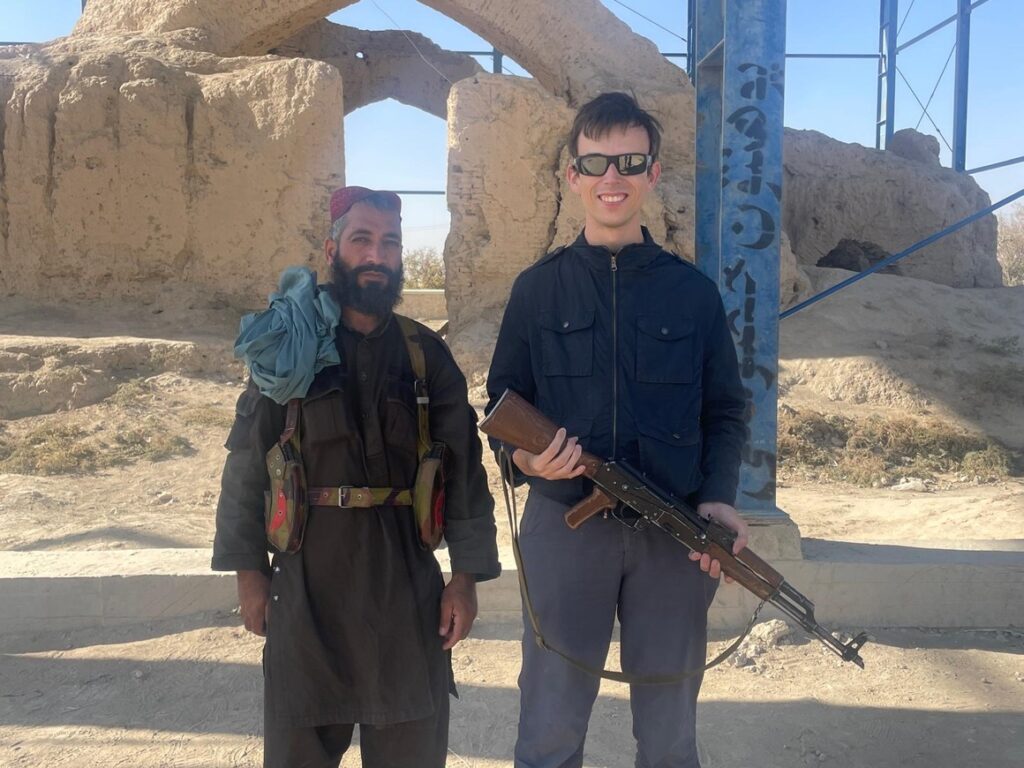
They told us that the guard is just for show these days. He would often stand nearby when we were out exploring Balkh, keeping a lookout for us with his massive gun. But Anas told us he was there purely for show rather than safety.
It’s cool at least. We took a few pictures outside the house of the poet Rumi, posing with the bodyguard’s gun. Not that a British person like myself has any idea how to handle a gun correctly, we don’t need them back home!
Technically, there was no cost to bring the guard along, but we were asked for a tip, and gave 200 Afghanis each (600 total, which is £7/US$9). It was worth it purely for the fun experience of having an armed guard with us.
Things to do in Balkh
Balkh doesn’t have a ton of things to do. Really you can see everything in under 2 hours here. It’s a fun morning out, but not somewhere you’ll need to dedicate serious time to. Here are the top things worth doing in Balkh:
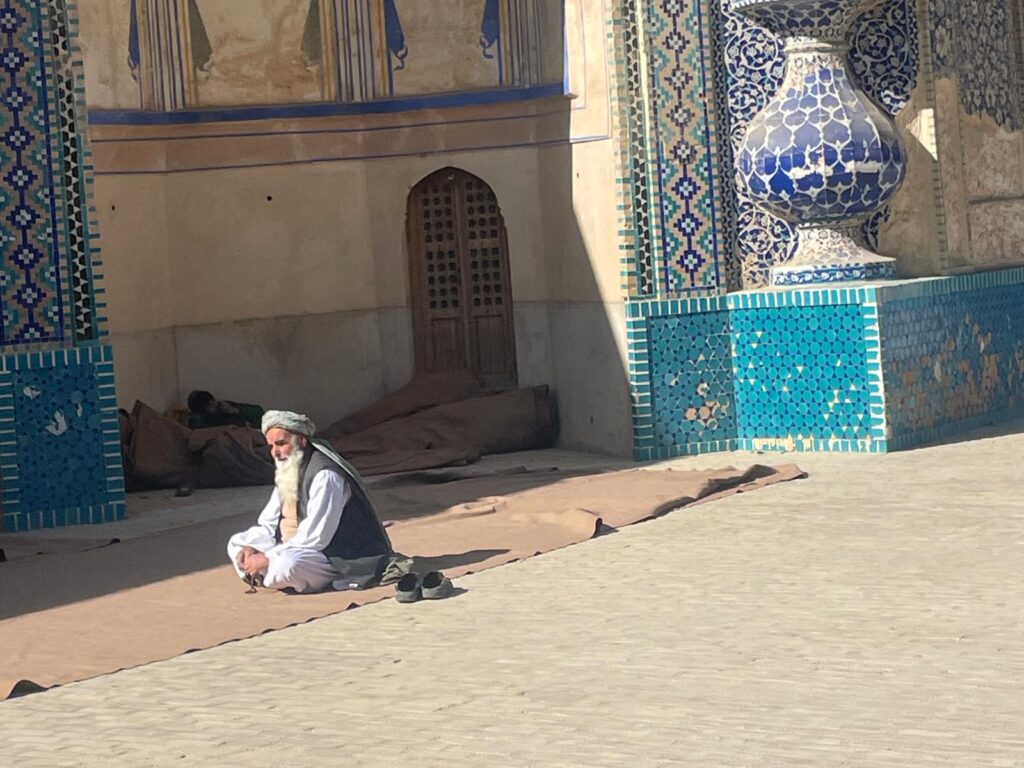
Visit the Green Mosque
If you’ve come from Uzbekistan then you’ll be familiar with Timurid architecture, where mosques are covered in intricate designs, and capped off with giant blue domes at the top.
The Green Mosque is pretty much the same thing. After centuries of weathering by the dusty environment, the Green Mosque’s bluish dome has faded and turned a different colour instead. As the name suggests, that colour is green.
The mausoleum of Khwaja Abu Nasr Parsa is located inside the mosque, but you cannot enter any mosque in Afghanistan if you are non-Muslim, therefore you will have to appreciate its beauty from the outside.
There is one exception in Kabul I have heard, but generally non-Muslims must stay outside elsewhere.

See the Tomb of the Poet Rabia Balkhi
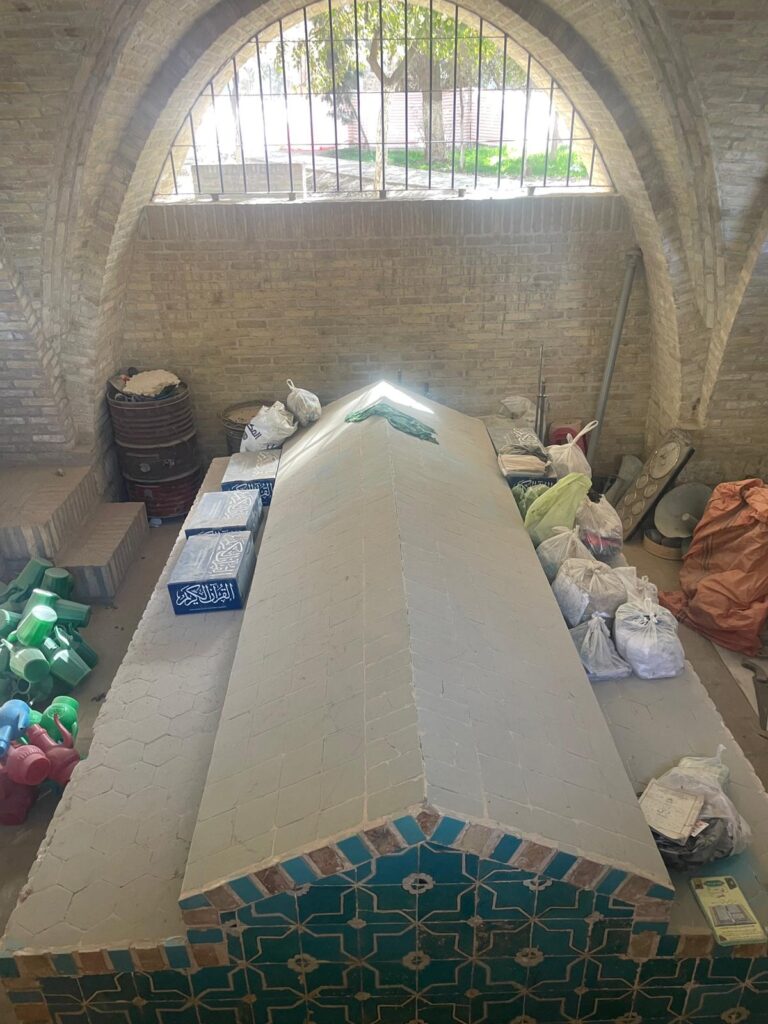
Just opposite the Green Mosque is a small tomb. You cannot enter, but you can peer through the bars where you will see a grave taking up most of the space inside, bizarrely surrounded by several plastic jugs and a few shabby carrier bags.
This is the tomb of Rabia Balkhi, a 10th-century poet whose memory lives on 1,000 years after her death.
She was known for falling in love with Bektash, a Turkish slave who belonged to her brother. Her brother became jealous and locked her inside a cell, where her wrists were slit, and she used her blood to write love poems on the walls before she died.
Yeah, Afghanistan’s answer to Romeo and Juliet is just as gruesome as the western version I’m afraid…
You can snap a few pictures here, and then walk a couple of minutes further on for the next stop.
Explore Balkh’s Fascinating Street Markets
Street markets in Afghanistan are completely different to anything else you have probably experienced abroad.
As a foreigner, you absolutely will stand out here. And that means a lot of people will stare at you. Balkh’s small markets are no different.
The good news is that Afghans are VERY welcoming to guests. I was offered tea on numerous occasions, and even given snacks by vendors for free during my time in Afghanistan. They would always follow kind gestures by saying “welcome to Afghanistan, you are a guest in my country” or something along those lines.
And you can expect no different here. You may be invited to join locals for tea, and you will definitely be asked for many photos.
Perhaps the biggest culture shock you’ll experience in Balkh’s street markets will be the young boys working as food vendors. Some of them are only around 10 years old, yet will sell bolani and other Afghan street food favourites from their tiny stalls. As you’ll see across Afghanistan, it’s only males, young and old, who work in public-facing roles.
Balkh’s street markets aren’t as intense as the ones in Mazar, but they’re still fun to check out.

Walk Along the Walls of Ancient Balkh
Balkh was once an ancient fortress city. But in the year 1220, Genghis Khan did what he did best, and sent an invading Mongol army to capture Balkh. In true Genghis style, he succeeded, leaving a large trail of destruction in his wake.
Balkh never recovered from this event. It was once a very important city. But now it’s a small and humble town, surrounded by the remnants of the walls which Khan partially destroyed.
The good news is that the walls weren’t completely obliterated. Some of them still function, which makes them fun to walk across as your guide explains everything that took place here.
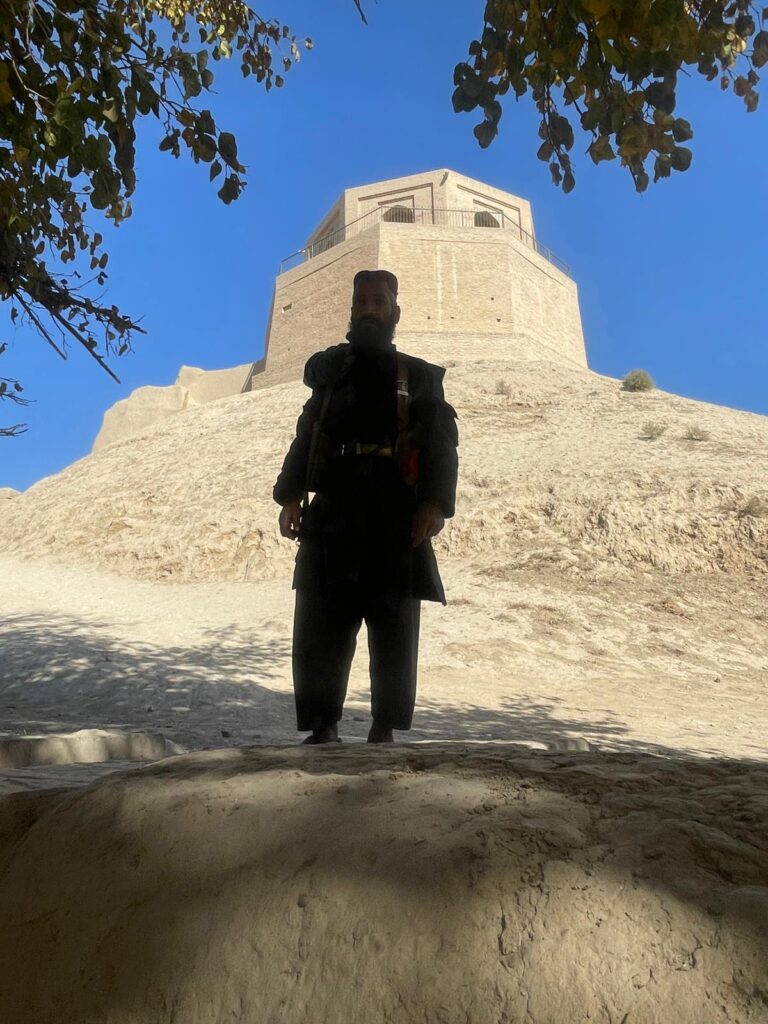
Our Taliban guard went ahead of us to keep a lookout, even though he wasn’t really needed. Especially around the walls where very few people still live within the immediate vicinity.
Really, the only danger here is that you’ll get covered in dust from the arid steppe. Trust me, it gets very windy up there.
Enter the Home of Famous Poet Rumi
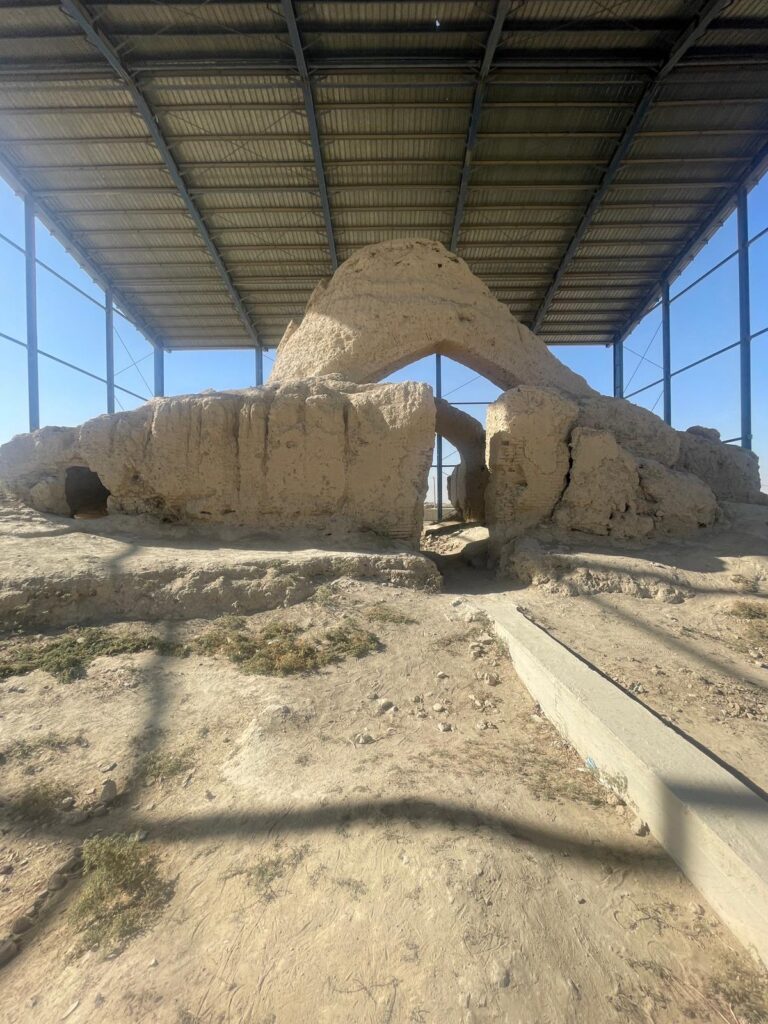
In a clearing near the ancient walls of Balkh, you have the crumbling house of Rumi, a famous Persian poet who was born here in 1207. I’m just impressed that they’ve managed to preserve birth records from over 800 years ago.
Rumi became famous for his works, with the Masnavi, a collection of 6 books exploring spirituality, perhaps his most famous.
Today it’s possible to visit Rumi’s house, or at least what’s left of it. Around 2 weeks before I was in Balkh, there was a massive earthquake nearby that was so severe, it woke me up 500km away in Bukhara (Uzbekistan) and rocked my bed.
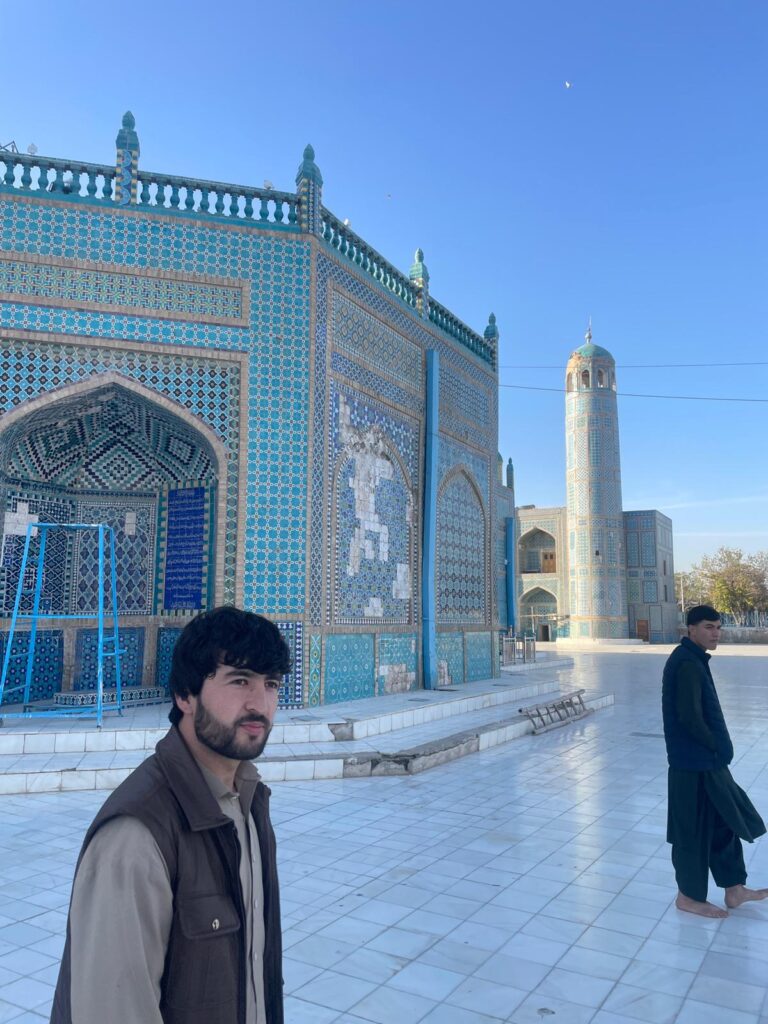
This damaged a fair few buildings in Balkh, Mazar-i-Sharif and surrounding areas. Mazar’s famous Blue Mosque was covered in scaffolding as a result, and I also found a giant rubble pile in Rumi’s house (which you can enter).
Turkey, the country where Rumi spent most of his life and eventually died, has funded a preservation project to protect what’s left of Rumi’s home. That’s why you’ll see a roof over it in the picture below.
It’s cool to see this crumbling building surrounded by wasteland, knowing that it was the house of one of Persia’s most famous artists.
Learn About the Former Opium Production Fields Surrounding Balkh
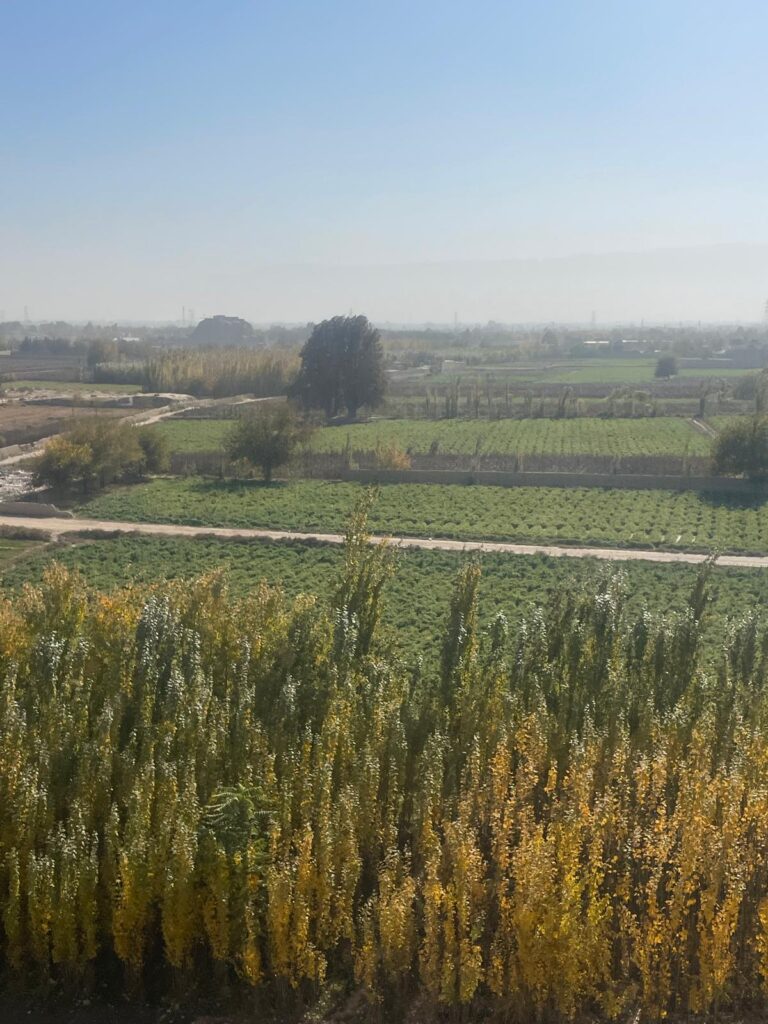
During the US occupation era from 2001-2021, Afghanistan had huge problems with opium production which was used to make heroin. Farmers made big profits from harvesting poppy fields, and selling their produce to willing buyers.
The country was the world’s biggest opium producer, until the Taliban banned it and Myanmar overtook it. War aside, Afghanistan had safety issues across the country when heroin was rife, with addicts roaming the streets and causing problems for normal everyday people minding their own business.
The Taliban’s no-nonsense approach to crime saw the poppy fields destroyed and addicts become virtually non-existent over the past few years. The real losers were the farmers, who now have to cultivate their land for less harmful products such as cotton. And this is a lot less profitable.
Anyway, you can pass several former poppy fields when you drive into and out of Balkh. Your guide can explain the history in full, so it’s pretty interesting to see part of what was once one of the world’s biggest drug problem spots.
Where to Stay When Visiting Balkh
There isn’t any accommodation in Balkh for tourists, and since you need a guide and a guard to be there regardless, it isn’t feasible even if you did find locals who would let you stay (which is illegal and could get them in trouble).
Besides, you can see everything of interest in Balkh within 2 hours.
Instead, you should stay a 30-minute drive away in Mazar-i-Sharif, the main city in Balkh province.
I highly recommend staying in Rahat Hotel. This place is a little pricier than anywhere else I stayed in Afghanistan at around 2,000 afghanis per night (£24/US$31). However, it’s fantastic value for money, as the staff will really look out for you here.
The manager speaks English, and when I had a night bus arriving from Kabul at 5am, he let me check into my room at that time, despite check-in not officially beginning until early afternoon. Now that’s Afghan hospitality for you.
He also helped me exchange money, gave tips on transport (night buses both to and from Kabul run from 5pm every day… well, plus a couple of extra hours whilst waiting for them to fill up…), and was invaluable for the information he provided to help me get around Afghanistan, a country that certainly isn’t for beginner travellers unless you’re fluent in Dari.
Accommodation options in Afghanistan are often pretty rugged. Rahat is a little dated, but for the service you get, it’s definitely the best place to stay. There are cheaper options, but the reviews aren’t appealing. And I recommend staying in a place with an English speaker so you have allies just in case something goes wrong with the Taliban.
Those chaps love bureaucracy these days, so it’s not hard to run into obstacles during your stay here.
Rules to Know When Visiting Balkh
The rules you need to be aware of in Balkh are the same as elsewhere in Afghanistan. Keep these in mind so you don’t end up in trouble (although your guide should be able to warn you of anything important regardless).
One thing I will say, is that rules change often in Afghanistan, and when they do change, the new rules aren’t always enforced. Be sure to ask your guide to stay aware of any changes.
- No photos of women or girls. This is an especially important rule to follow for male travellers.
- No photos of checkpoints. Don’t take any pictures when the Taliban stop your vehicle to inspect your permits.
- No photos of the Taliban without permission. We were able to take pictures with our Taliban guard after asking. But you cannot snap the Taliban in general unless they say it’s okay to begin with.
- Non-Muslims cannot enter the Green Mosque. This rule also applies to almost every mosque in Afghanistan.
- You cannot stay with locals. As mentioned above, you cannot stay with locals, which means no Couchsurfing. Mazar-i-Sharif is where you will almost certainly be spending the night when you come to Balkh.
- You must have your permits and passport with you at all times. You can get in trouble without them.
FAQs on Visiting Balkh
Is Balkh Safe For Tourists?
Yes. It’s a small town surrounded by Taliban checkpoints, where they monitor who is coming and going. Afghanistan is much safer than it was before, and the Taliban bodyguard you require is for show rather than safety these days.
How Long do I Need to See Everything in Balkh?
You only really need 2 hours here, 3 if you spend a bit longer hanging around in the markets or stopping for lunch (or sheer yakh ice cream as we did). It’s cool, but not packed with activities.
Can I Visit Balkh Without a Guide?
No. Whilst guides are technically mandatory for tourists in Afghanistan, this rule isn’t commonly enforced. However, it is enforced when visiting Balkh, and you won’t be able to visit without one.
More Posts on Afghanistan
- The Best Things To Do In Balkh During Your Afghanistan Trip
- The Complete Guide To Watching Buzkashi In Afghanistan
- What I Wish I Knew Before Travelling To Afghanistan
- What Are The Best Things To Do In Mazar-i-Sharif?
- How To Cross The Hairatan Border From Termez To Mazar-i-Sharif
- How To Get An Afghanistan Visa In Termez (Uzbekistan)
- The Complete Afghanistan Travel Guide
