
What I Wish I Knew Before Travelling to Afghanistan

Disclaimer: Some links on this page may be affiliate links. If you purchase anything through them, I will receive a small commission at no extra cost to you! Further details in the Privacy Policy.
Travelling in Afghanistan was one of the most magical experiences of my life. From drinking tea with everyday people and Taliban members alike, to watching buzkashi, a sport so brutal it wouldn’t look out of place alongside the gladiatorial battles of Ancient Rome, Afghanistan has many unique experiences to offer.
But it’s not an easy country to travel in. My itinerary was torpedoed by transport issues, discomfort is almost as common as the numerous tea invites you’ll receive, and English is scarcely spoken which could cause issues if you run into problems with the Taliban.
Here are several things that I wish I knew before travelling to Afghanistan as a tourist for the first time.
English-Speaking Allies Are Essential In Afghanistan
In the modern era, you’re probably used to travelling with a stack of apps that simplify your experiences, such as Uber and Booking.com. I’m afraid you can’t rely on those in Afghanistan. It’s like stepping back in time to the days where smartphones were a futuristic fantasy, similar to flying cars, and you would have to do things the old-fashioned way.
You won’t find bus schedules on the internet, and there are very few reliable Afghanistan travel guides to help you plan your journey.
Unless you speak Dari or Pashtun to a high level, you’re going to need friends here, and fast.
Despite having a valid permit for Bamyan province (which covered Band-e-Amir National Park), I had to go to the permit office anyway to have it signed again (good old Afghan bureaucracy). However, the Taliban weren’t happy as I had no interpreter, and I didn’t understand what the problem was.
Fortunately, the receptionist at Noor Band Qala Hotel where I stayed, and the owner of Afghan Arya Guesthouse in Kabul where I was previously, both spoke fluent English. A couple of phone calls later, my translation issues were no longer a problem, and suddenly the lack of interpreter was no longer an issue, so they let me go on my way.
This is one situation which could’ve been messy (or at best, frustrating) without having contacts to help dig me out of an unexpected hole. My driver was there, but as a non-English speaker, he couldn’t help at all.
It was also through getting to know English-speaking locals that I was able to learn how to get from Mazar-i-Sharif to Kabul, then onwards to Bamyan and back. They helped with timing, locations, and how much everything should cost.
English-speaking allies are invaluable here. Make friends quickly.
You will most likely enter Afghanistan either by flying into Kabul, or crossing overland from Uzbekistan to Mazar-i-Sharif. I stayed at Afghan Arya Guesthouse in Kabul, and Rahat Hotel in Mazar. I highly recommend both places, as they had English-speaking owners who helped a lot throughout my trip.

The Taliban Are Friends Not Foes
A controversial point for sure, but I speak purely from the perspective of a traveller here. Locals and people who were here with the military back during the war will understandably have very negative views of the Taliban. But as a traveller, I can tell you that these guys are very much on your side.
The Taliban are Pashtuns, and hospitality is deeply embedded in Pashtun culture. I ended up drinking tea with them in Bamyan, and they often greeted me with a warm “welcome to Afghanistan”. All interactions ranged between very friendly and neutral. None were hostile, even in cases where they seemed suspicious of the random tall white guy trotting around a country known solely as a hotbed of war and terror in the last two decades…
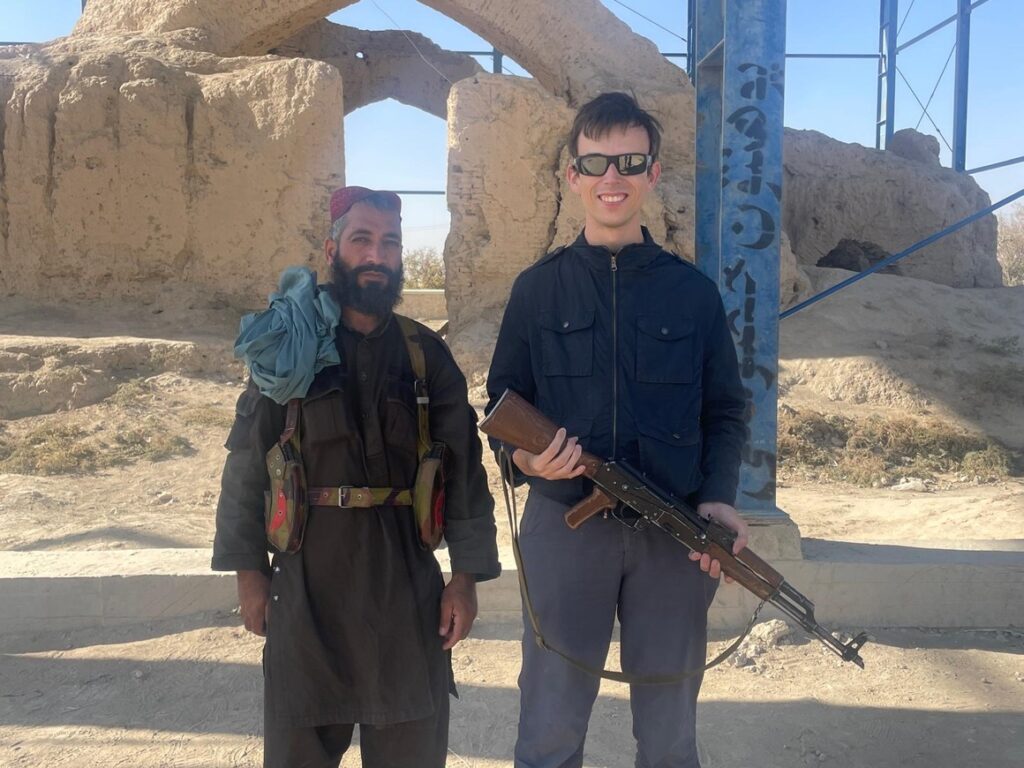
The Taliban take the safety of tourists VERY seriously, and instructed our guide in Mazar-i-Sharif to look after us at all costs. They wouldn’t let us visit nearby Balkh without an armed Taliban bodyguard, although in all fairness, I think they just wanted to give him some work for a few hours to make money off us… Bodyguards are no longer needed for safety.
Sceptics may say that the extreme niceness of the Taliban is purely a PR stunt to boost their reputation in the eyes of foreign governments, none of whom (except Russia) recognise them as Afghanistan’s real government.
I think both points are true. They truly are hospitable people, as are most Afghans, but they also realise the importance of acting like angels in the eyes of foreign tourists in the hope of building their reputation abroad.
And let’s be honest, most tourists in Afghanistan are serious travellers who often have big followings on blogs, vlogs or social media. When we have good experiences out there, we’re going to make content on it. And when we praise post-2021 Afghanistan, we’re indirectly praising the Taliban too, given that they’re the ones now running the country.
I’ll happily speak positively about Afghanistan and write good things about the country, because my experiences out there were overwhelmingly positive, both with normal people and the Taliban. But it would be dishonest to suggest we aren’t PR pawns for them in some capacity by doing this.
And yes, I do see the irony of the guys responsible for endless bombings and shootings from 2001-2021 suddenly being the same people who roll out the red carpet for you. But that’s politics for you… It’s similar to Syria in some ways, where leader Ahmed al-Sharaa went from wanted posters to the White House in the space of a year.
The point of this section isn’t to gush about how wonderful the Taliban are. They’ve done some pretty awful things, which I’m sure you already know about.
As a tourist however, the Taliban will look after you, help you where possible, and they won’t cause problems assuming you play by the rules.
And for clarity, I repeat what I said at the beginning: I’m talking about the Taliban solely from a traveller’s perspective. This section is valid for travellers (both male and female). The Taliban certainly haven’t been such a boon for locals.
Kidnapping and Terrorism Are No Longer Major Issues
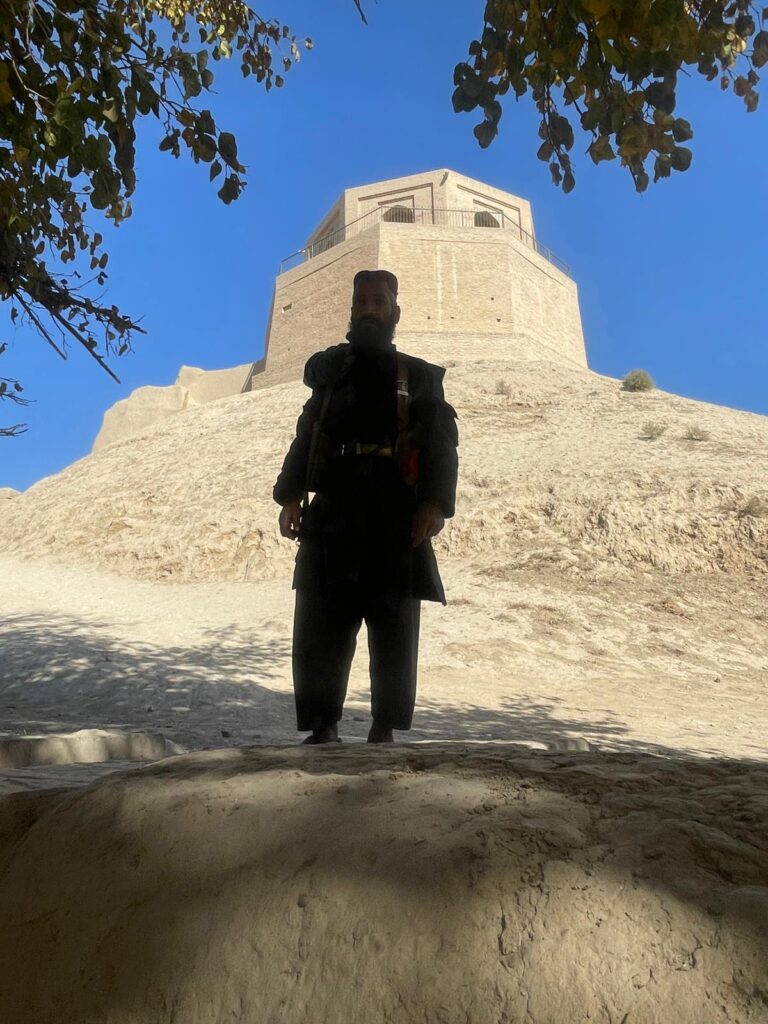
The irony of the arsonist putting out the fire certainly isn’t lost on me here. But in modern Afghanistan, the kidnappings, shootings and bombings that made this one of the world’s most dangerous countries are almost entirely confined to the past.
The Taliban have gone from guerrillas to government, and now want to prove that they’re able to keep the country secure.
Another dark force has popped up in the form of ISIS, and they’re the group responsible for modern security threats in Afghanistan. However, the Taliban have done a fairly good job of containing them. Since a May 2024 attack on tourists in Bamyan, the Taliban have restricted ISIS to a small pocket of the country, mostly near the Pakistan border.
With checkpoints all over the country (I was stopped several times per journey), they’re very keen on ensuring no suspicious characters get through.
If you stick to awesome spots like Mazar-i-Sharif, Kabul and Bamyan then you are no more likely to fall victim to terror than you would in France, the UK or Belgium for example.
Afghanistan is one country however where I wouldn’t recommend going too far off the beaten path without knowing what to expect in advance. Aside from ISIS you also have mines left over from the war in many rural areas.
Don’t act like terrorism no longer exists here. But do realise the chances of getting caught up in anything are minuscule, and Afghanistan is no worse than much of Western Europe in this respect.
The real issues you’ll encounter are horrendous driving and potentially aggressive street children.

A 3-Hour Journey Actually Takes a Day
Nothing cratered my Afghan adventure plans as much as transport did. I’d already suffered from some transport nightmares getting from Dushanbe (Tajikistan) to the Uzbek/Afghan border city of Termez, which is where I got my Afghanistan visa.
This meant missing out on Buzkashi in Mazar-i-Sharif on the day I arrived. Yet the worst was still to come.
According to Google Maps, Kabul to Bamyan takes 3 hours and 2 minutes by driving. Ha, good joke…
I’ll skip the story of my journey from Kabul to Bamyan, as I received duff information which bumped a few hours onto the trip after I went to the wrong location, so that was an avoidable situation. Instead we’ll focus on the return journey.
I was told buses leave regularly from Bamyan’s bus station, with the earliest starting at 6am. I arrived at 7am and instantly found a group of men who said they were going to Kabul, and I quickly agreed a price of 400 afghanis (this is the correct price for the Kabul-Bamyan route), and sat in the van.
At -7°C (19°F), I was hoping we’d leave quickly. I could see my breath as I shivered away in the back seat, and quickly had to grab my hat, gloves and scarf, whilst constantly wiggling my toes to keep the blood circulating.
But transport in Afghanistan runs on a “leave when full” policy rather than going at set times. And not for the first time, I was left waiting 2+ hours before we finally departed. Then you can add on well over an hour extra in time spent messing around, stopping, and navigating the bumpy roads.
And when we finally got to Kabul, I planned to do some sightseeing before the 5pm night bus to Mazar-i-Sharif. But that plan had to be scrapped due to the traffic, which in Kabul is the worst I’ve seen in any country I’ve been to.
After realising I was running out of time, I redirected my taxi driver from central Kabul to the bus station to Mazar. Cheekily he asked for a lot more money, despite the new route only taking a minute more than the original one. I ended up negotiating down to 100 afghanis more than the initially agree price and paid 500 in total.
Anyway, the apparent 37-minute taxi ride took over 2 hours in the end. So that “3-hour journey” took closer to 9 hours in the end. A recurring theme from my Afghan adventures.
Take this into account when you visit. A journey between cities should be accounted for as a day being taken out of your itinerary. No activities, just transport and frustration.

Only Bring US$100 Bills In Good Condition To Exchange
You need to bring a lot of US$100 bills to exchange for afghanis when you arrive in Afghanistan.
ATMs aren’t reliable, so even though you may get lucky and find one that works (albeit with ~8% fees), you cannot count on this.
Which means you need to exchange money with local money exchangers who can be found at borders, markets, and other places that your accommodation host will most likely know about (or as I found in Mazar, they may change money themselves).
However, you must have US$100 bills, anything else will only be accepted at a much lower rate, and anything under US$20 may not be accepted at all.
Not only that, but the bills need to be “clean” with no tears or marks on them. Kinda cheeky given the state of the afghanis you will receive in exchange (see my picture below). They may not accept them otherwise.
The money situation is a little frustrating if I’m honest, but just make sure you come prepared. I had to cut my first trip short, partly because I was running low on dollars above US$20.
Some places also accept euros, and near the borders you may also be able to change money from neighbouring countries. At the Uzbek border, I was offered 25% below the official rate however…

The Internet is Terrible Everywhere
Can’t say I expected 5G internet in Afghanistan, but the connection is bad everywhere.
From Wi-Fi to mobile data, from major cities to remote areas, from Airalo to DENT to any other SIM provider, you can expect internet to be bad or non-existent.
Wi-Fi is slow and will often drop out, if it works at all in the first place. This is true regardless of location. Even in Kabul I found it patchy.
Mobile data isn’t much better. I normally use Airalo eSIMs as they’re good and reliable. But I heard that wasn’t the case, so I went with DENT instead, which was a disaster and ended up ruining my phone to the point where I could no longer access mobile data without a VPN.
At least DENT worked whilst I was in Afghanistan, but it mostly had 3G connections in Mazar and Bamyan, whilst it didn’t work at all outside the cities. In Kabul it was a little better with LTE, but still far from perfect.
Many travellers to Afghanistan recommend an Afghan Wireless (AWCC) SIM card. It costs around 650 afghanis (£7/US$9) for 10GB, or 1,000 afghanis (£11/US$15) for 20GB. It’s the best of a bad bunch though, so don’t get your hopes up for great internet.
I’m afraid it will be a while before Afghanistan becomes a popular digital nomad spot. Perhaps stick to Bali, Chiang Mai or Lisbon for now. Because attempting to work here would be infuriating.
Oh, and in remote parts of the country like the Wakhan Corridor, forget about internet altogether. At least you can enjoy a nice phone detox for a few days or weeks.

You Will Get Very Dirty And Dusty Here
You don’t come to Afghanistan for a holiday, you come here for an adventure. And I’ll be honest here, you’ll get absolutely filthy when travelling here.
In Kyrgyzstan I remember zipping around the outskirts of Issyk Kul Lake in a marshrutka and getting absolutely covered in dust from the roads which seemed to find a way of getting through the vehicle and all over my hands and clothes.
Afghanistan is similar, at least in tuk tuks and minivans, such as those used for journeys to Bamyan. Private vehicles (if well maintained) and VIP buses covering longer routes are much cleaner in all fairness.
But beyond transport, the country is pretty dusty in general. Especially if you head to places like Bamyan and the outskirts of Balkh.
My top tip here would be to leave your best clothing behind, and have a good bag cover to protect against general filth you’ll inevitably collect on your journey.
Buzkashi Only Takes Place On Fridays In Winter Time
Transport problems cratered my original itinerary, and a huge reason for this was because I missed the buzkashi in Mazar-i-Sharif which I’d planned to visit on the day I arrived.
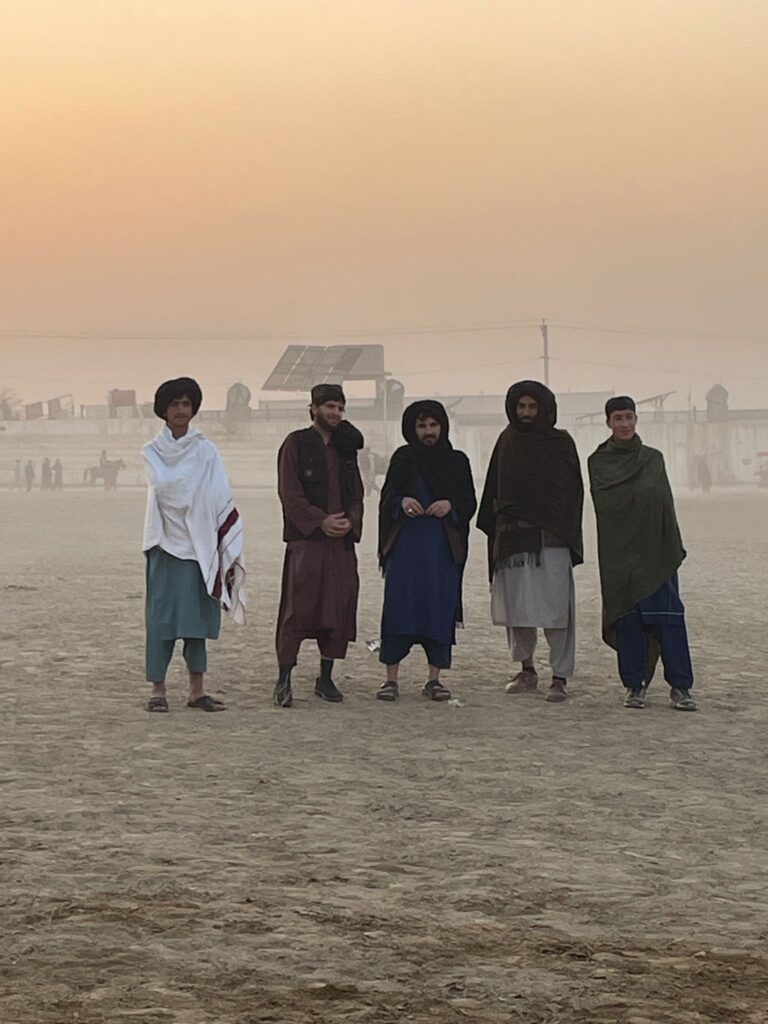
Buzkashi takes place at 2pm on Friday afternoons from November-March time. Now, this is Afghanistan, which means things don’t exactly run like clockwork. And when I did eventually make it to a game, it started just before 3pm, an hour later than expected.
Due to my journey from Dushanbe to Termez running into problems, it had already gone 2pm by the time I crossed the Hairatan border into Afghanistan. Which meant having to rip up my original plans in order to return Mazar and catch a game before I left.
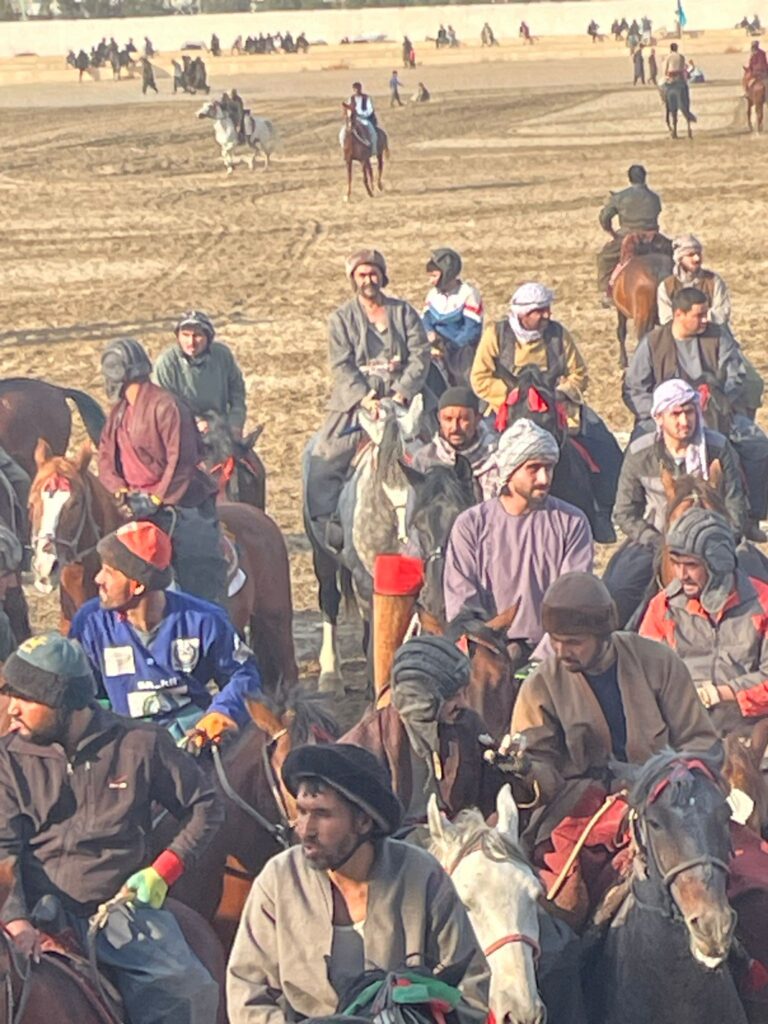
Now in this brutal sport, riders on horseback compete for possession of a sack to throw into a “goal” circle on the ground. It’s dangerous, exciting and intense. And was 100% worth sacrificing other activities to see.
Watching buzkashi in Afghanistan is one of the most authentic experiences you can have out here. If you have flexibility over when you can visit, I recommend November, the same month I went in. You can catch a game of buzkashi, whilst simultaneously enjoying the country before it hits the coldest months.
Allow Plenty Of Time For Conversations Over Tea
Afghanistan is not a place where you want to be in a hurry. It’s fun to just walk around at a casual pace, and discover points of interest along the way.
One inevitability here, is that you will be invited over for tea. I lost count of the number of tea invites I had.
I visited a carpet shop in Mazar. Was offered tea. I walked through the markets of Kabul. Was offered tea. I went to the Taliban’s permit office in Bamyan. Was offered tea.
It’s a recurring theme, and can be a lot of fun to drink with locals even if you don’t share a common language with them.
You might want to wait a few minutes before taking your first sip however, as the tea here is often scorching hot.
Can you imagine a complete stranger on the streets of London or New York inviting you over for a cuppa and a chat? Not at all right?
And perhaps that’s part of what makes this such a fun cultural experience. Slow down, meet some locals, and share a hot glass of tea with them.

If You’re Okay With Discomfort, You Have Nothing To Worry About
Things you don’t have to worry about whilst travelling in Afghanistan: crime, kidnapping, terrorism.
Things you do have to worry about whilst travelling in Afghanistan: discomfort, discomfort, discomfort. Oh, and traffic, but that’s another story.
Accommodation here is generally of a lower quality than what you’ll find in other Central Asian countries, and across the likes of East Asia, Europe and Latin America. Aside from barely-functioning Wi-Fi, you can expect poor temperature regulation, dated rooms and very simplistic bathroom facilities. On the plus side, staff are often very helpful, and breakfasts are hearty out here.
The transport is rough. It’s okay within cities, but for longer trips, you may suffer a fair bit of discomfort. I took the VIP night bus between Mazar-i-Sharif and Kabul twice. Once the seats fill up, people will start sitting on the carpeted aisle until there’s no space left and you eventually leave (after 2.5 hours in my experiences…).
You must take shoes off before getting on the bus here. And my journey back to Mazar quickly turned into a nightmare due to the situation I ended up in.
I was surrounded by young kids with awful parents who just let them run riot. They were screaming, eating popcorn in the aisle and making a mess of the floor we had to walk on with just socks, whilst coughing non-stop.
Picking up something nasty seemed inevitable whilst surrounded by these terrible toddlers, and sure enough I started coughing and sniffing endlessly a couple of days later…
But with the aisle full of people, and the kids surrounding me, there was no escape route. I just had to endure their bad behaviour for 12 hours as the mothers acted oblivious to it.
Then you have the buses to Bamyan. These are much smaller, they’re minivans really. Yet in Afghanistan you’ll be wedged between the window and 2-3 locals, with a load of junk shoved under your seat, placed behind you digging into your back, and located just about anywhere else space can be found.
The vehicles can be freezing cold at times, and roads are pretty bumpy, so don’t expect a luxury service here.
Afghanistan is one of the most enjoyable countries I’ve visited, but you come here for an adventure, not for a relaxing time.

Get Insured With SafetyWing
We’ll end on a very important point: insurance. Most travel insurance packages won’t cover you for Afghanistan. However, that’s where SafetyWing comes to the rescue.
SafetyWing is one of the few legitimate providers that will insure you for Afghanistan. Even better, they specifically create their insurance packages for nomads, so if like me you spend most of the time on the road, they can cover you throughout the year.
I’ve had my fair share of medical issues on the road over the years, including one incident in Uruguay where insurance covered my £1,050 bill, so I’d highly recommend getting insured before your trip, especially when visiting a country as rugged as Afghanistan.

SafetyWing Insurance
Don’t risk being left with a possible $100,000+ bill if something goes wrong on your travels.
Click on the link below to avoid a stressful trip, protect yourself, and know that you will be covered in emergency situations.
Final Thoughts On Travelling To Afghanistan
Travelling to Afghanistan is one of the coolest things you can possibly experience. A culture so unique and untouched by tourism that you get an authentic experience everywhere you go, rather than a manufactured tourist setup.
The warmth of the locals is genuine, and the people you’ll encounter will remain in your memory for years to come.
I won’t forget Rafi, the carpet shop owner who proudly told me about his British business contacts over tea, or the Taliban bodyguard we ate ice cream with in Balkh, or the many kids who followed us in the markets of Mazar, excitedly asking for photos.
Right now, there’s a golden window to travel here. You’re coming after the safety issues which plagued this country for decades were finally reduced to a minimum for men and women alike, yet before Afghanistan takes off as a mainstream tourist destination, which may well happen if it continues on its current trajectory. A big “if” admittedly…
I won’t pretend Afghanistan is an easy beginner travel destination comparable to Thailand or the Netherlands. It’s not.
But if you have a bit of experience in rugged destinations under your belt, and you can tolerate discomfort, then there are few more enjoyable places to experience right now than Afghanistan.
More Posts on Afghanistan
- The Best Things To Do In Balkh During Your Afghanistan Trip
- The Complete Guide To Watching Buzkashi In Afghanistan
- What I Wish I Knew Before Travelling To Afghanistan
- What Are The Best Things To Do In Mazar-i-Sharif?
- How To Cross The Hairatan Border From Termez To Mazar-i-Sharif
- How To Get An Afghanistan Visa In Termez (Uzbekistan)
- The Complete Afghanistan Travel Guide
