
3 Month Central America Itinerary Without Flying

Disclaimer: Some links on this page may be affiliate links. If you purchase anything through them, I will receive a small commission at no extra cost to you! Further details in the Privacy Policy.
This 3 month Central America itinerary is based on my own trip through the region, visiting all 7 countries, plus Mexico which is the most common start or end point for any Central America backpacking trip covering all countries in the region.
Don’t miss out on this underrated part of the world which is full of incredible bucket list activities such as the incredible Mayan ruins of Tikal in Guatemala, boarding down a volcano in Nicaragua, and witnessing the rich wildlife that Costa Rica has to offer in its many jungles. Oh, and I saw a volcano erupt too, that was pretty special.
The well-trodden backpacking route is easy to follow, with plenty of buses and tourist shuttles travelling throughout the region. And you will inevitably meet many other travellers along the way to share your experiences with, and join on adventures.
I absolutely love this region of the world. It’s budget-friendly (well, Belize and Costa Rica not so much), full of fun adventures, and attracts a lot of cool people from across the world. It’s very easy to make friends out here and you’ll pick up memories that will last a lifetime. There is no bad country in Central America. All had tons to offer.
Is Central America Cheap to Travel?
Yes! Central America is one of the most affordable regions in the world, and your money can go a long way here. The only two countries which are slightly more comparable to European prices are Belize and Costa Rica (and to a lesser extent, Panama).
Here is a table of how many days I spent in each country, and how much I spent on average each day in total. I’ve also included individual costs on accommodation, food and drink, transport, activities and “other”, which means anything that doesn’t fit into these categories, such as local SIM cards for example.
Please note that I stayed primarily in private rooms in Mexico (compared to mostly hostels elsewhere) which inflated the Mexico costs, and I was stuck in Santa Ana (El Salvador) for a week as Semana Santa brought everything to a standstill. This meant I did little and brought my average spending down there.
Honduras costs are also significantly inflated because I only travelled by expensive tourist shuttles (rather than local buses) and took boats to and from Utila. Honduras overall can be done very cheaply and in terms of day-to-day spending is one of the cheapest Latam countries for travellers to explore.
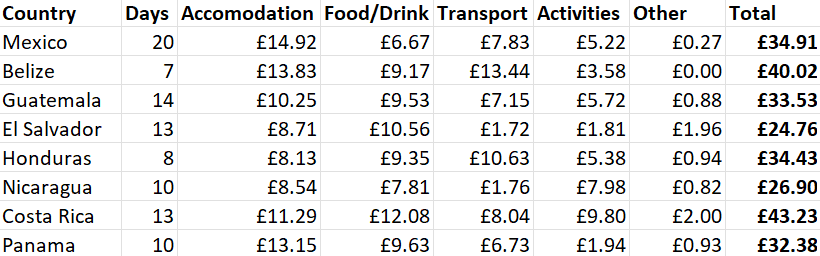
For your own Central America backpacking trip, I advise budgeting around £40 (US$54) per day. This will allow you to do pretty much every major activity in the region and live in relative comfort. If you’re happy living rough, only staying in hostels and only eating street food however, you could slash these costs by as much as 50%.
I’m a budget backpacker, but not an extreme penny pincher. My style tends to be keeping costs down, but I’ll take a clean pad in the city centre over that £2-a-night rat-infested hostel with bedbugs, go for an affordable restaurant meal over street snacks, and take a tourist shuttle in dodgy areas where bus transport isn’t sensible (Guatemala and Honduras were examples of that here).
3 Month Central America Itinerary
I’ll cover safety, the best times to visit and other important information at the end. But you came here for the itinerary, so here it is.
I’ve made some minor adjustments from my own itinerary, condensing it down to exactly 3 months. I’ve taken out some of the less interesting stops (unless they’re logistically necessary to visit). I’ve also reduced time spent in Santa Ana as I was stuck there for over a week, and you don’t need that long.
You will almost exclusively be travelling by bus to get between places. Although tourist shuttles often operate between more popular locations. All of this is easily doable without flying, as I have done myself. Boats are also used to get between the islands in Belize and Honduras.
By travelling across Central America, you will see some of the most incredible destinations in the world, so hopefully you enjoy it as much ass I did!
Mexico
Geographically Mexico isn’t in Central America, but culturally and linguistically it has far more in common with the seven Central American countries than its fellow North American nations, the USA and Canada.
It’s also very affordable, and one of the easiest countries in Latin America to reach from the USA or Europe, with many flights towards Cancun or Mexico City, making it an ideal start or end point for most travellers on the Central America backpacking route. The common backpacking route goes between here and Panama City, from where you can easily fly to Colombia on a budget, which is exactly what I did. And I recommend doing the same.
I spent around 3 weeks here, and found that Mexico is a great country to ease yourself into Latin America if you haven’t visited the region before.
Days 1-4: Mexico City
Mexico City is massive, and you can easily spend weeks here if you have the time. But with four days, you’re going to want to target the highlights.
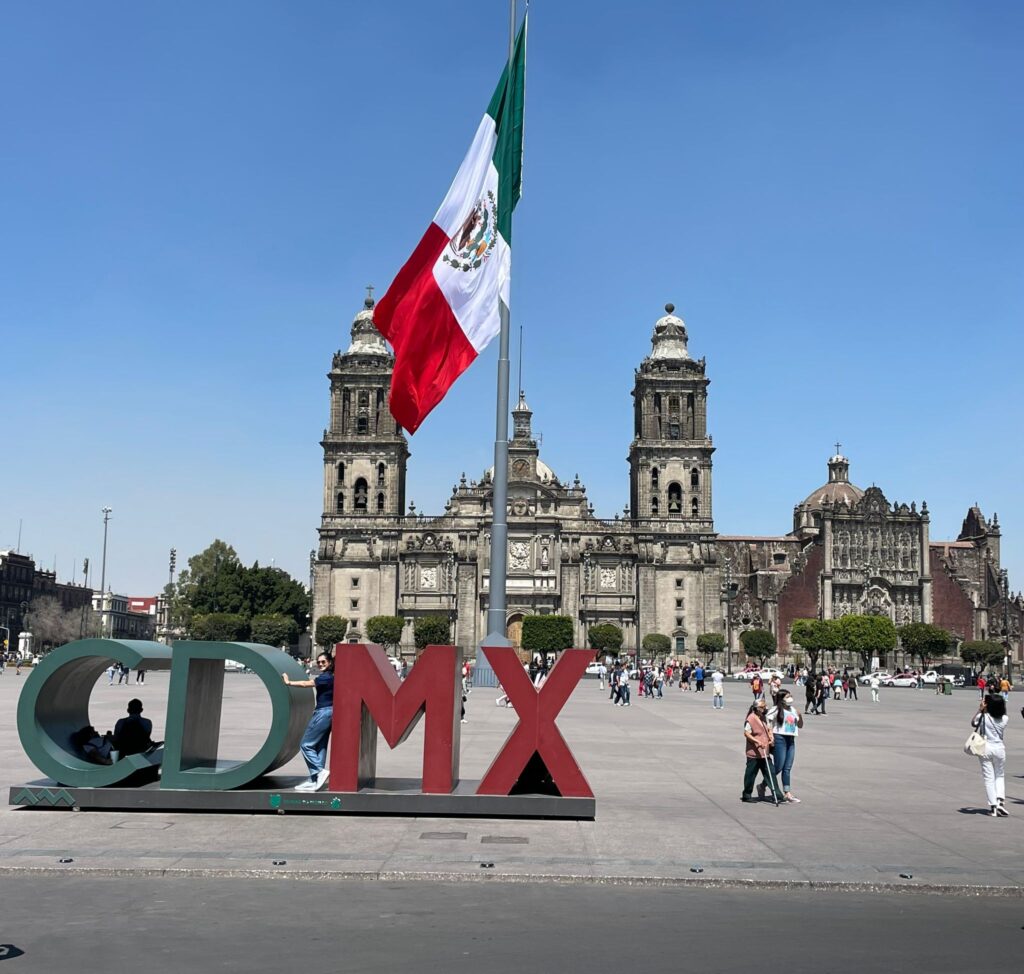
The Zocalo, or central square, is a good starting point. It hosts many celebrations and various events, so you may catch one if you’re lucky. It’s located in El Centro, which is the heart of the city, where most of the cool stuff can be found.
Around a 15-minute walk away is the Palacio de Bellas Artes, an impressive arts museum and theatre space. Mexico City is also famed for the Frida Kahlo Museum, dedicated to the famous Mexican artist of the same name.
My personal highlight in Mexico City was Teotihuacan, a series of ruins from an ancient city that predates the Aztecs arriving. This is well worth one of your days in the capital. You’ll quickly get annoyed however by the vendors constantly blowing jaguar whistles. If you don’t know what a jaguar whistly is before visiting, you’ll quickly find out!
If possible, you should also try and catch a Liga MX or Mexico national team football game. Mexico is home to the famous Estadio Azteca, which is undoubtedly the most iconic stadium in North America. If there isn’t a game on during your visit, you should at least book a stadium tour to see this incredible ground.
I caught a Cruz Azul game there. They’re poorly supported and I didn’t see the Azteca at its buccaneering best. Fortunately, it’s only Club America and the Mexico national team playing there now, so you should be able to enjoy a world class atmosphere. Note: the Azteca currently goes by the sponsored name Estadio Banorte.
Mexico City is also home to Xochimilco, which is the country’s answer to Venice with a series of canals full of colourful gondolas. Try and get to the Island of the Dolls which is a spooky attraction believed by some to be haunted. Make sure you do your research first however as there is a fake Doll Island which many tourists are led to.
Stay in Roma Norte or La Condesa on your first trip here. They’re safe and very tourist-friendly spots which I highly recommend for easing yourself into Mexico, especially if this is your first trip to Latin America. You definitely don’t want to end up in a dodgy barrio such as Tepito or Doctores where crime rates are high and there’s little of interest anyway.
Day 5: Bus to Oaxaca
One of the downsides of overland travel in Central America is that bus journeys can take out a whole day. You should take night buses where possible. They aren’t comfortable, but will save you money on accommodation and leave you with more precious exploring time.
Unfortunately the bus to Oaxaca will wipe out most of your day, so bring some entertainment for the bus ride.
You will lose a few days in this itinerary to lengthy bus journeys. Be prepared for that.
Days 6-7: Oaxaca
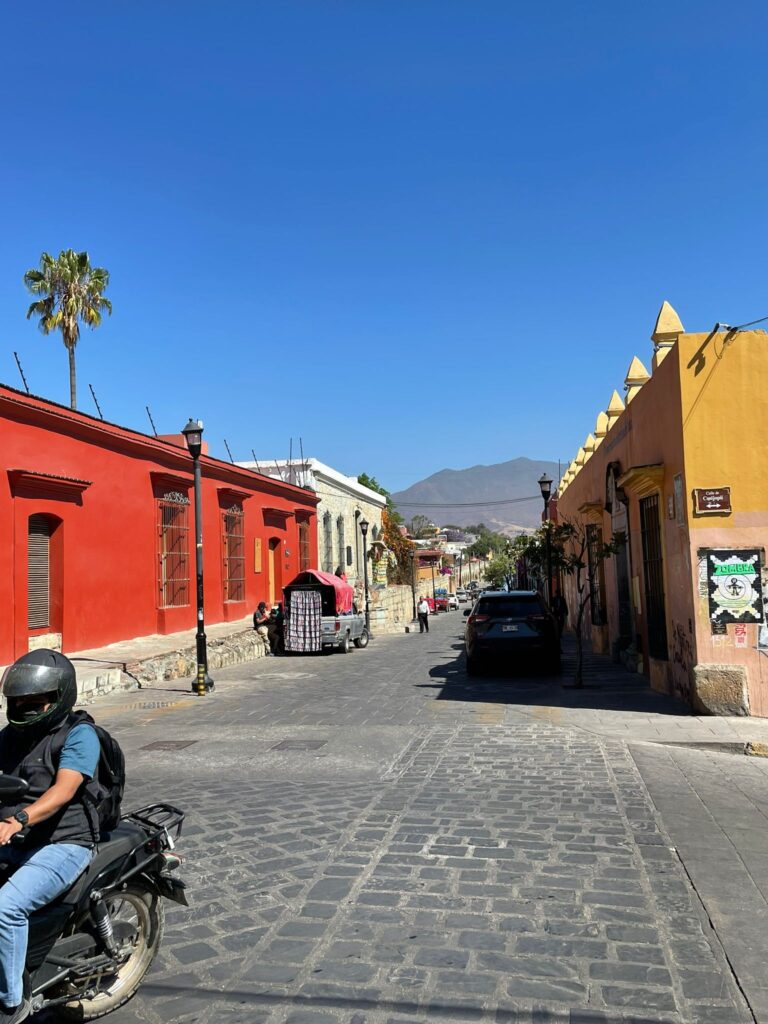
Oaxaca is the most beautiful city I went to in Mexico. Walk down its streets and admire all the colourful colonial buildings.
Oaxaca is Mexico’s mezcal capital. If you aren’t familiar with mezcal, it’s an ultra strong spirit which burns your throat as you drink it. Tequila is a form of mezcal. You can take a mezcal tour if you’re brave enough.
I loved just sitting in the main square (Zocalo) sipping on a mezcal, whilst trying to act cool and not as if my throat was on fire… You don’t have to spend every minute doing wild activities. Travel is an extended holiday, so enjoy it!
Don’t skip Mercado Benito Juarez, which can give you great insights into local life. You can even eat grasshoppers there if you’re brave enough!
The city itself is fun to aimlessly walk around, but if you fancy a day trip you could always check out Hierve el Agua, a natural wonder which is a bit like a cross between Guatemala’s Semuc Champey and the incredible Salar de Uyuni in Bolivia.
Day 8: Bus to Villahermosa
After Oaxaca, it’s time for another lengthy bus ride. To be honest, Villahermosa isn’t the most exciting place you will visit. It’s more of a transit stop on the way to Palenque.
There are security issues on the road between San Cristobal de las Casas and Palenque, which means buses coming from the west have to go via Villahermosa.
Expect this bus ride to take out the whole day.
Day 9: Villahermosa and Bus to Palenque
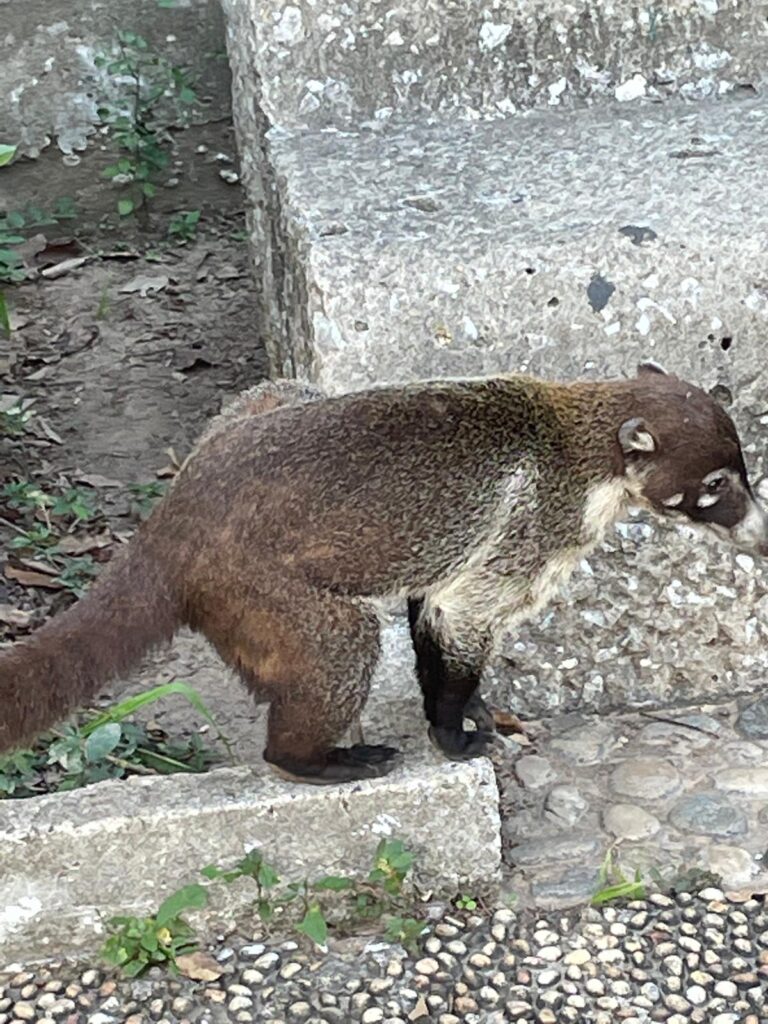
When you wake up, check out Parque El Jicaro. I saw a lot of wildlife round here, including crocodiles! There are also a few raccoon-like coatimundis similar to those at Iguazu Falls in South America. It’s a pretty chilled spot as Villahermosa isn’t touristy, so you can enjoy it in peace with only a handful of locals around.
Once you’ve seen the park, you don’t really need to spend any longer in Villahermosa. Instead hop on a bus to Palenque, and chill out in the small town for the evening, where you can find several bars and restaurants.
Day 10: Palenque and Bus to Merida
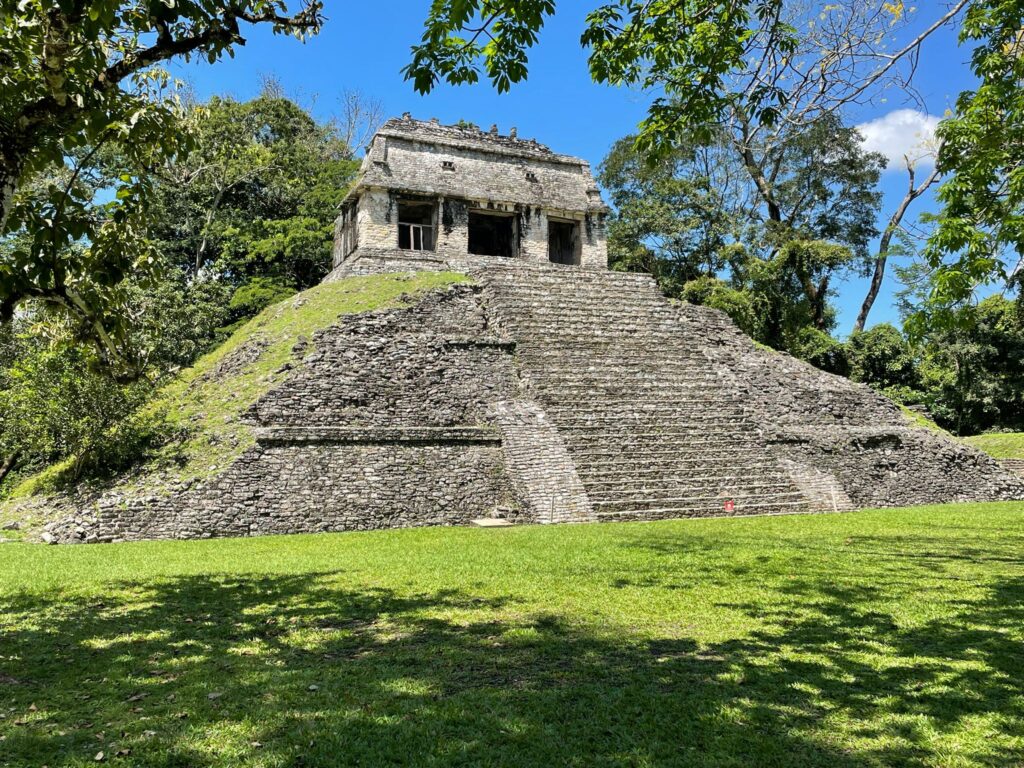
There’s one reason to come here, and that’s to check out the Mayan ruins of Palenque. Spend your morning exploring the area and learning all about this ancient civilisation, which is gradually being swallowed up by the surrounding jungle.
This was one of my highlights in Mexico. It’s also a lot quieter than the popular Yucatan Peninsula which you will be heading towards soon.
The town of Palenque is pretty tourist-oriented with tons of bars, restaurants and hotels aimed at foreign visitors. It’s pretty fun though and a nice spot to wind down with a good Modelo or Tecate.
In the evening, get the night bus to Merida, a city in the north of Yucatan state.
Days 11-13: Merida and Chichen Itza
One of the best things to do in any new city is to take a free walking tour. A local guide will show you all the best bits as well as telling you all about the history of the area. This will help you find your feet for the next few days. Your guide will be happy to answer any questions you may have.
Spend some time in Lucas de Galvez Market for more cultural experiences. Markets are a great way to see local life at its most authentic.
Also be sure to check out Merida’s Centro Historico, the main square and home to La Catedral de San Ildefonso as well as a few government buildings.
Otherwise, spend your time in Merida relaxing and slowing down for a day or two. You will burn out over 3 months in Central America if every day is full of adventures or brutal bus journeys.
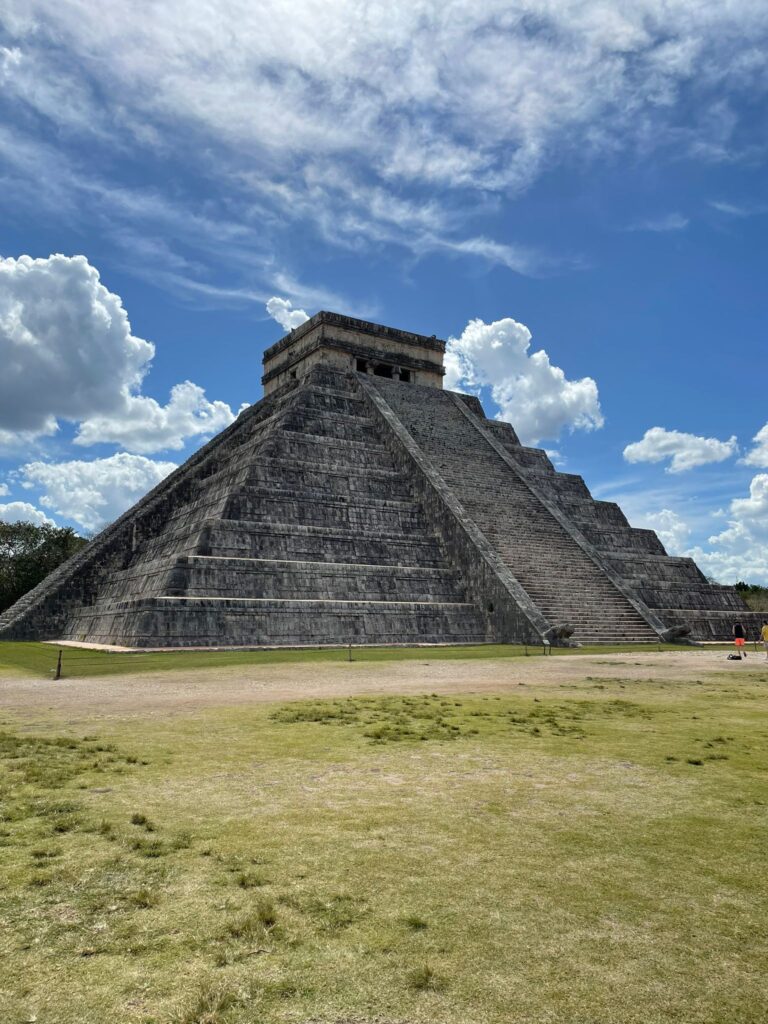
One absolute must, is a visit to Chichen Itza, one of the New Seven Wonders of the World. You can do this as a day trip from Merida, or on the way to Cancun, or even whilst heading back from Cancun for a day.
I’ve listed it in the Merida section as I did it as a day trip from there. Although you will have to backtrack quite a bit by returning to Merida.
This impressive Mayan site is most famous for the Temple of Kukulcan, a large stone pyramid which you will see in most images of Chichen Itza.
Days 14-16: Cancun
Fortunately your last few stops in Mexico are much quicker to get to by buses, so you no longer need to worry about lengthy night buses.
Cancun is one of the most popular tourist destinations in Mexico, and many people’s only stop within the country.
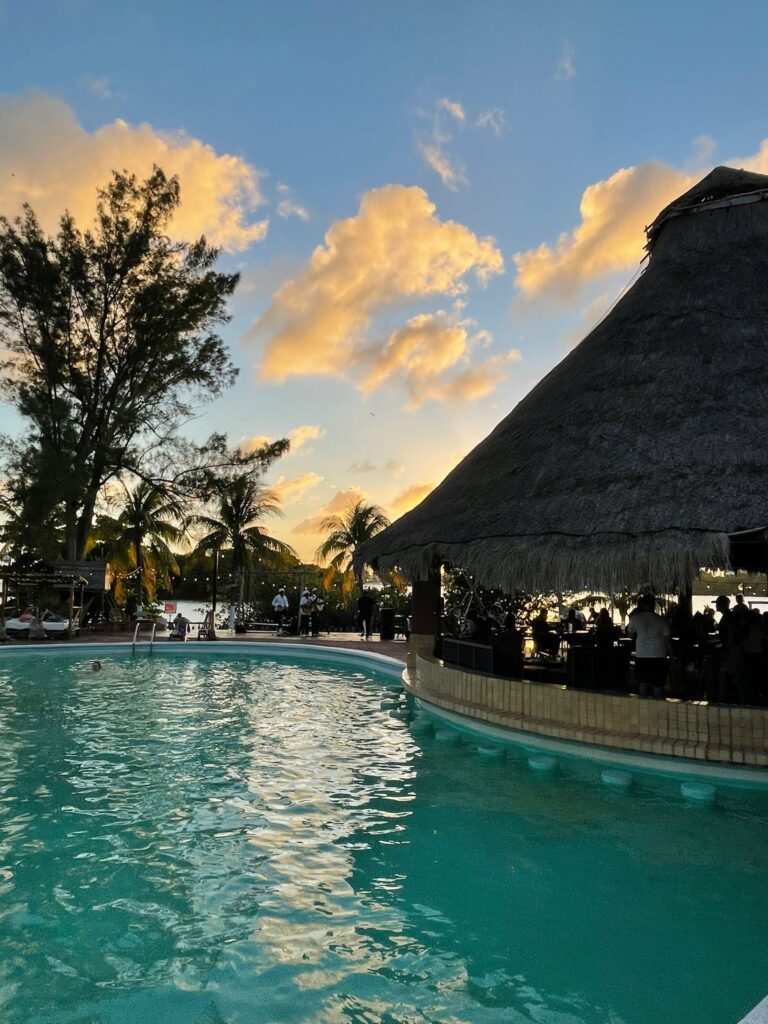
Cancun is famous for partying, relaxing and chilling on the beaches. Even the most intrepid traveller needs some downtime every once in a while, and there’s no better place to get it than here.
I’m not that guy who thinks I’m too cool for tourist spots because I’ve been to whacky places like Afghanistan and Venezuela now. Tourist spots are popular for a reason, and Cancun’s not bad even if it didn’t entirely match my vibe. Go and let your hair down a little, you’ll appreciate the downtime as fulltime travel is exhausting.
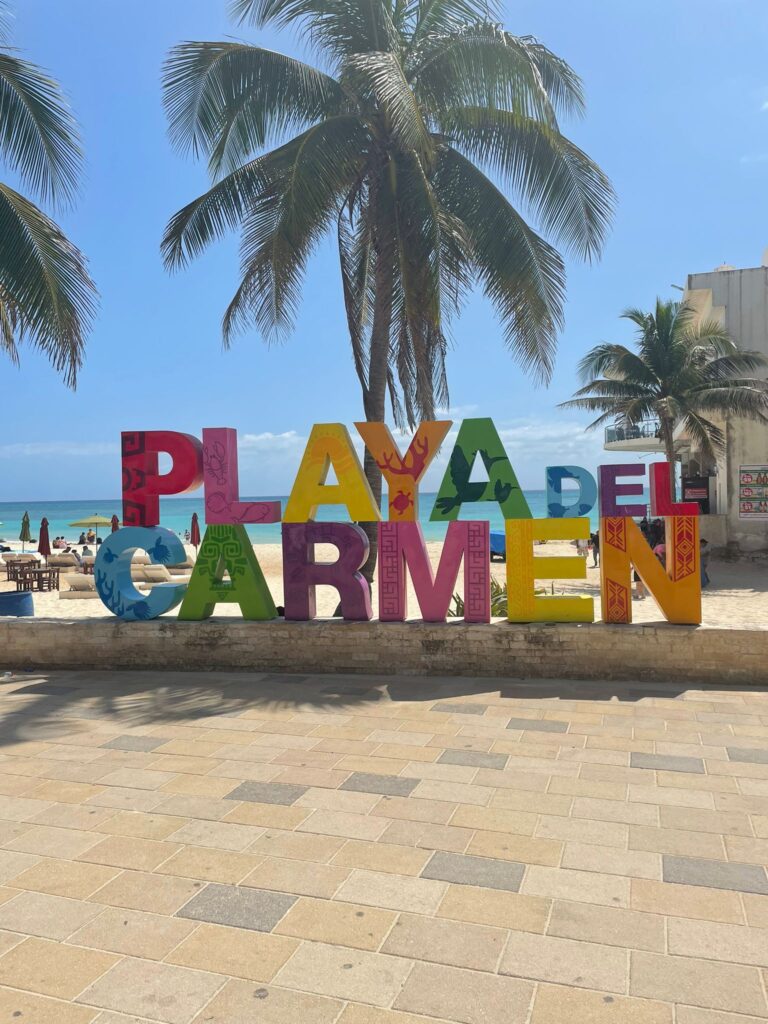
Day 17: Playa Del Carmen
PDC as it is known colloquially, is just down the coast from Cancun. And in all honesty it’s more of the same.
Partying and beach life. You’re right in the heart of Mexico’s main tourist hotspots down here.
Soak up some more sun, grab a beer, make some friends and then move on. I get the appeal, but PDC doesn’t really offer much that you can’t find in Cancun. It’s beaches, parties, and little else.
Days 18-19: Tulum
Personally I didn’t like Tulum, but many people do so I will include it here regardless.
Tulum carries on from Cancun and PDC with its party vibe and being a place to let your hair down rather than see authentic culture and bucket list experiences. There are many beaches here, but they’re often pretty busy.
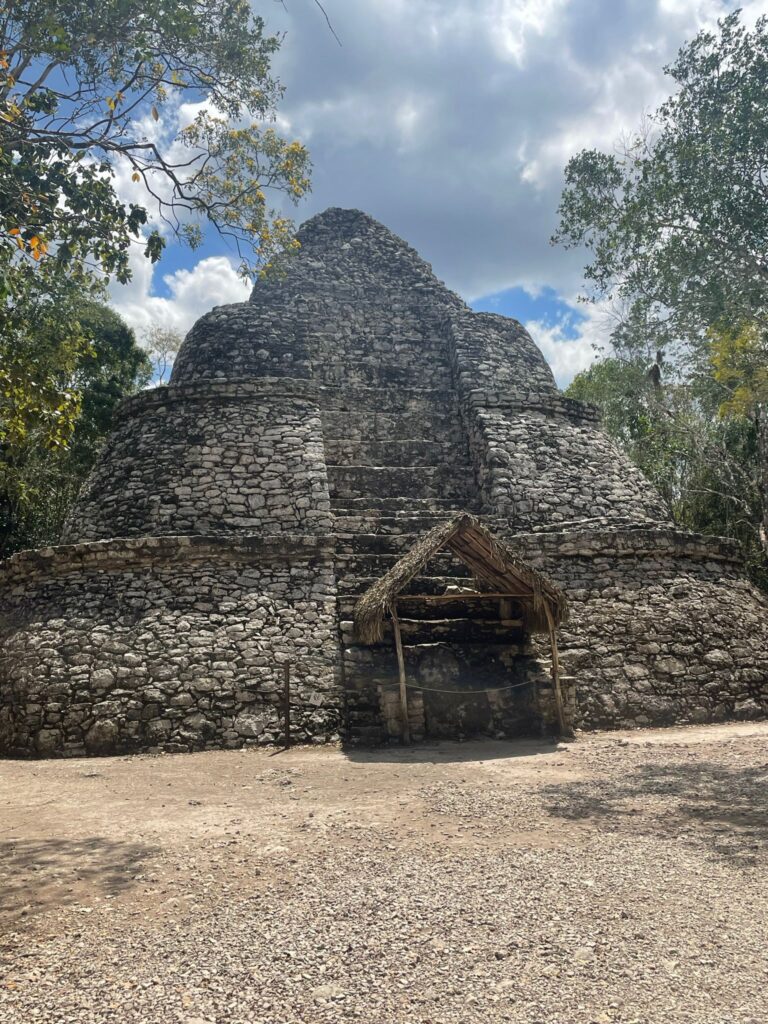
You can visit the nearby Coba Ruins. They aren’t as impressive as Palenque or Chichen Itza, but they can still make for a fun morning.
You can visit several cenotes near here. Cenotes are natural sinkholes, created when the roof of a cave falls in, often created cool swimming spots. Cenote Santa Cruz, Gran Cenote and Cenote Escondido are a few of many nearby.
Perhaps the best thing to do whilst in Tulum is take a trip to a nearby UNESCO World Heritage Site: the Sian Ka’an Biosphere Reserve which is a wildlife paradise, as well as being a spot for kayaking and snorkelling.
I’d recommend exploring the cenotes rather than Tulum itself. They’re pretty cool, and you can enjoy a good dip in warm water.
Days 20-21: Bacalar
Head towards the Belize border, and now you’re getting back towards more authentic travel destinations rather than party spots.
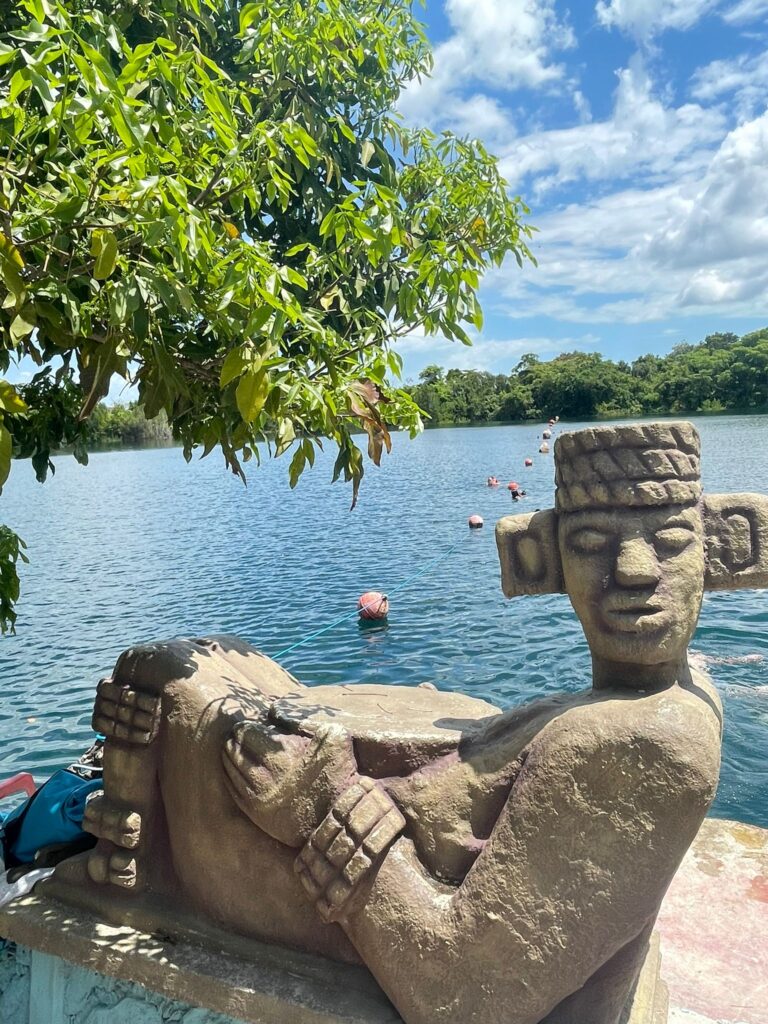
Bacalar is a fun place to chill for a couple of days. You can do a boat tour of Bacalar Lagoon and go out to see the picturesque turquoise waters.
Another fun activity here is visiting Cenote Azul. This is a very open cenote (an old one, as there is no longer a roof) where you can spend time in the water, or observe by the side. I enjoyed this one because it wasn’t too busy.
And that’s Bacalar in a nutshell really. Cancun, PDC and Tulum are the “big 3” on Mexico’s eastern coast, which means Bacalar often gets overlooked. As someone who is rather “experienced” in the travel world (that sounds nicer than “old”), I much preferred the chilled environment Bacalar offered over the party vibes the others offered.
Belize
Belize is different from the other Central American countries, in that it feels much more like a Caribbean destination with its culture and linguistic differences (English is spoken in Belize, compared to Spanish in all other countries on this itinerary).
It’s a unique spot compared to all other countries in the region, and well worth checking out, despite being one of the most expensive countries in Central America.
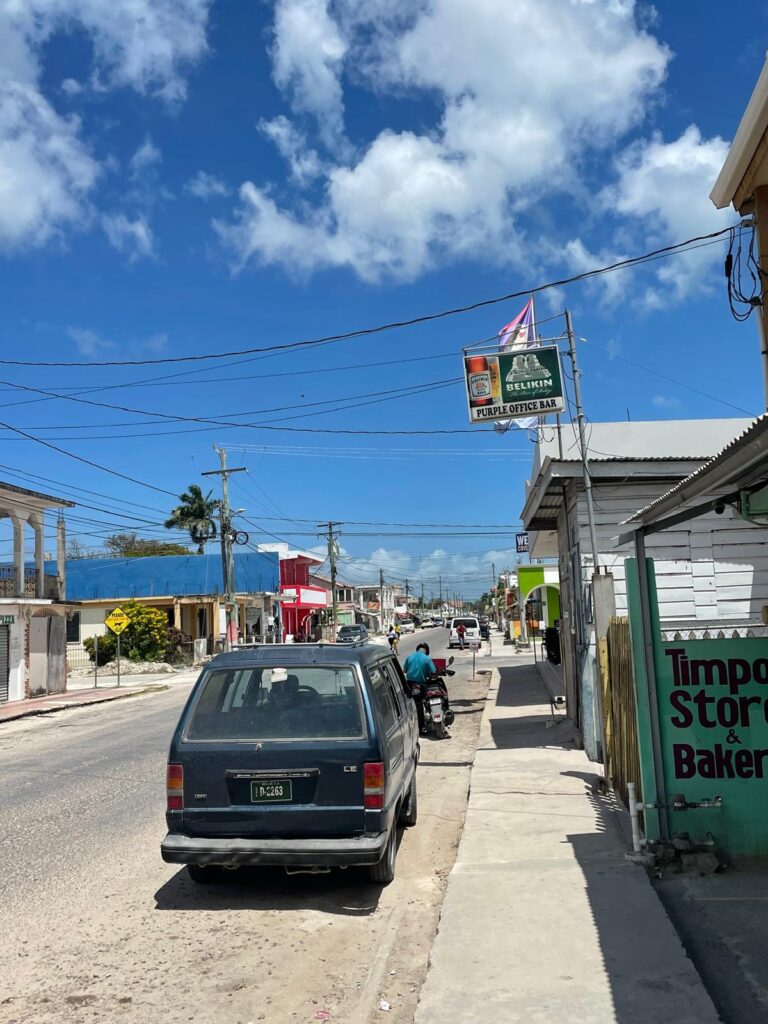
Day 22: Corozal
Day one is really just a travel day. You will need to get an early bus down from Bacalar and cross the border from Mexico into Belize.
Really, Belize is all about the islands. And you will need to take a boat out to reach them. Corozal has little to do, and is really just a transit stop.
If you’re lucky, you may be able to get a boat to San Pedro on the day you arrive here. If like me you’re unlucky, then you may be stuck in Corozal for the day and have to wait.
Be wary of a shady guy hanging around the spot where you buy boat tickets acting in an overly-friendly manner. He turned out to be a criminal with a keen interest in my whereabouts, so I had to book a £50 flight and lose my boat ticket money to dodge him. The full story of this incident is long, but gives you an idea of what may happen here…
Get a SIM card at the Digi store to begin with. Be wary of the fact that it’s a slow process however and you may be spending over an hour here.
Then get some Belizean dollars and you’re good to go.
Days 23-25: San Pedro (Ambergris Caye)
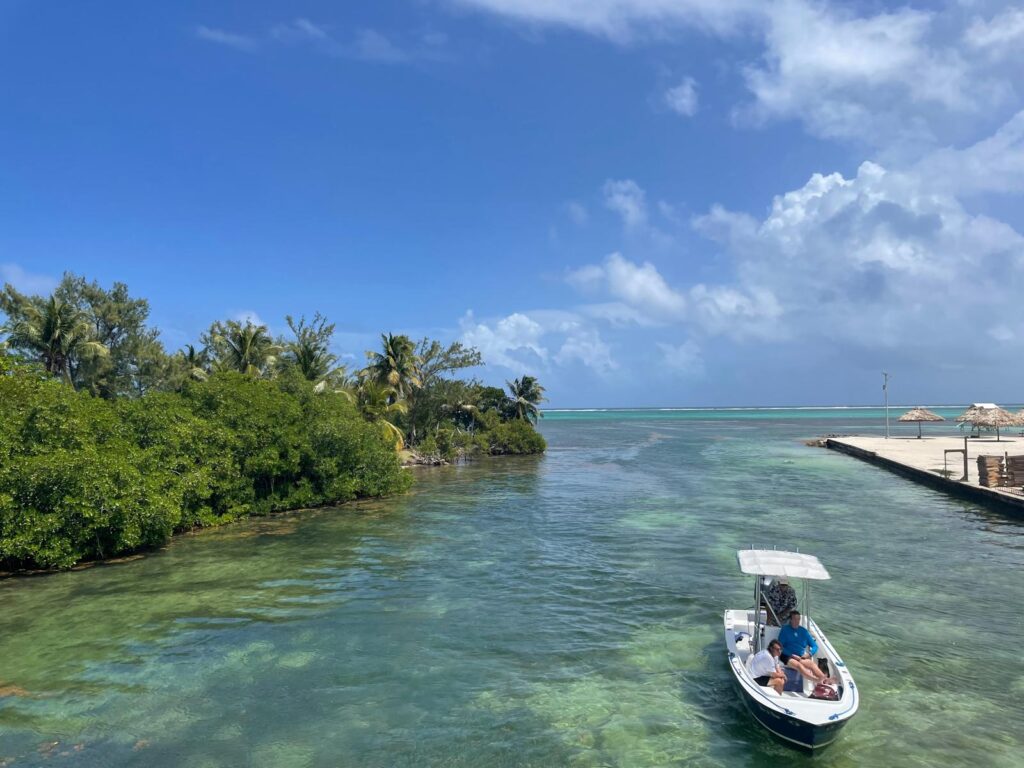
There are multiple cayes (keys) in Belize, but the two most popular by far are Caye Caulker and Ambergris Caye.
Ambergris Caye is by far the most lively of the two, and is a great base for water activities such as snorkelling, diving and boat tours.
You can also explore many of the caye’s beaches whilst you’re here.
The main town on the island is called San Pedro, and this is where most of the accommodation is based. It’s also the main hub for tours, facilities and transport, therefore I’d advise staying here.
Days 26-27: Caye Caulker
Caye Caulker is the opposite of Ambergris Caye. Accessible by boat, the island’s motto is “go slow” and that’s exactly what they do here. Unfortunately, that also applies to the bar and restaurant service, so maybe go for an early dinner if you have things to do and places to be.
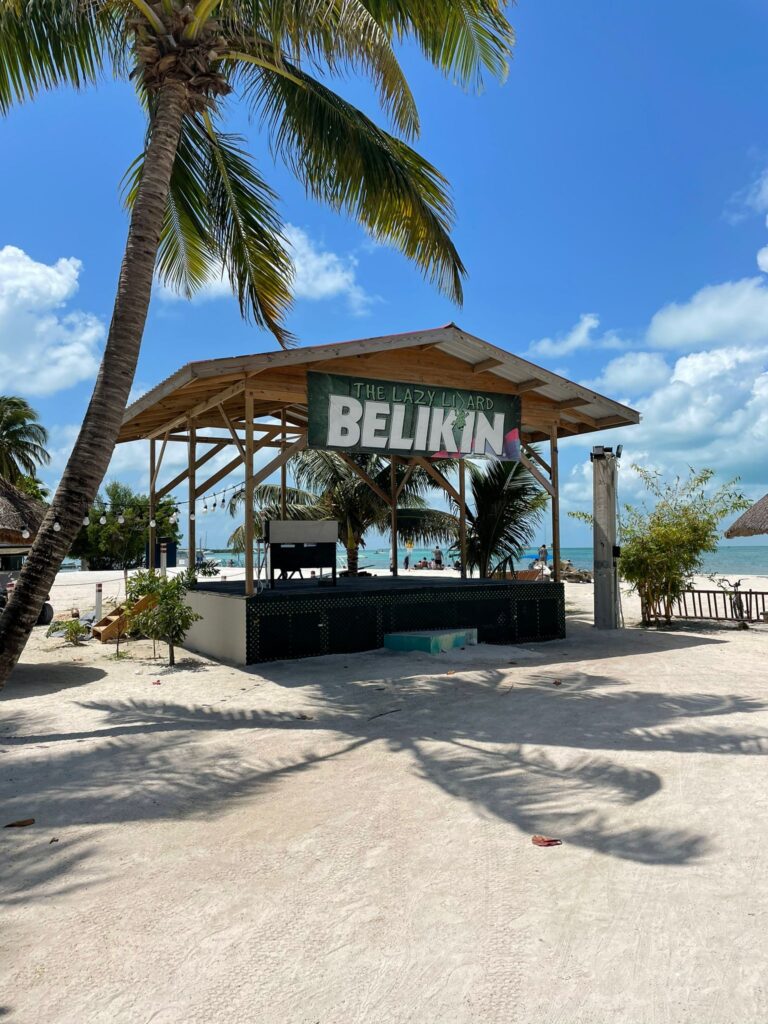
Caye Caulker is a place to relax and watch the world go by. You can have a few drinks whilst watching the sunset at the Lazy Lizard bar on the Split.
The Split is where Caye Caulker is divided into two islands, with the southern island being where the bulk of the life is. And the northern island being practically deserted and not very built up.
I even had entire beaches on the northern island to myself without a single other person around. You should consider walking around the northern island if you fancy going a little off the beaten path.
Even on the southern island you can get a little off the tourist track by walking away from the town. I found a fisherman who was happy to show me his catches on the coast, so this is your best bet for authentic encounters with locals.
Days 28-29: San Ignacio
On day 28, take a boat to Belize City, and head to the bus terminal which is a 15-minute walk away. I walked there without issues, but it is in the notoriously shady southern part of the city, therefore taking a taxi may be a better idea.
Then you can catch a bus to San Ignacio, near the Guatemala border. I was surprised to find just how fun it was here!
Cahal Pech is a Mayan ruin site, right in the middle of the city which you may want to see, although you will visit much better ruins within the next couple of days.
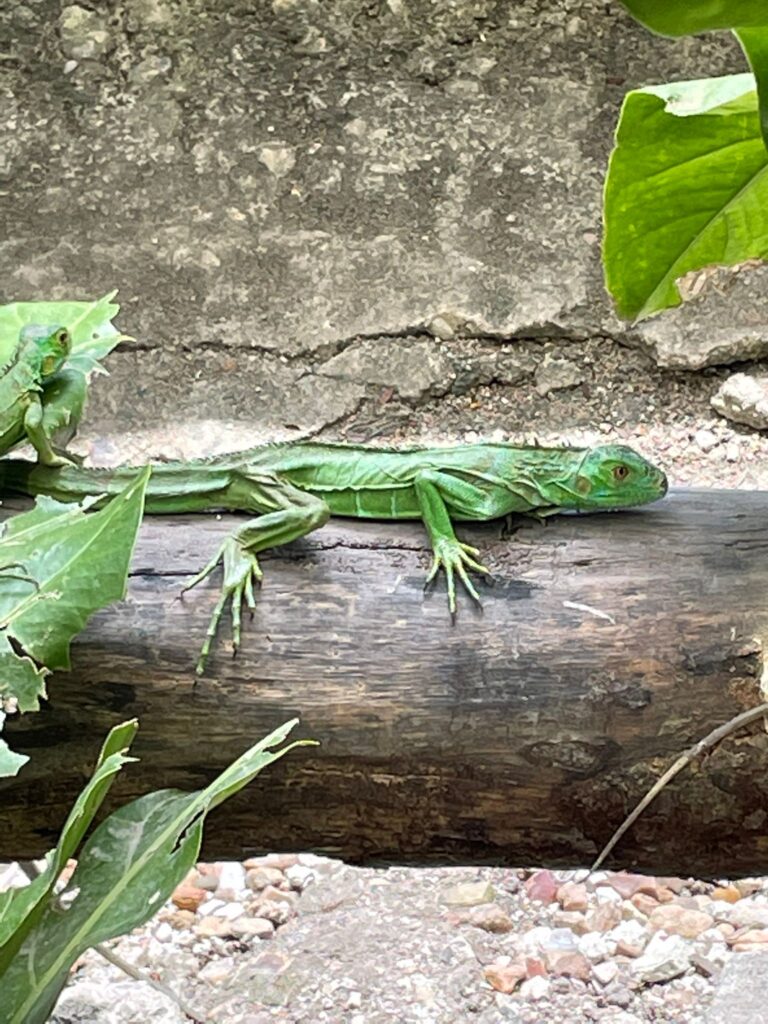
Head to San Ignacio Resort Hotel and you can find an iguana sanctuary, where a guide will tell you all about the green iguanas in the area and even let you hold them. It costs 23 Belizean dollars to visit (£9/US$12.5). I had some issues finding the sanctuary, but you will have to go inside the hotel to get there. Your money goes towards an iguana conservation project.
If you’re feeling adventurous, you can always go on a guided tour of the Actun Tunichil Muknal Cave (ATM Cave) which involves climbing up rocks and swimming through parts of the cave. This cave was once used for human sacrifices, and you can see skeletons remaining today, including the famous Crystal Maiden. Human sacrifices were common across the Americas in centuries gone by, as you can also see at the Museo Santuarios Andinos in Peru.
The caves aren’t cheap however as you have to have a licensed tour guide to visit, and only 125 tickets are provided per day. Tours generally start from £74 (US$100).
Guatemala
Guatemala is the best country in Central America for bucket list activities. You can see a volcano erupt here, which is worth the trip on its own. And that’s just the tip of the iceberg in an incredible adventure destination.
You should not backpack Central America without visiting Guatemala, it’s one of the best countries in the region for sure.
In fact I’d go as far as saying Guatemala is one of the world’s most underrated countries. If it wasn’t for 2 weeks of often-gloomy weather, and safety concerns (it is a bit dodgy off the tourist trail if I’m honest), then it may well be one of my favourite countries in the world.
Day 30: Flores
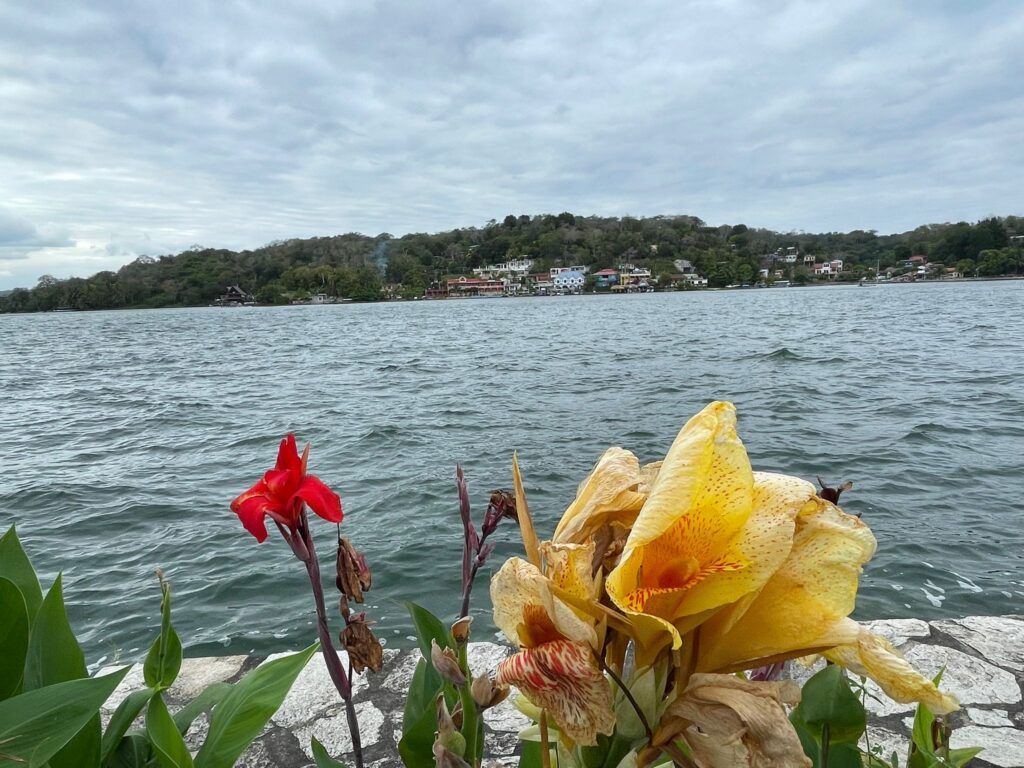
Start by taking a bus from San Ignacio to Flores in Guatemala. This small town has a nice lake. But really your main purpose for coming here is to arrange a tour of Tikal. Spend your day in Flores doing that, then just enjoy the sunset in the evening.
Don’t stay in Hostal La Terraza however. I found it pretty dirty there during my stay. But later heard multiple stories from tourists who had things stolen by the staff there. These incidents took place on several separate occasions.
Day 31: Tikal
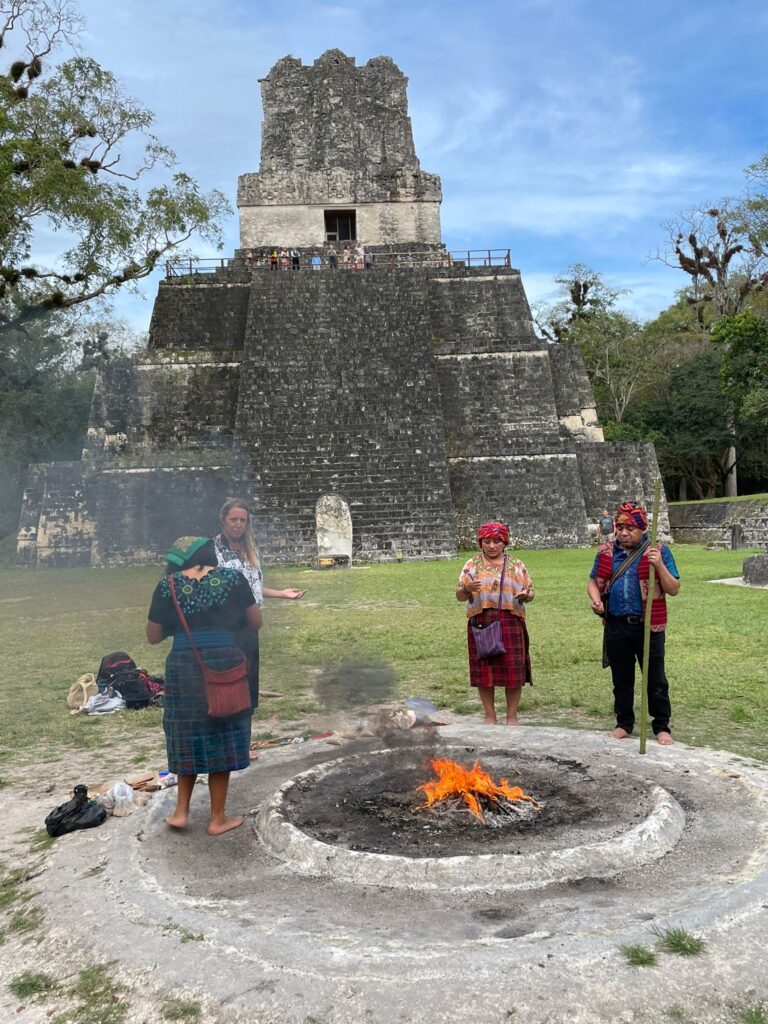
Now if you thought Chichen Itza was cool, this is even better. In my opinion, the ruins of Tikal are the best Mayan ruins out there.
Nestled deep in the jungle, this ancient city has three really cool things to see.
First up are the ruins themselves. They are worth coming here for alone.
Secondly, there are Mayan ceremonies taking place in front of the ruins. Locals and tourists alike, dressed in traditional clothing, gather around a bonfire and participate in a series of chants and rituals.
Finally, Tikal is a great place to see lots of awesome wildlife. Coatimundis are common here, as are monkeys. And you may even be able to spot agoutis, the Central American version of capybaras.
Entrance to Tikal costs 150 Guatemalan Quetzales (£15/US$20). Tours will cost extra, and the price depends on which operator you go with. Transport to and from the site also costs more.
Day 32: Bus to Lanquin
Another travel day I’m afraid. Prepare to get uncomfortable as you spend most of the day in a shuttle down from Flores.
It’s a wise idea to book transport at the same time as your Tikal tour in Flores. Shuttles can be arranged from the same place.
When you arrive in the evening, book a tour to Semuc Champey for the following day. Tours of Semuc Champey cost around £20/US$27 and are well worth the cost for all the activities which are included.
Day 33: Semuc Champey
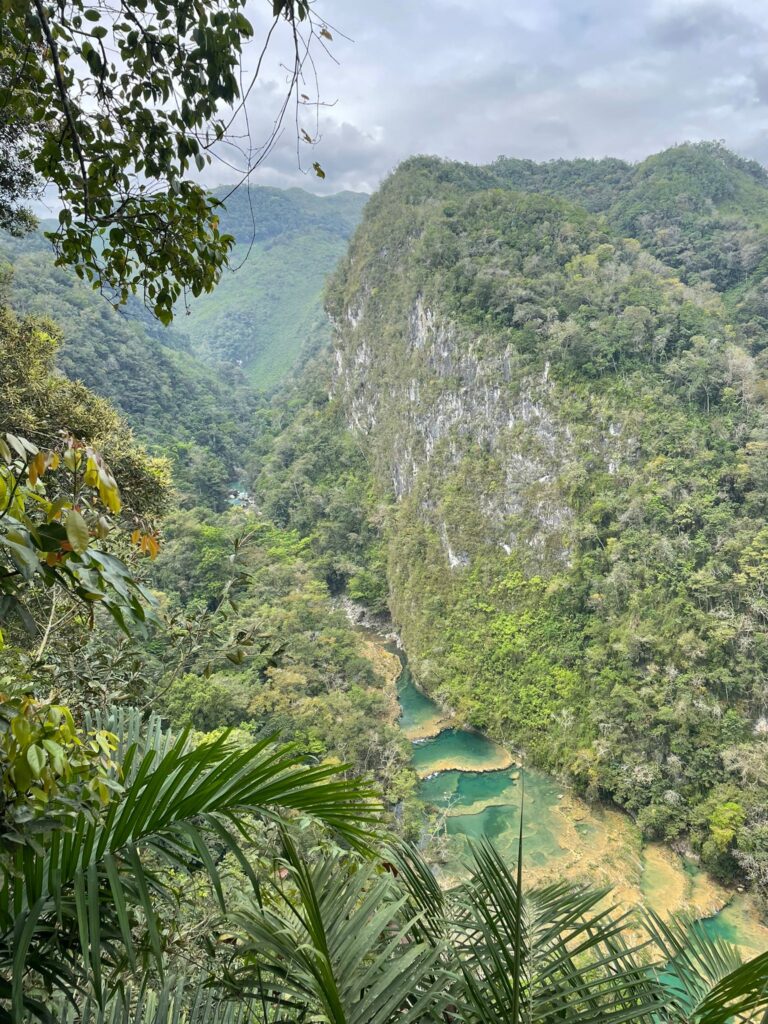
Semuc Champey is a natural wonder in the centre of Guatemala. To get here is an adventure itself. You will need to take a truck ride up the bumpy hills from Lanquin. Only, you will be stood in the back of the truck and have to grip onto the sides for dear life. It’s not one for the faint-hearted!
Once you arrive, Semuc Champey has several activities included in the tour. You start by hiking up to a viewpoint to see the natural wonder itself.
Then you can go down to the bottom and swim in the water for a while.
Next up is an adventure, clambering through caves with water which goes up to your neck. Oh, and I’m 6’3″ so if you’re shorter, then you may find it even more challenging here. Your guides will help you if you have any difficulties.
Lastly, you can relax by tubing down the river, and even grab a beer whilst doing so to end the day on a high note!
Now, I was pretty ill the day after coming here. I cannot pinpoint the exact cause, but swallowing the cave water (which is full of bat poop btw…) is one potential reason behind it. Be careful.
Day 34: Bus to Antigua
Semuc Champey only requires one day. After that it’s time for your next long bus journey. This time you will be heading to Antigua, the most popular city for tourists in Guatemala. And there’s a very good reason for that…
Days 35-39: Antigua and Volcan Acatenango
Antigua is a cool colonial city with many picturesque buildings. In some ways it reminded me of Oaxaca.
You can spend a few days walking around and winding down. But there is one major reason to come here. Hiking up Volcan Acatenango.
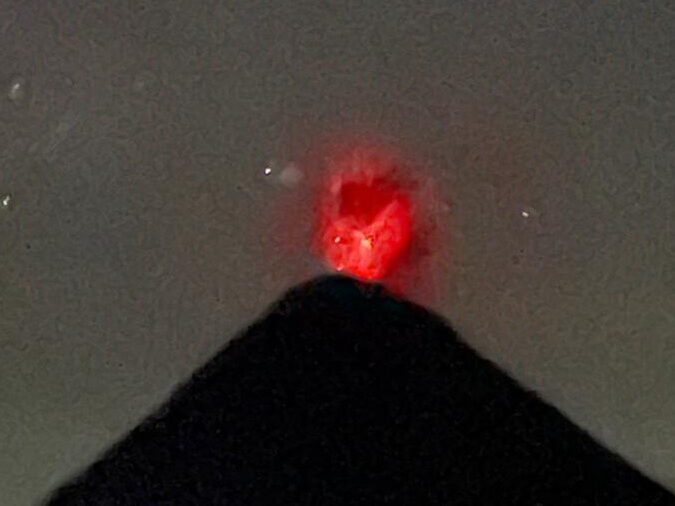
If you hike up Acatenango, then you can camp on the side of the volcano overnight, from where you will see Volcan de Fuego in the distance. This volcano erupts every 15 minutes on average and you can see lava coming out when the weather is clear. It is one of the most incredible experiences in Central America. In fact it’s probably the coolest thing I’ve seen in any country.
Find a tour whilst in Antigua. And make sure you rent some hiking sticks if you don’t have your own. There’s no denying it, this hike is tough. I didn’t have hiking boots for this, and fell over several times, including one occasion on the way down where I slipped off the edge of the volcano and ended up with a mouth full of dirt…
Don’t be me. Prepare properly, bring proper hiking shoes, and appropriate trousers too.
Tours cost around £40/US$54. Book in person with a local hostel or agency for these prices. Booking online will cost much more.
Back in Antigua, you should consider taking a free walking tour to see the highlights of the city with an expert. And otherwise wind down for a bit before moving on.
Days 40-41: San Pedro La Laguna (Lake Atitlan)
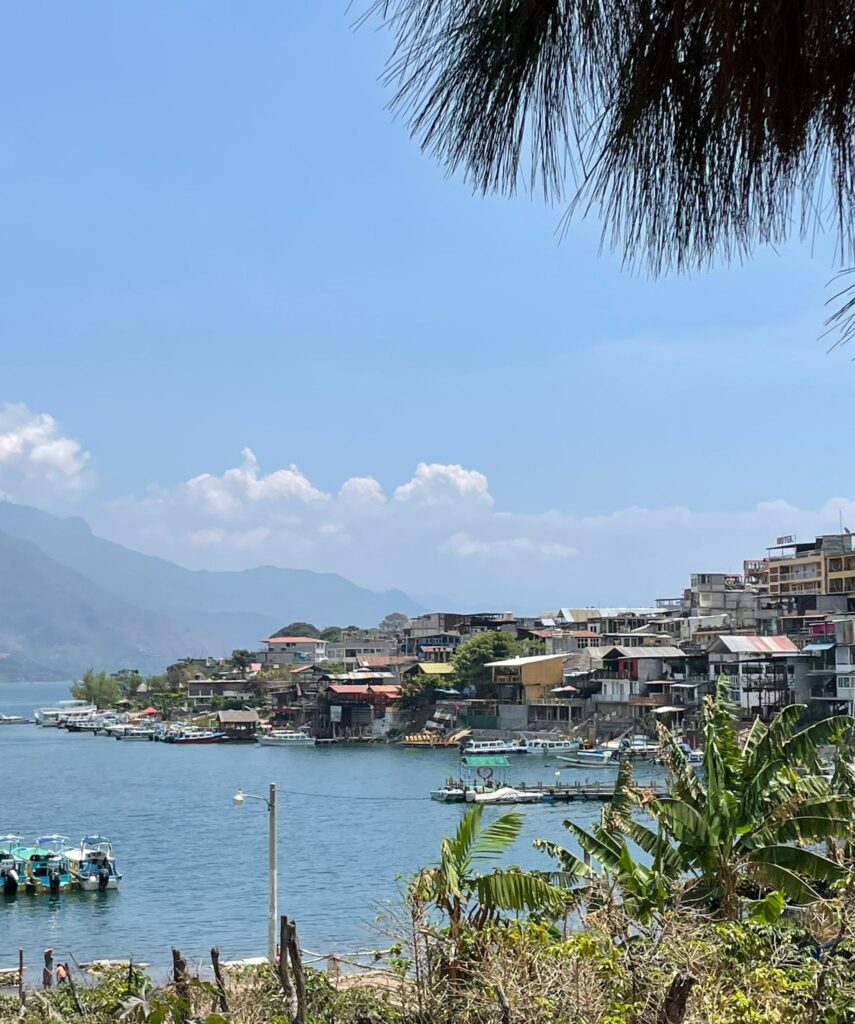
Once you’re ready to leave Antigua behind, head to Lake Atitlan. There are 11 towns and villages around the lake, each with a different vibe. San Pedro la Laguna is one of the most popular, and you will see a lot of tourists here.
Fortunately bus distances are short and it should only take 2-3 hours to get here from Antigua, so you won’t have to waste a day in transit.
There are many tiny alleyways in this small town, and the primary method of transport is via tuk tuk.
You should consider checking out some of the cafes and restaurants, either overlooking the lake, or in the small alleyways.
You can also swim in the lake for a bit. I even discovered Che Guevara beer here. It was almost as disgusting as the man himself…
San Pedro la Laguna is a popular spot on the Gringo Trail through Central America, so you’ll end up meeting new friends without too many difficulties here.
Days 42-43: Panajachel
I went to Xela next, but dropped it from this itinerary as it’s only worth going if you want to learn Spanish, which may be tricky if you only have 3 months in Central America. I personally went to watch football as a goal of mine is to watch top flight football in every country, and there happened to be a game in Xela when I was there.
But a better choice is heading straight to Panajachel, another popular stop on Lake Atitlan. It takes two hours to drive there from San Pedro la Laguna. The better option would be to get a boat, with boats leaving every 30 minutes throughout the day.
You can go kayaking here, and get a view of the lake and surrounding volcanos from the water itself. Unfortunately I was ill here, so I never did this. Other tourists enjoyed it however.
You can also check out the craft markets along Calle Santander, and maybe pick up a local souvenir or two.
Then go and see the colourful street art which is dotted around the area.
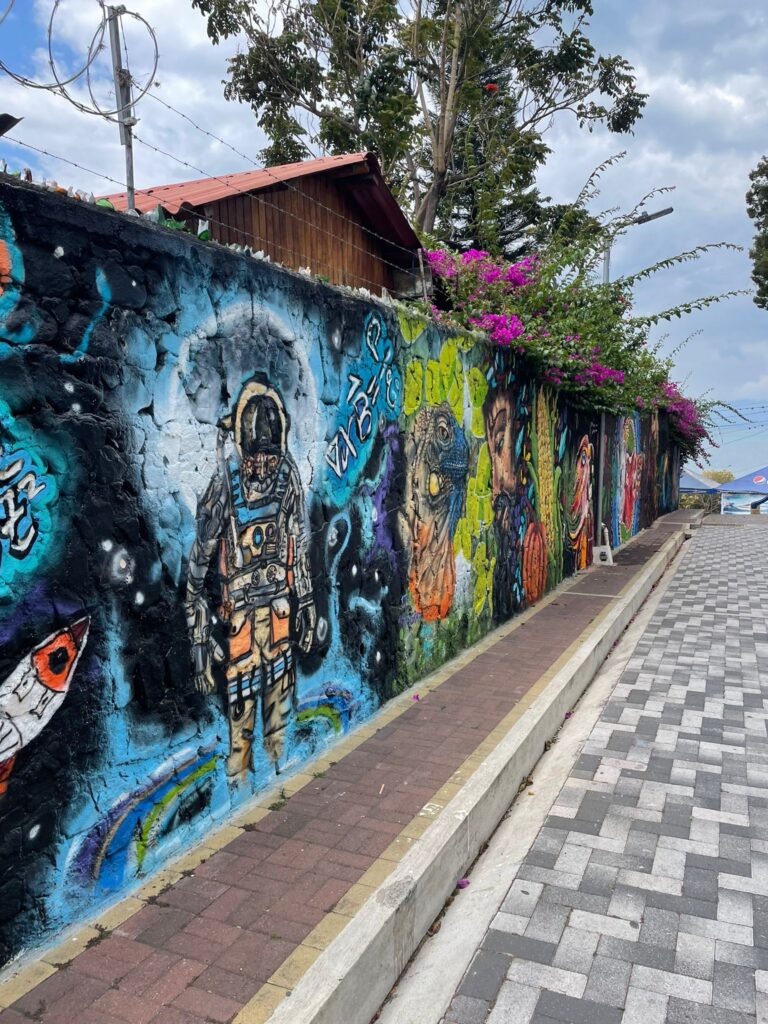
El Salvador
In the past, people would skip El Salvador on their Central American backpacking itinerary. It was deemed too dangerous due to having some of the world’s highest violent crime rates.
In fact, the phrase “don’t skip El Salvador” became popular as time went on. It’s also geographically easy to skip, as it is a small country nestled into the corner of Central America, with buses easy to take directly from Guatemala to Honduras, missing out on El Salvador along the way.
The good news is that El Salvador is now very safe to visit after a major crackdown on gang crime. And it has a lot of beauty which makes it an essential part of any Central America travel these days.
Don’t skip El Salvador!
Day 44: Bus to Santa Ana
From Panajachel you will need to take a bus at around 5am to Guatemala City. Then after several hours waiting around, you will need to catch another bus, this time to Santa Ana in El Salvador.
You should arrive by early evening. This is a long travel day.
Days 45-46: Santa Ana
A real gem of a city. Santa Ana is another beautiful colonial spot, where you can soak up the atmosphere in the main square and visit Santa Ana Cathedral whilst you’re there. I was lucky enough to visit during Semana Santa (Easter week) and they had a big service taking place on Easter Sunday.
The highlight of Santa Ana however is outside the main city. You can do a day trip to Santa Ana Volcano, one of the easier hikes in the region. From there you can additionally check out beautiful Lago Coatepeque which can also be seen from the summit of the volcano.
Spend your first day pondering around the city, and your second visiting the lake and volcano. Santa Ana is awesome.
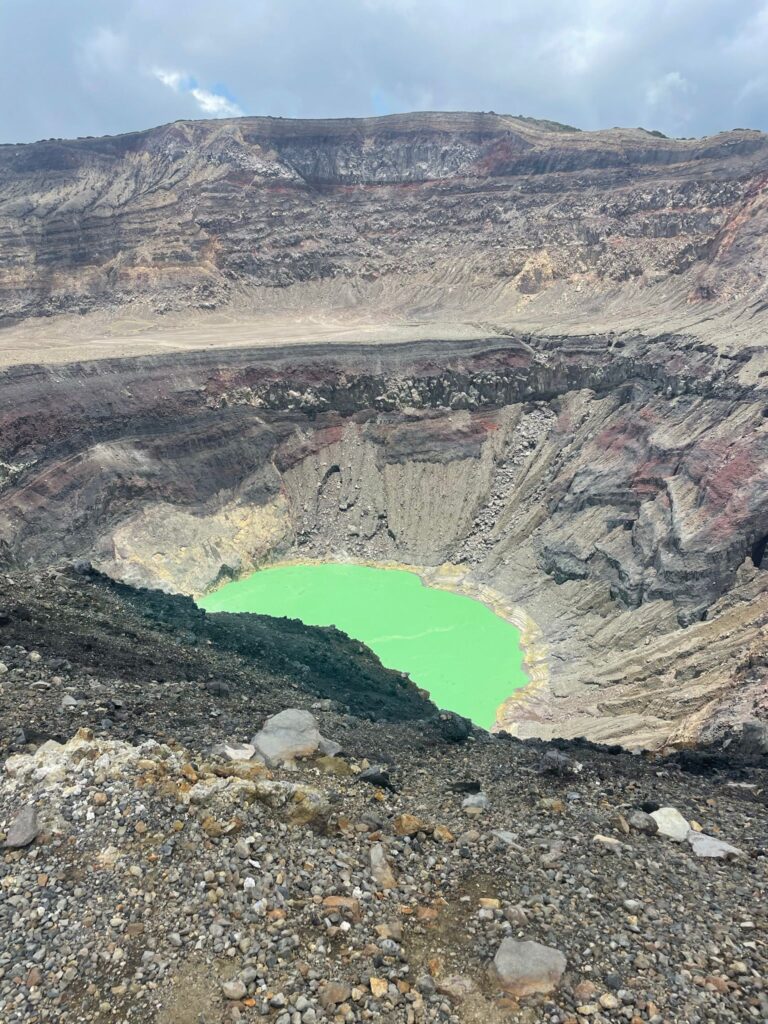
Days 47-48: El Tunco and El Zonte
You may need to transit briefly through the capital San Salvador. Fortunately, El Salvador is small in size so you won’t waste a whole day on a bus here.
El Tunco is a popular beach with surfers. And El Zonte is known as “Bitcoin Beach” for its burgeoning ecosystem using the popular cryptocurrency for most payments. Astonishing really given how underdeveloped El Zonte is at this point.
El Tunco has more to see and do. Even if you don’t surf, it has many cafes and restaurants, and incredible sunsets.
El Zonte has black volcanic sand which is cool if you’re only familiar with yellow sand beaches.
Worth a day or two, but avoid staying in a cheap hostel in El Sunzal called El Balsamo. By far the worst place I’ve ever stayed in, and they have dangerous dogs which bit two people shortly before I arrived (I narrowly avoided becoming their third victim).
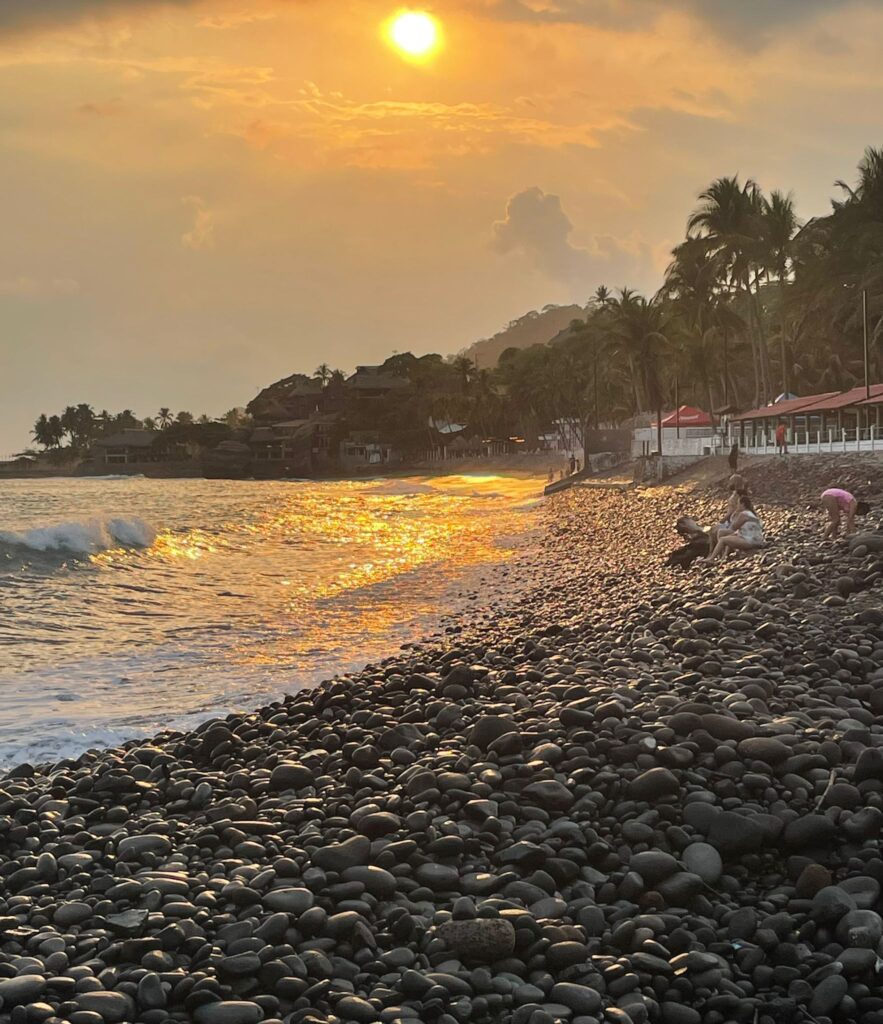
Days 49-50: San Salvador
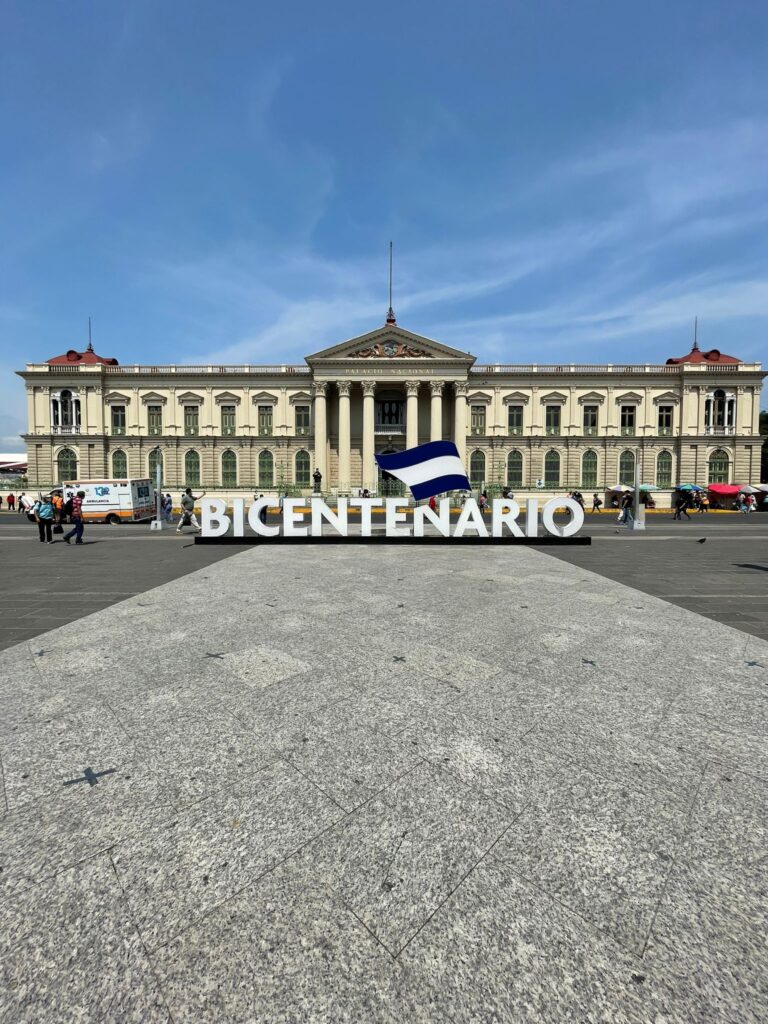
End your time in El Salvador by visiting the capital. San Salvador is split into the modern Americanised western part of the city full of shopping malls, and the traditional colonial centre with more of a local feel to it.
Spend one morning in the Centro Historico where you can check out the old buildings, and grab some pupusas, the popular tortillas which El Salvador is famous for.
Also spend some time visiting El Boqueron, a volcano on the western edge of the city. You can take an Uber practically to the summit, so it’s really easy to reach.
Western San Salvador is the closest you will find to a fully developed city that wouldn’t look out of place in the US. Therefore if you’re looking for a bit of western comfort for a day or so, spend some time visiting the shopping malls and surrounding yourself with familiar brands. I developed an addiction to the shortbread at San Martin Bakery during my short stay here. It was nice having more western-style food for a couple of days.
Honduras
Honduras is arguably the most dangerous country in Central America, but can be visited safely with the right precautions.
Copan Ruinas is super safe, and feels like a bit of a bubble compared to the rest of the country.
The Bay Islands (Utila and Roatan are the main ones) are also very safe compared to most of the mainland, so they’re also easy to visit without issues, and are one of the most common stops for Central America backpackers.
Day 51: Bus to Copan Ruinas
I’m afraid it’s time for another down day. To get from San Salvador to Copan Ruinas, you will need to take a bus to the El Salvador/Honduras border, then a colectivo from the border to Ocotepeque to La Entrada, and another from La Entrada to Copan Ruinas.
This process is long however, and it was getting dark when I did this. Therefore for safety reasons I got off in Santa Rosa de Copan instead of La Entrada, then got an additional bus to continue my journey the next day.
Day 52: Copan Ruinas
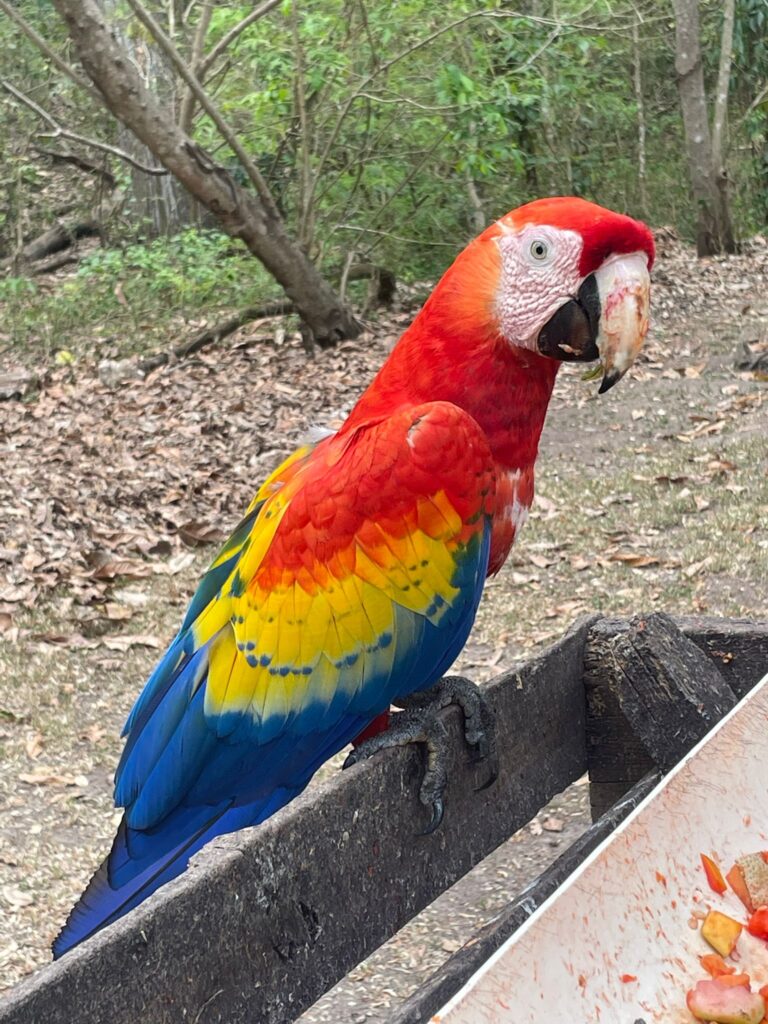
Copan Ruinas is small but cool. It’s a lovely little town and if you wish, you can see some macaws at Macaw Mountain. However you don’t need to do this for one good reason.
The highlight of this place is the Copan Ruins themselves. This is another set of Mayan ruins, and in all honesty the ruins themselves aren’t quite as interesting as some of the others you’ve already seen. However, there are several macaws living at the ruins that often come down and eat right in front of you. I would say they are the highlight and they make this trip worthwhile.
Another popular activity it to take a 45-minute drive up to the Luna Jaguar Spa Resort where you can enjoy the hot springs either side of two hefty travel days.
Day 53: Bus to La Ceiba and Ferry to Utila
Another long bus journey, this time to La Ceiba which is the main ferry port in Honduras, and therefore your primary route to the Bay Islands.
Hopefully you will make it in time to get the ferry in the evening. Take a tourist shuttle to maximise your chances of doing this. Otherwise you may have to take a bus to San Pedro Sula, and catch another bus from there, with no guarantee the buses will arrive and leave in good time.
Days 54-56: Utila Island
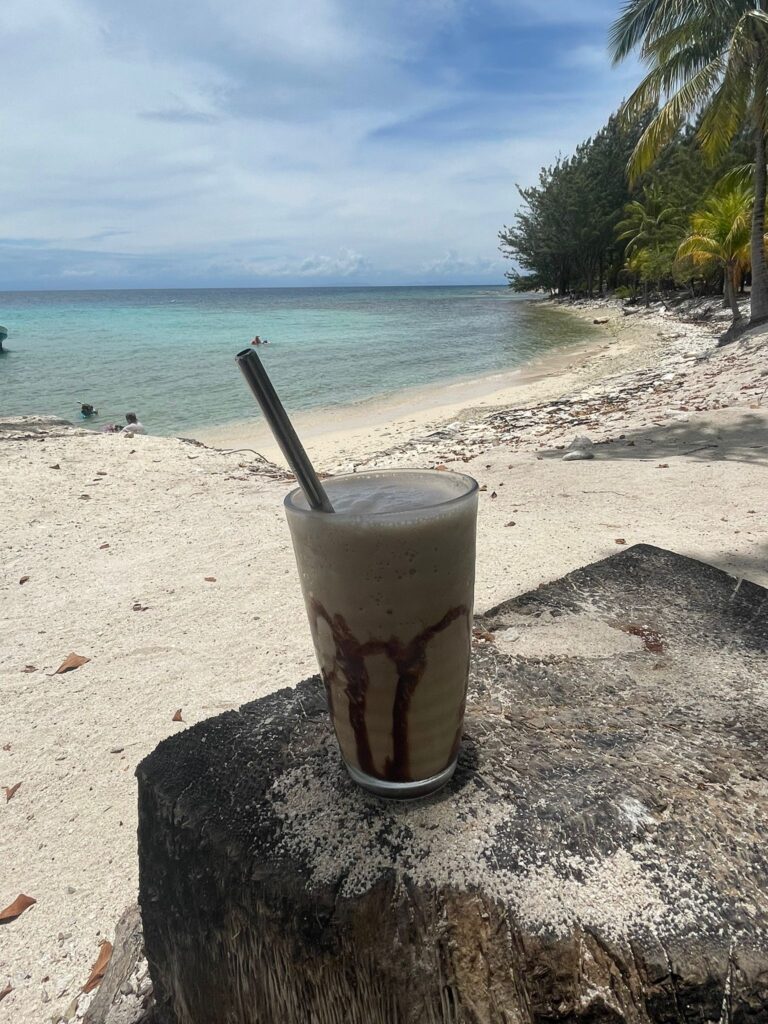
Utila is best known as a diving destination. Some call it the cheapest place in the world to get your diving qualifications.
In all honesty, there isn’t loads to see and do if you aren’t into diving. Pumpkin Hill can be a fun (albeit short) hike if the weather isn’t too hot. And it’s also fun to take out a boat to Neptunes Bar on the more remote western side of the island.
But really, if you come to Utila, it’s all about the diving. I came here as a non-diver, and whilst I wouldn’t go as far as saying I regretted it, Utila did become boring quickly for me. Come here to explore the depths over the island itself.
Day 57: Bus to Leon (Nicaragua)
Once you’re done with Utila, take a ferry back to La Ceiba and a tourist shuttle down to Leon in Nicaragua. The Honduras/Nicaragua border is said to be the trickiest in Central America to cross. Therefore I’d advise taking a tourist shuttle where the driver can handle the logistics for you.
This is what I did, and it was super easy. You can book shuttles on Utila itself, which is a better option than searching for options in La Ceiba.
Nicaragua
Nicaragua is my pick for Central America’s best country. It has something for everyone, from boarding down a volcano, to seeing lava, to jungle adventures, to beaches and more.
Nicaragua is amazing. Read on to find out why. There are so many great ways to spend 2 weeks in Nicaragua, so don’t miss out on this absolute gem of a nation.
Days 58-59: Leon
The small colonial city of Leon is the perfect place to find your feet in Nicaragua. Do a free walking tour to learn about the city and see the highlights when you first arrive.
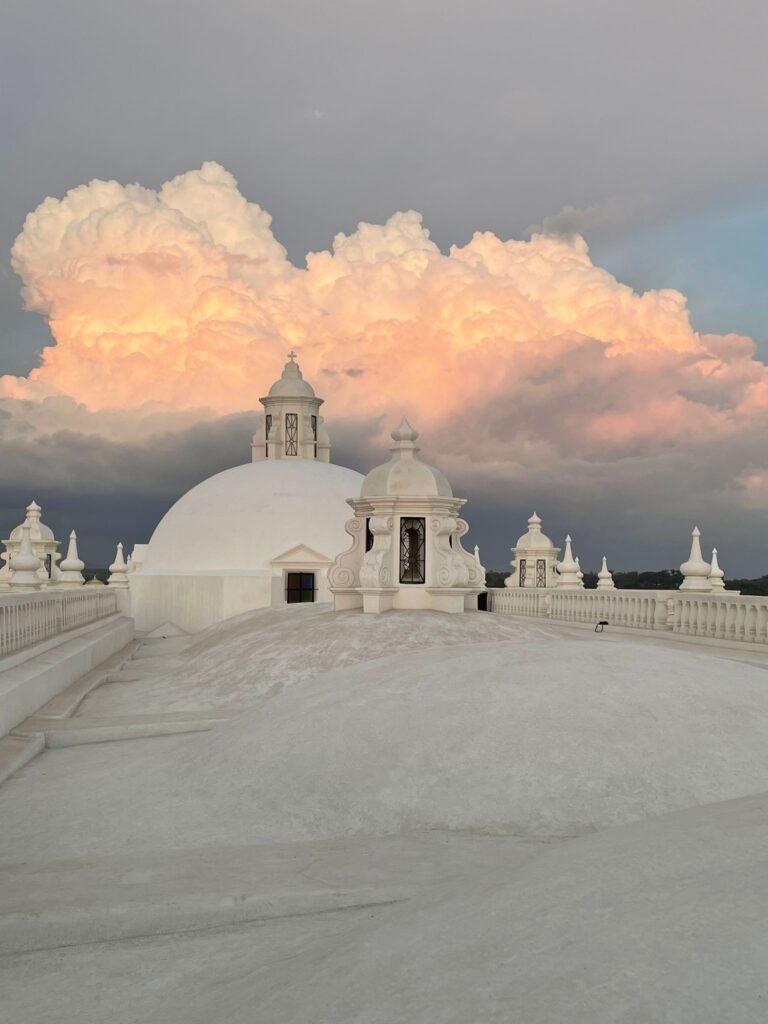
Check out the spectacular sunsets at Leon Cathedral, where you can stand on the roof which is covered in white domes.
And most importantly of all, allow yourself to wind down and explore the city at a leisurely pace. Sometimes it can be fun to just grab a beer and sit by the pool!
Also be sure to arrange a volcano boarding tour with either Volcano Day or Bigfoot Hostel, one of the two companies that offer such tours.
I recommend Volcano Day from personal experience, although Bigfoot Hostel is said to also be a good one.
Day 60: Volcano Boarding at Cerro Negro Volcano
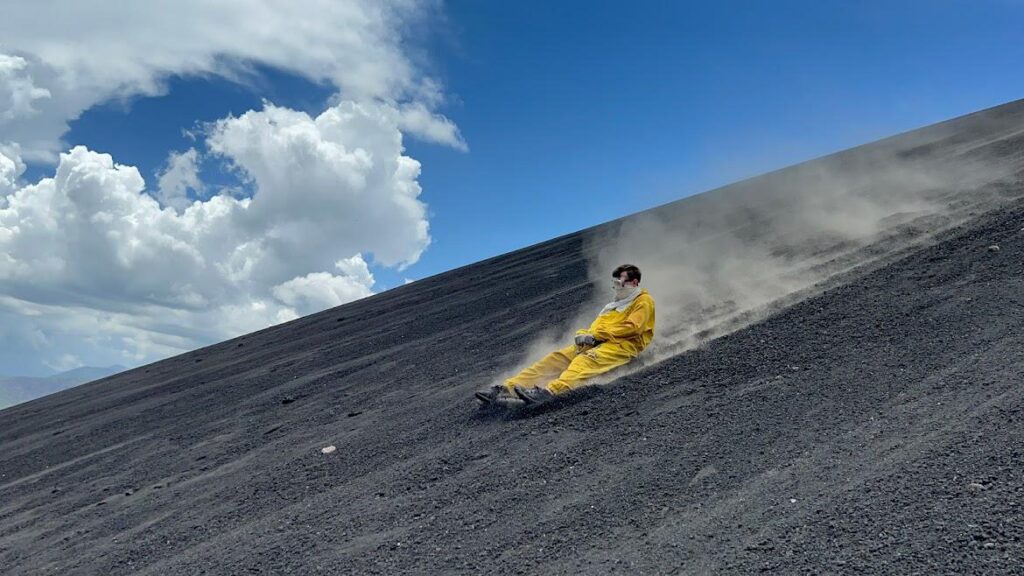
One of the world’s most unique activities. There are very few places in the world where you can slide down a volcano at 70km/h, and Cerro Negro in Nicaragua is the only one that offers organised tours.
Going volcano boarding is one of the most adventurous things I’ve done on my travels, although it can be a little scary as your speed picks up and you get bombarded with volcanic grit. It’s pretty hard to control your speed, even if you listen carefully to what the guides tell you on slowing down.
Days 61-62: Granada and Volcan Masaya
Around 4 hours from Leon is Nicaragua’s other popular colonial city, Granada. Again, do a free walking tour to get a feel for the place and arrange a Volcan Masaya tour which I’ll explain in a second.
You can also do a boat tour of the Granada Islets, a series of tiny islands in Lago Cocibolca (Lake Nicaragua) which were formed from a volcanic eruption. They don’t call Nicaragua “the land of lakes and volcanoes” for no reason you know.
I highly recommend staying in Oasis Hostel. It is the best hostel I have ever stayed in (from around 150+ over many years of travel), with dorm rooms and private rooms, several activities and even multiple free rum-based drinks during happy hour. Not to mention pancakes for breakfast, help booking tours/transport and a great social vibe.
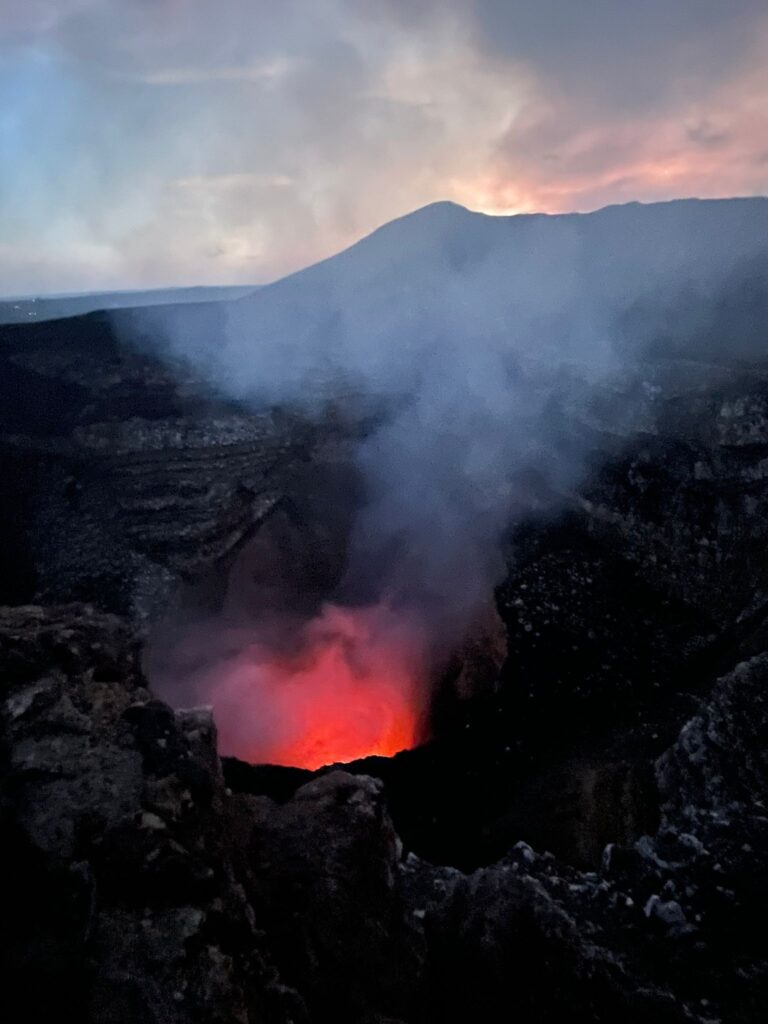
Anyway, the highlight of Granada is a tour to Volcan Masaya, where you can see lava at the base of the volcano!
Unlike in Guatemala, it doesn’t erupt (thankfully… you’d be in big trouble if this one did). But this is still a breathtaking sight and one of those magical “this is why I travel” moments. Don’t miss it.
Day 63: Treehouse Nicaragua
Near Granada, you can spend a night in a treehouse right in the middle of the jungle.
The Treehouse Hostel is an experience itself, with community tours, chocolate making, yoga and a big party every Friday on the agenda.
It’s cool to be surrounded by wildlife for the night. A little uncomfortable if I’m honest, after all, you’re in the jungle here and sharing a dorm room (wooden shack) with too many other travellers to count. Fun for a night, but I’m glad I didn’t extend beyond that.
Days 64-67: Ometepe
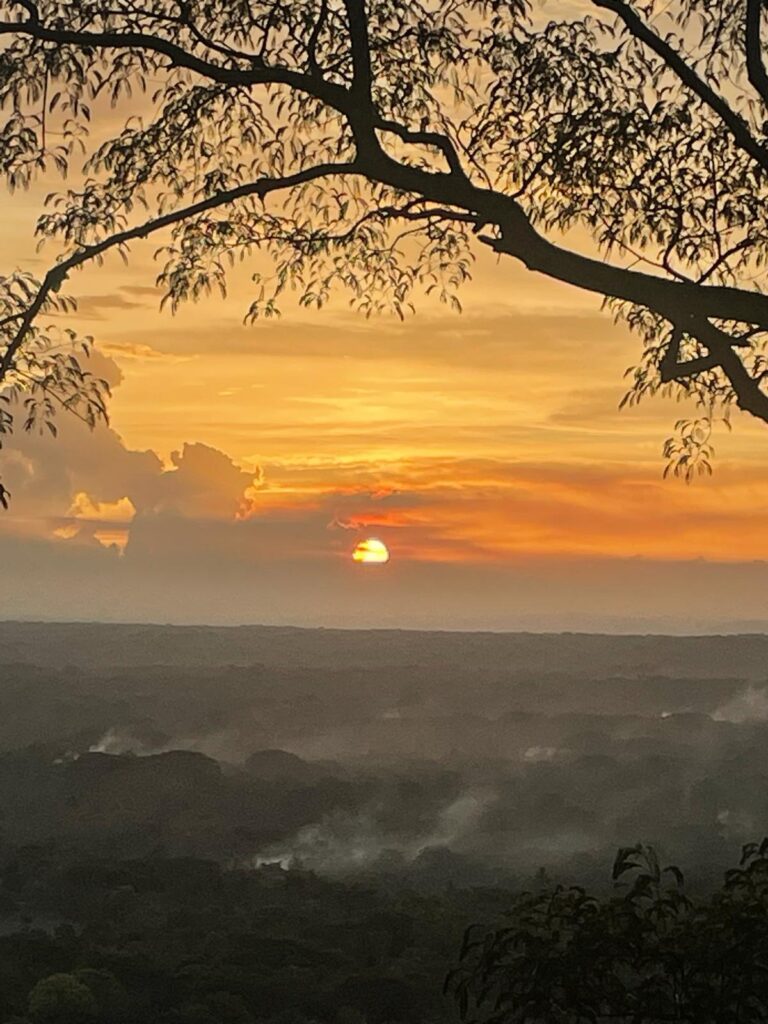
Head down to San Jorge on the shores of Lake Nicaragua. From here, take a boat across to the incredible island of Ometepe.
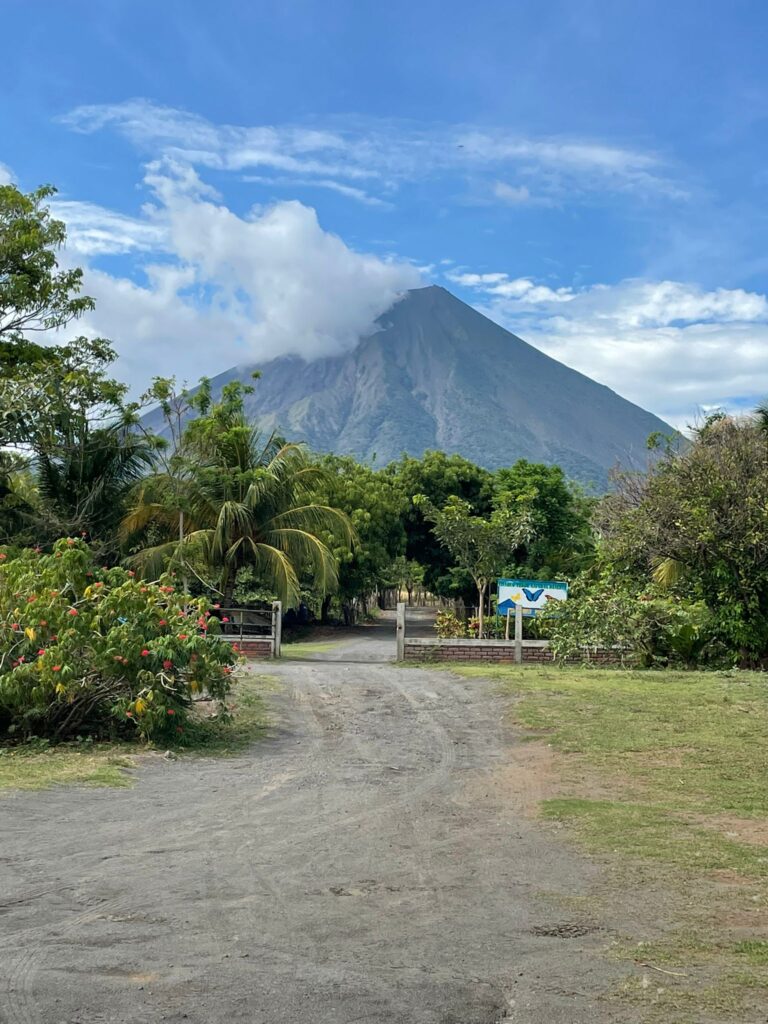
You can hike up the challenging volcanoes Maderas and Concepcion. The latter requires a mandatory guide, although a guide is a smart idea for both of them really.
Enjoy the natural springs at Ojo de Agua. And you may also want to visit San Ramon Waterfall.
My personal highlight on the island however was Charco Verde Ecological Reserve, a wildlife paradise with cool creatures ranging from dung beetles to boa constrictors, as well as the awesome (but noisy) howler monkeys.
As with just about every Nicaragua stop in this itinerary, Ometepe should not be missed.
Day 68: San Juan del Sur
Last but certainly not least is a trip to Nicaragua’s surfing paradise, turned mini Rio de Janeiro.
Just like Playa del Carmen, San Juan del Sur is often referred to by its initials, SJDS.
SJDS is a place to surf and party. But there’s also a cool Jesus statue overlooking the bay, hence the Rio comparison.
It will take you roughly 40 minutes to hike up to the statue of “Christ of the Mercy”. From there you can pay a £1.50 (US$2) entrance fee to enter the statue and get the best views of the bay below.
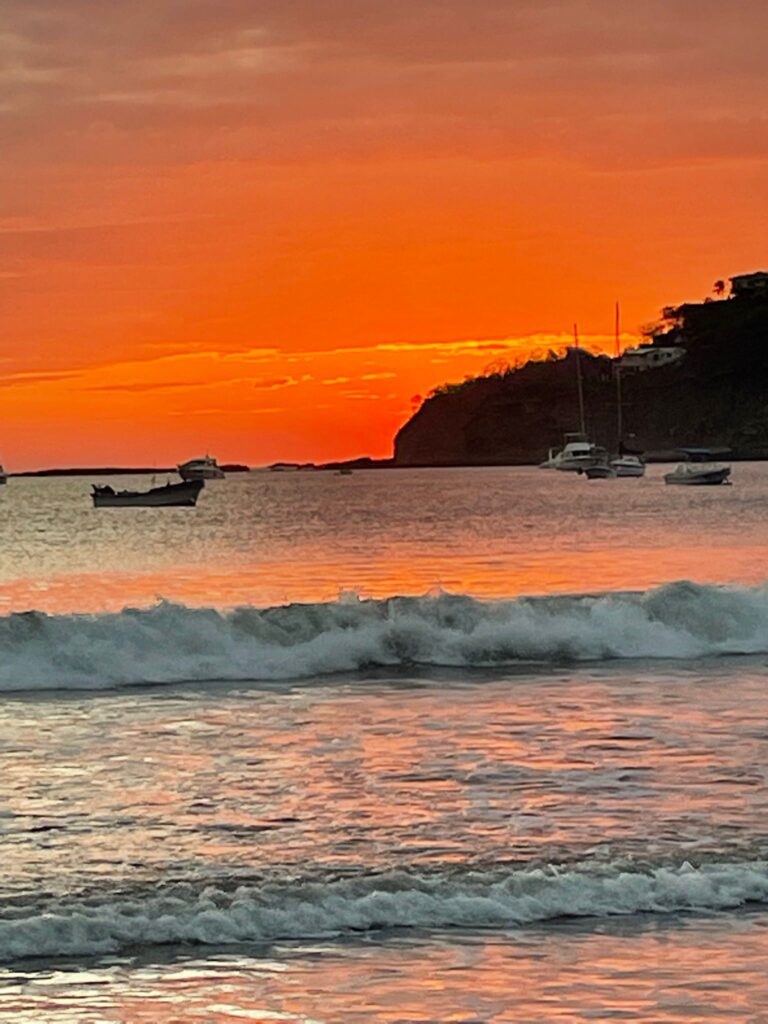
And don’t miss out on the amazing sunsets here.
Costa Rica
Costa Rica is the most popular Central American country for tourists, but not necessarily the favourite of backpackers who have visited other nations in the region, myself included.
This is quite possibly the best country in the world to see wildlife. However, backpacking Costa Rica is more expensive than neighbouring countries, and it lacks the diverse range of attractions of a Nicaragua or Panama for example.
Day 69: Bus to Liberia (Costa Rica)
Yep, another travel day. From SJDS you will need to catch a bus to Rivas, then another down to the Peñas Blancas border, and finally a third bus towards Liberia.
Stay here for the night, then head off to Monteverde as soon as the sun rises.
Days 70-71: Monteverde
The first place in Costa Rica where you can really see some of the country’s famous wildlife. Warm up by hiking to the top of Cerro Amigos, which takes around an hour and has some good views from the top.
The highlight however is a Monteverde Cloud Forest night walk. There are several tours available in Monteverde itself.
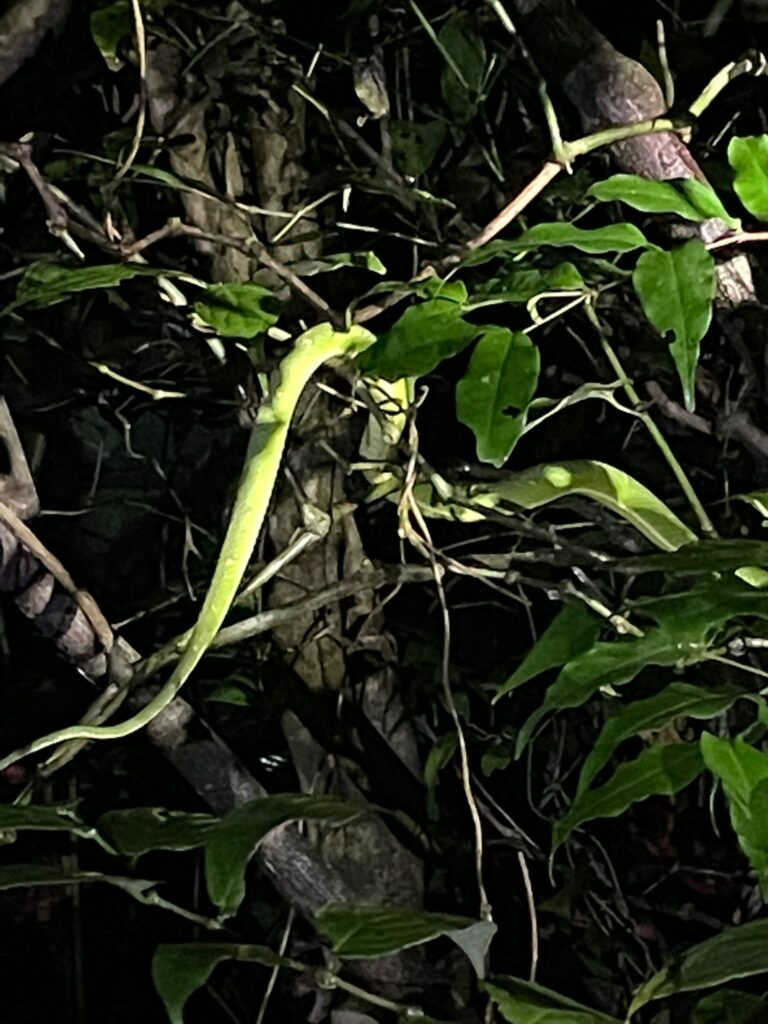
The night walk takes you through the jungles to see the incredible creatures living there including tarantulas, pit vipers, scorpions and many cool frogs among other things.
You have to sign a waiver before entering the jungle to say that the tour company aren’t liable if something goes wrong. But if you follow the rules, you will have no issues. They took us along a manmade trail, which minimises the danger of running into trouble.
Days 72-73: La Fortuna
La Fortuna has a lot to do. You can start by crossing the Mistico Arenal Hanging Bridges which will take around 3 hours. Then spend 2-4 hours walking along some of the hiking trails at Arenal Volcano.
Don’t miss out on the Bogarin Sloth Trail where you can see several cool creatures which are different from those at Monteverde.
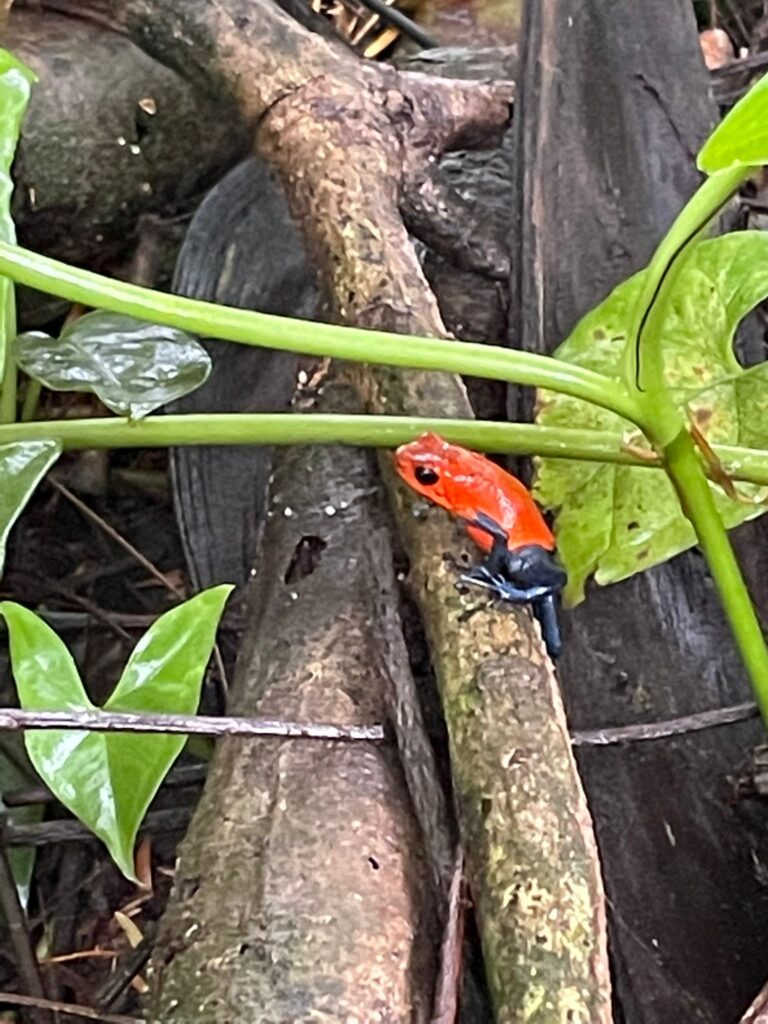
I would highly recommend taking a guided tour. I went without one and would have only seen the blue jeans frog, a red poison dart frog with blue legs if not for a bit of luck.
The luck came in the form of a guide with a couple who were going round the trail at a similar pace to me. The guide would often point out creatures including several sloths, a deadly fer-de-lance snake hiding in the undergrowth, and bullet ants which are notorious for their incredibly painful bites.
The guide was happy to call me over whenever he spotted something, and I never would have found these creatures without him. Get a guide on any Costa Rica jungle trek for the best experience.
Days 74-76: Tortuguero
After La Fortuna, take a bus to La Pavona. From there you will need to catch a boat to get to Tortuguero itself.
Tortuguero is great. It’s a remote spot in the jungle where you’re surrounded by wildlife and cut off from civilisation.
As with pretty much anywhere in Central America, your first move should be to organise some tours. And there are some cool ones here.
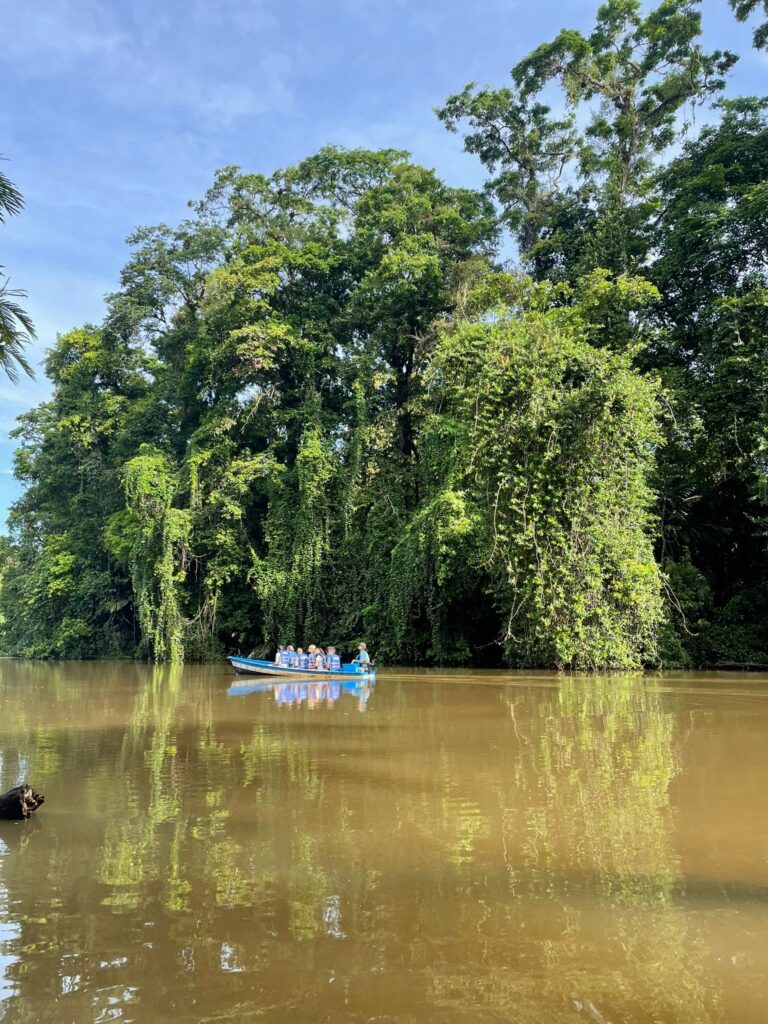
Start with a boat tour which takes you down the rivers and through the mangroves. You can see some of Costa Rica’s aquatic life, including caimans which are similar to crocodiles.
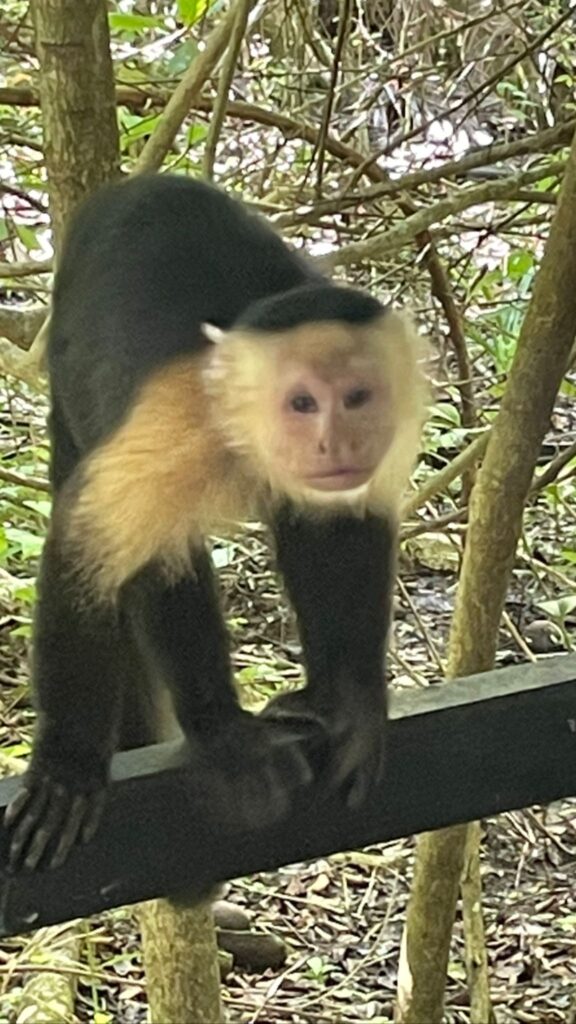
Afterwards, you can walk through the jungles on your own and try to spot some land animals including capuchin moneys and agoutis.
I would also recommend a guided night tour. The one I took was with an experienced guide who pointed out sloths, toucans and Costa Rica’s poster animal, the red-eyed tree frog.
I was even offered the option to go on an illegal “danger tour” which would mean going to off-limits parts of the jungle full of dangerous creatures including many deadly snakes. This involves trekking through lengthy overgrowth and other tricky terrain. I didn’t come prepared for this, therefore I turned down the offer. But next time will be a different story…
Days 77-78: Cahuita
If you’re missing the Caribbean vibes of Belize, you can find them again in Cahuita which is down the coast from Tortuguero, not too far from the Panama border.
Once again, I’d recommend a jungle trek through Cahuita National Park to see wildlife including snakes and capuchins alongside many other creatures.
But aside from that, just spend some time chilling in the town and soaking up the atmosphere on the Caribbean coast. You can often find reggae-themed parties here, so there’s no shortage of activities in this small town.
Days 79-80: Manuel Antonio
End your time in Costa Rica by taking a bus to capital San Jose, and another to Manuel Antonio on the opposite side of the country.
Don’t waste time in San Jose, it’s a pretty miserable city. Only pass through it for transit purposes.
Once in Manuel Antonio, end your time in Costa Rica with another jungle trek through the national park where you can once again see many awesome creatures.
Don’t go on a Tuesday however as it’s closed. Something I learned when my birthday fell on a Tuesday and I went to celebrate by visiting Manuel Antonio…
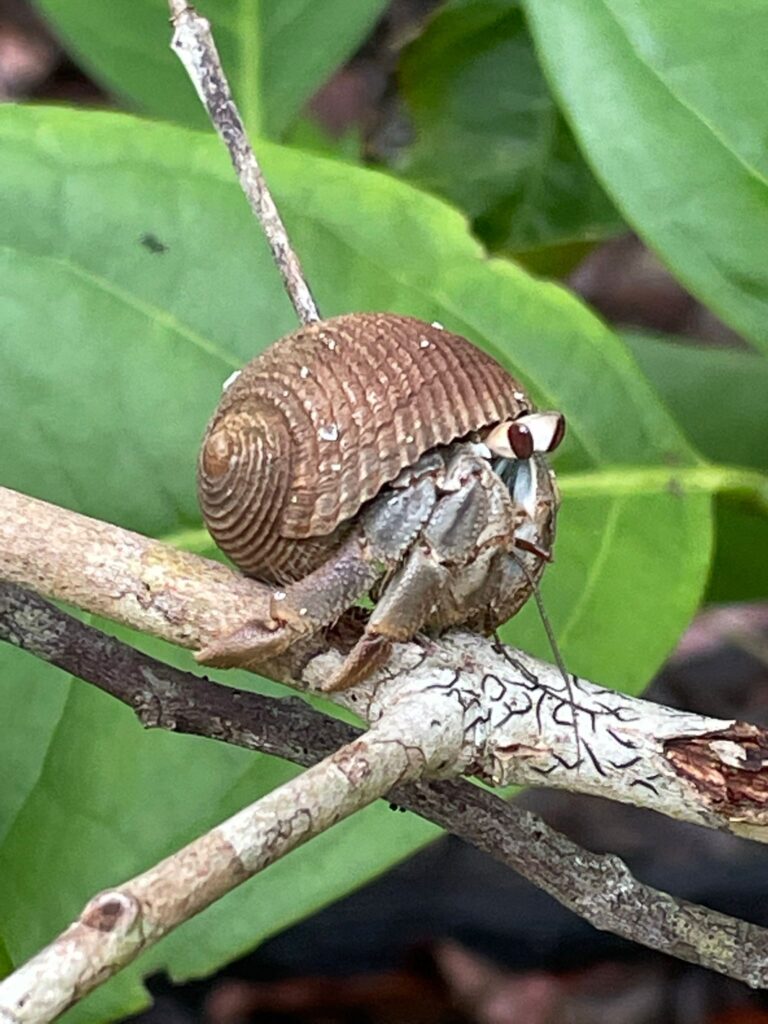
Day 81: Bus to David (Panama)
After Manuel Antonio, head back to the capital San Jose, and take a bus down to David in Panama.
Panama
The final stop on your Central America backpacking itinerary. When I got to Panama I wasn’t particularly excited, as I thought I’d seen everything the region had to offer. Right?
Wrong.
Panama was a real gem and it was a pleasure to end on a high note before heading to Colombia to continue my journey through Latin America. This was even without visiting the San Blas Islands which are said to be a paradise destination.
I skipped them however as they are very expensive to visit, costing hundreds of dollars. They are however the only feasible way of crossing the Darien Gap into Colombia without flying.
Days 82-83: Boquete
Your Panama trip will start in David. But get out of there as soon as possible and head straight to Boquete.
This lovely small town nestled in a mountain valley is full of greenery and is a popular place for expats to come and retire.
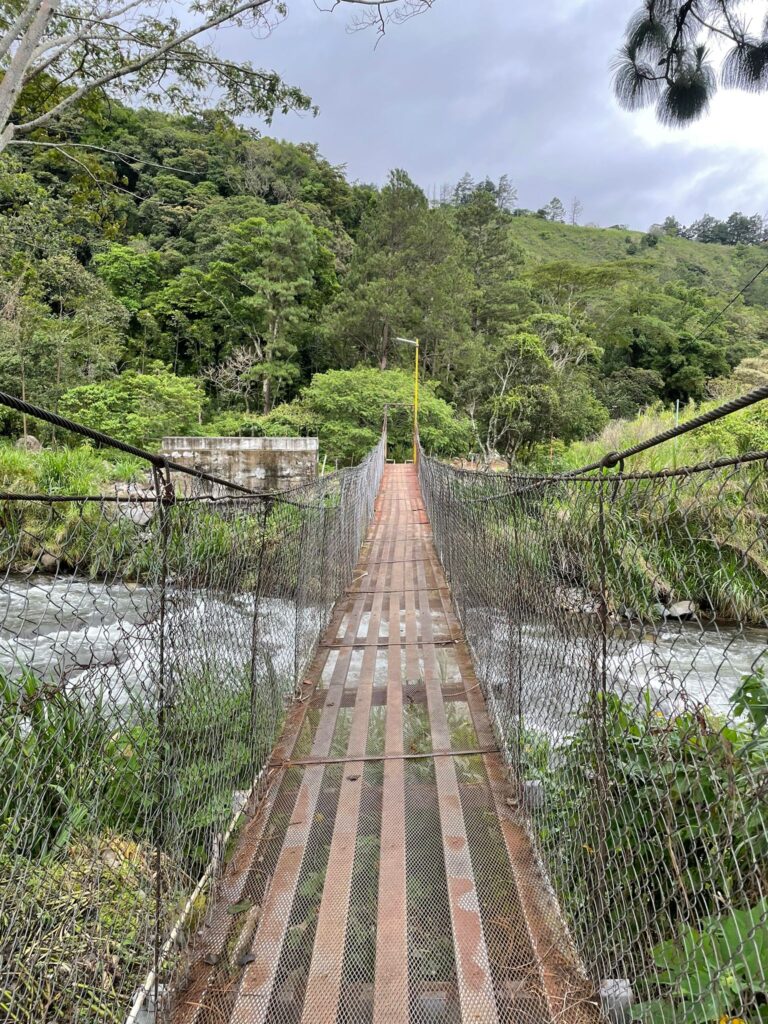
You can hike to the Lost Waterfalls, as well as the Hanging Bridges, before coming back to chill in the town.
It’s the sort of place with something both for people who like a bit of activity, and those who just like to relax.
Days 84-87: Bocas del Toro
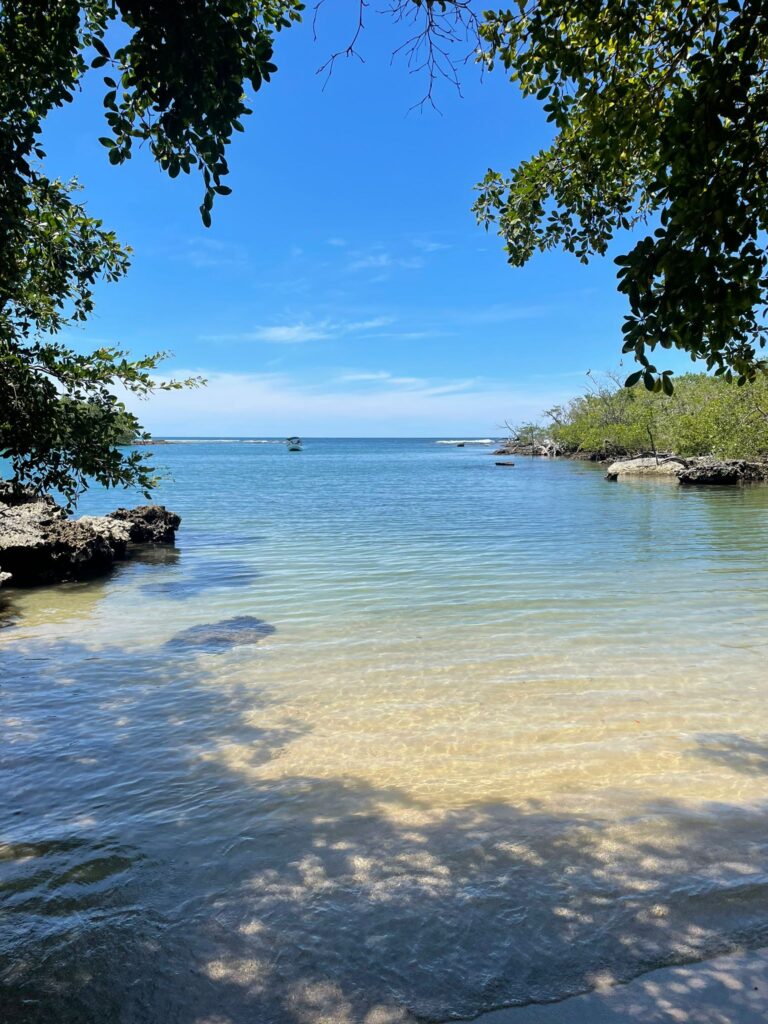
From Boquete, take a bus to Almirante, then a boat across to Colon Island and find somewhere to stay in Bocas Town, which is the main hub of the island.
Colon Island is home to Playa Estrella, or “Starfish Beach” in English. This beach is home to many giant starfish which you can see in the clear waters. Playa Estrella is awesome and should be a must on your Bocas del Toro itinerary.
The north of the island is full of dense jungle, and you can trek through here to find snakes, howler monkeys and if you’re lucky, a very rare yellow poison dart frog with black dots and silver legs, which is exclusively found on Colon Island.
Be careful walking through long grass there, we almost stepped on a snake. Fortunately, this one turned out to be dead, but others may not be and you’re a long way from a hospital, or even someone to help you here.
In the evenings, come back to Bocas Town and party the night away. Younger backpackers may be interested in the infamous “Filthy Friday” event which is a weekly bar crawl taking place, funnily enough, on a Friday.
After Colon Island, I recommend taking a boat to Bastimentos Island, which is famous for its red frog population. If you stay at Selina Red Frog, you can even take a free tour in the evening which includes seeing red poison dart frogs and caimans.
Aside from the frogs, Bastimentos has a few beaches which you can check out.
Day 88: Bus to Panama City
Once you leave Bocas, you will need to take a boat back to Colon Island, then another to Almirante, then a bus to David, and finally another bus to reach the capital Panama City by the evening.
Days 89-90: Panama City
After 3 months of backpacking Central America, it’s time for the final stop. Panama City is one of the best hub cities in Central America with lots of public transport and many flights to and from Europe, South America and the USA. Therefore this is the perfect end point for your journey. Or start point if you do it in reverse.
You won’t have much time here unless you extend your trip by another day or two, but there are still some cool things to see and do.
Panama City is home to one of the world’s greatest engineering feats, the Panama Canal which you can see.
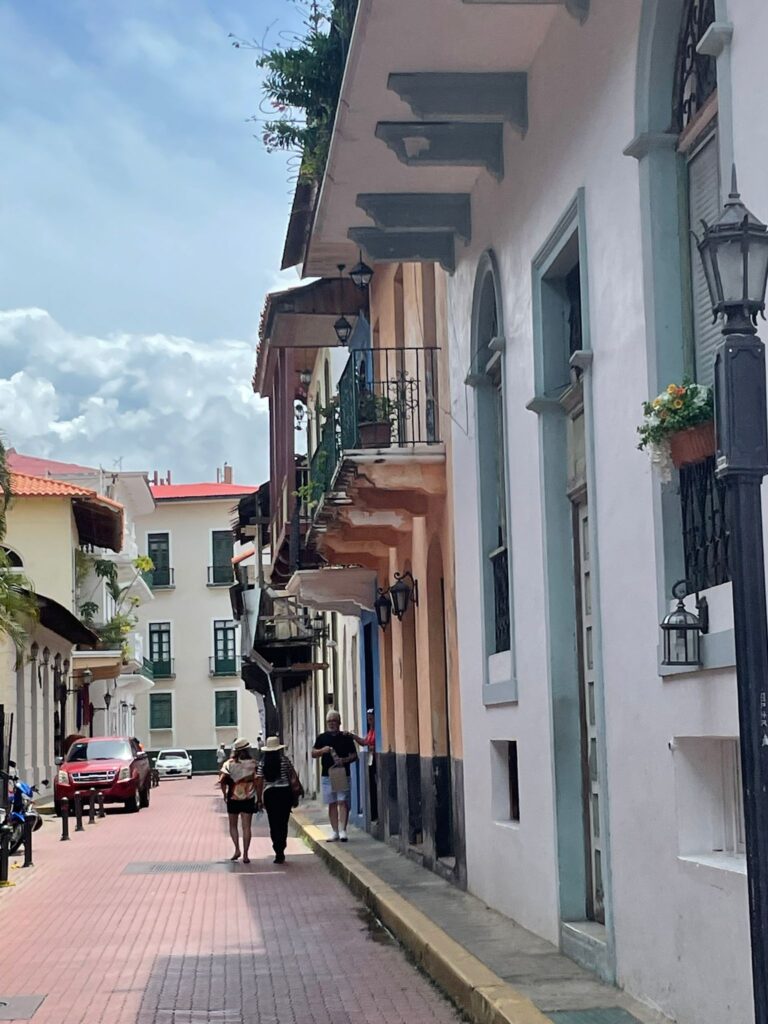
You can also spend some time in Casco Viejo, the colonial quarter which is home to some quaint buildings and has been made a UNESCO World Heritage Site.
And lastly, it will be time to head to the airport. Make sure you get there in good time for your flight. And I really hope you enjoyed your time in this wonderful region of the world.
If you’re heading south from here, be sure to read my post comparing Central and South America to decide which is better in a number of factors.
And that’s a wrap. Hopefully you would have seen the best of what this region has to offer. Central America has the most appeal to adventure lovers, and wildlife enthusiasts. I’m tempted to come back and do another 3-month trip as I loved it so much, although I’d focus on seeing the few spots I didn’t explore the first time around.
When is the Best Time to Visit Central America?
The best time for visiting Central America is from December to April, which is during the dry season. May is a shoulder month which is generally dry, but there is a higher risk of rain. November is often dry, but can also be the tail end of hurricane season.
Hurricane season is from July to October, with a smaller risk in November before the drier months begin. Hurricanes are more likely to hit some countries than others. El Salvador and Panama are less likely to be hit.
Is Central America Safe to Visit?
Yes, Central America is safe to visit. It has a reputation for violent crime, but that can often be avoided with some common sense precautions such as not going out alone at night, and keeping your valuables secure.
El Salvador and Costa Rica are amongst the safest Latin American countries, with Panama close behind.
Do a lot of reading on travel safety before your trip here as there’s a lot of useful information you should know to help you stay safe.
Also consider booking a one-to-one travel planning session with me where I can offer advice on safety and other aspects of travel.
I met a few people with the occasional robbery story. But in every single case, they let their guard down at some point. As did I in Quito when I almost got mugged.
No one I met became a victim of crime if they took appropriate precautions.
What Languages are Spoken in Central America?
Spanish is the language spoken in every Central American country except Belize. In Belize they speak English instead.
There are slight variations in the Spanish spoken across each country, but you will understand any version if you speak Spanish yourself. It’s like comparing British English to American English.
Is 3 Months Enough Time to See Everything in Central America?
Spending 3 months in Central America gives you just enough time to see all the highlights at a fairly rushed pace. This is the minimum amount of time I would recommend to see all 7 Central American countries plus Mexico (which is on the fringes of the region).
Without Mexico, you will have a little more time to add more stops such as the San Blas Islands in Panama, Roatan in Honduras and smaller stops including Guatemala’s black sand beaches at El Paredon and the laid-back Belizean village of Placencia.
I would say 4 months is a good amount of time to see everything at a more relaxing pace, and 5-6 months is enough time to thoroughly explore every country in the region. If we exclude Mexico for a second, these countries are all fairly small, with the combined size of all 7 fairly similar to France or Spain.
Central America is a region which packs a lot into a relatively small area. And it’s a region full of adventures you will never forget.

Thank you for a detailed and entertaining blog post. The detailed table of your costs per country is incredibly helpful. I copied and pasted it into AI to convert to Australian dollars and it worked, thank you for the formatting to allow for that.
Thank you! Honduras and Guatemala can actually be done a fair bit cheaper. I just splashed out extra on tourist shuttles over local buses for safety reasons.
My Belize transport costs are slightly skewed as I bought a boat ticket, and a shady character knew I would be at the dock at a certain time the following day, so I ended up buying a flight to avoid him which skyrocketed my costs.